The Bhutanese Leading the way.
714 EVs registered with only 75 charging stations in the country
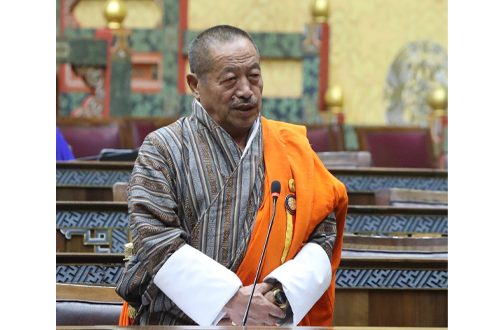
During the National Assembly’s question-hour session, the Minister for Energy and Natural Resources (MoENR), Gem Tshering, revealed that Bhutan currently has 714 registered electric vehicles (EVs) but only 75 charging stations across the country. Of these, four are non-operational, and the rest are unevenly distributed, with some dzongkhags lacking even a single station.
Highlighting the issue, Nyishog-Saephu MP Kuenga noted that Bhutan places a high priority on environmental conservation and has actively promoted EV adoption to cut carbon emissions. He pointed out that EV sales are steadily rising, with 44 agents in the country having sold a total of 919 EVs to date.
“However, only 75 charging stations are available, 32 AC and 43 DC and nearly 40 of these are concentrated in Thimphu, Paro, and Phuentsholing,” he said. The lack of stations in other dzongkhag towns and along highways, combined with maintenance issues and non-functional facilities, poses a serious challenge to the widespread adoption and use of EVs, the MP added.
MP Kuenga questioned whether the government had a clear policy for the installation and upkeep of EV charging stations and stressed the urgent need for one.
In response, Lyonpo Gem Tshering said the government plans to expand the EV charging network significantly. “Our target is to establish one charging station for every 15 EVs by 2030, ensuring equal distribution across all dzongkhags,” he said. The Bhutan Power Corporation (BPC) will oversee construction, maintenance, and ownership of the stations, while the Ministry of Infrastructure and Transport (MoIT), Ministry of Finance (MoF), and MoENR will coordinate to address infrastructure gaps. MoF will support the initiative through budget allocation.
By 2030, the number of EVs in the country is expected to exceed 16,000. “This is part of our broader strategy to reduce fuel imports, as Bhutan has no fossil fuel reserves but abundant electricity that we can harness,” Lyonpo Gem stated.
The Minister for Infrastructure and Transport added that a Memorandum of Understanding (MoU) was signed in 2022 between BPC and the former Road Safety and Transport Authority (RSTA), under which the government committed to fund the operation and maintenance of EV charging stations. Currently, the government spends about Nu 12 million annually on utility bills, spare parts, tools, and operational costs for EV charging infrastructure.
Following a comprehensive review of the current system, the MoIT, MoENR, and BPC identified several areas for improvement. A joint proposal was submitted to the Lhengye Zhungtshog on 16th April 2025, seeking approval for MoIT and MoENR to lead planning on EV infrastructure and energy supply, including grid stability.
As part of the proposal, BPC would be responsible for the procurement, construction, operation, and management of all EV charging stations in the country. It also recommends revising the monthly service fee to Nu 26,955 per station to cover robust customer care services and faster maintenance turnaround.
Additionally, the proposal includes provisions to offer equal financial incentives to private operators willing to manage EV charging stations, provided they meet the same service quality and response standards as BPC.