The Bhutanese Leading the way.
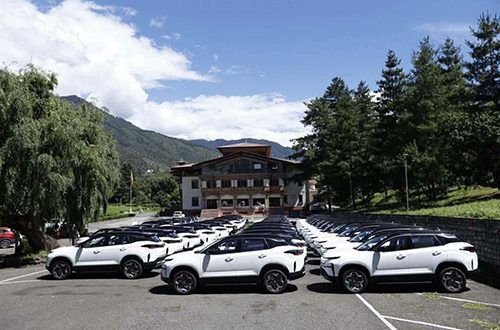
Bhutan is poised to save a staggering Nu 7.53 billion (bn) in fossil fuel import costs by 2030 as the government accelerates its transition toward electric mobility.
According to a comprehensive strategy report published by the Department of Energy and other key ministries, the government aims to increase electric vehicle (EV) penetration to 10 percent of the total vehicle population within the next six years.
This shift is expected to see the national EV fleet grow from 714 vehicles in 2025 to 16,718 units by 2030, significantly reducing the nation’s reliance on imported petroleum and strengthening its trade balance.
The economic justification for this rapid adoption is substantial, with the report highlighting a net financial gain of approximately Nu 3.77 bn after accounting for all infrastructure investments.
While the cumulative capital and operational expenditure for the charging network is estimated at Nu 3.75 bn, the massive reduction in fuel imports far outweighs these costs.
Even when considering the opportunity cost of Nu 111 million (mn) in foregone electricity exports and Nu 47 mn in additional winter import costs, it still expects a total net benefit exceeding Nu 3.6 bn.
This financial windfall underscores the strategic importance of EVs in Bhutan’s long-term energy security and environmental stewardship goals.
To support this influx of electric vehicles, Bhutan will undergo a massive infrastructure expansion, increasing the number of charging stations from the current 75 chargers at 40 locations to a total of 1,115 by 2030.
Following a global standard of one charger per 15 electric vehicles, the government plans to deploy high-capacity DC fast chargers at intervals of 50 to 100 kilometers along national highways to ensure seamless cross-country travel.
Urban centers will see an increase in Level 2 AC chargers at public parking lots, shopping centers, and office buildings.
Furthermore, for remote areas without grid access, the report recommends the exploration of solar-powered charging stations, which generate and store electricity locally to provide reliable service in off-grid locations.
The management of this nationwide network will see a significant institutional shift, as the Bhutan Power Corporation (BPC) is now mandated to take full ownership of the procurement, installation, and operation of EV charging services.
This move is intended to address current operational challenges, including a lack of trained maintenance personnel and difficulties in sourcing spare parts.
To protect these critical assets, the government intends to implement security measures such as CCTV surveillance at public stations to curb vandalism and misuse.
By consolidating these responsibilities under BPC, the government aims to create a more resilient and standardized charging ecosystem that can evolve with emerging technological trends.
Looking toward future sustainability, the government will continue to fund the infrastructure until 2030, after which a ‘pay-per-use’ model will be introduced to ensure cost recovery.
To manage the impact on the national grid, particularly during the winter months when power demand peaks, Bhutan will adopt dynamic pricing strategies.
This system will utilize smart meters to offer lower electricity rates during off-peak hours, incentivizing drivers to avoid charging during the ‘evening rush’.
Such demand-side management is seen as vital for maintaining grid stability while Bhutan continues its journey toward a carbon-neutral and energy-secure future.