The Bhutanese Leading the way.

The Chamgang Prison in Thimphu is currently operating at nearly 50% over capacity, with 653 inmates housed in a facility built to accommodate only 400. Despite efforts to address the overcrowding through skilling programs for further deployment OAP programs, the rising number of inmates continues to persist.
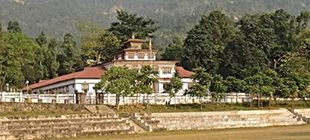
Chamgang is Bhutan’s largest prison facility. The country has a total of four prisons, including district prisons at Lungzor (Trashigang) and Rabuna (Wangduephodrang), and an underage facility at YDRC in Chukha, housing an additional 200 inmates. Total prison population stands at 853, with 653 inmates in Chamgang alone.

Meanwhile, 19 OAP sites currently accommodate 1,103 inmates across the country, including at religious institutions such as Chizhi Goenpa, Talakha Goenpa, Neyphu Goenpa, and the five Gyalsung project sites in Mongar, Wangdue, Gelephu, Samdrupjongkhar, and Samtse.
Senior Superintendent of Police (SSP) of Chamgang shared that while the prison continues to face pressure from increasing inmate numbers, measures are in place to support inmate reformation and relieve additional congestion through a carefully regulated Open Air Prison (OAP) and skills development initiatives.
He said that inmates are not transferred to OAPs merely to decongest the prison. “Inmates are evaluated based on conduct after completion of their 30% sentence and trained in various skills including masonry, carpentry, and welding before deployment”


A recent batch of 90 inmates received technical training supported by the PEMA Secretariat and the Ministry of Education and Skills Development (MoESD). These trained individuals were later deployed to various OAPs based on project needs.
Currently, 20 OAP sites are operational, including five Gyalsung project sites and one under the Royal Bhutan Police (RBP). Another round of skill training is planned for a new group of inmates to support upcoming projects.
SSP Chamgang shared that the prison follows a strict Standard Operating Procedure (SOP) for evaluating inmates before they are considered for OAP deployment. Upon admission, convicts are required to sign a remission form which allows for sentence reduction based on conduct. After serving 20% of their sentence, inmates are eligible for skilling programs, and after 30% completion, they may be considered for OAP deployment.
Previously, inmates had to complete 75% of their sentence to qualify for outside work, but with growing demand for skilled labor in national projects and the need to reduce overcrowding, this threshold was reduced.
Participation in OAP is not a right but a privilege, subject to conduct and the demand from OAP projects. “Even if an inmate qualifies, they are not sent unless there’s a need from the OAP site,” SSP clarified.
While working on these sites, inmates earn wages and experience a slightly more flexible environment, often with family contact, although security measures remain in place.
Inmates can be sent back to prison for any breach of OAP rules. Minor infractions lead to temporary recall, while major offenses result in court prosecution and loss of OAP eligibility.
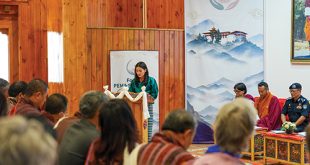
Chamgang also offers a nine-month substance use disorder (SUD) rehabilitation program supported by the PEMA Secretariat. Currently, 267 inmates are enrolled in SUD rehabilitation, housed in Blocks 2 and 3, while the remaining 350 inmates are distributed across other blocks, including one female block with 26 inmates.
The SUD program includes three phases, orientation and familiarization, skilling preparation, and skills training concluding in a conduct-based evaluation before inmates qualify for additional training for OAP.

Additionally, reformatory workshops as part of skilling are provided to the inmates for further skills development. This has provided opportunity for the prisoners to practically demonstrate their skills and earn at the same time. Even recently, during the 4th Made in Bhutan Exhibition and 2nd Watermelon Festival held at Thimphu’s Clock Tower Square on 22nd June 2025, handcrafted products by inmates were showcased and purchased by many people.