The Bhutanese Leading the way.

The hydropower sector is projected to create more than 50,000 jobs, achieve an installed capacity of 25,000 MW, and contribute 12–15 percent to the national GDP by 2050, as outlined in the 10X Economic Roadmap launched on 4th June.
According to the Economic Roadmap, the economic growth will be driven by three core sectors which are agriculture, hydropower, and tourism.
The roadmap outlines several key objectives for the hydropower sector. These include underpinning the energy security and promoting a clean energy mix to support the development of a green and sustainable economy.
It aims to provide a foundation for the growth of manufacturing and other emerging sectors by delivering affordable and competitive energy.
Another goal is to increase the expertise in hydropower technology, enabling the export of services to regional and international markets. Additionally, the sector is expected to power data and computing centres, which are increasingly in demand due to the rise of AI-driven industries.
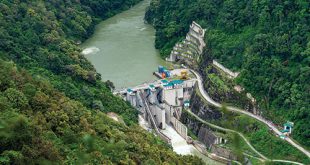
To accelerate hydropower generation, the government plans to develop large and mega hydropower projects to deliver at least 25,000 MW of installed capacity by 2050 through public and intergovernmental models, an initiative falling under the ownership of Druk Holding and Investments (DHI). It also aims to revise and implement power allocation frameworks to optimise industrial usage, an initiative under the Ministry of Energy and Natural Resources (MoENR). In addition, partnerships with environmental agencies will be strengthened to ensure sustainable practices are integrated into all hydropower and energy projects, which is a continuous initiative under MoENR and all relevant agencies.
For the development of expertise in hydropower and broader energy projects, the roadmap states the need to accelerate the development of specific capabilities in conducting feasibility studies, project management, and maintenance to support domestic projects and facilitate export into other markets. This is a goal under DHI. A research centre focused on next-generation technologies in energy and hydroelectricity will also be established, under the responsibility of DHI, MoENR, and all relevant agencies. Additionally, the roadmap includes a review of existing policies and the development of new mechanisms to attract domestic and international investors, increasing private sector participation in the hydroelectricity sector. This initiative falls under MoENR.
To capitalise on synergies with other sectors, the government will identify energy-intensive products and services that can be supported by the low-cost and renewable hydroelectricity, and develop corresponding manufacturing plans. This falls under the Ministry of Industry, Commerce and Employment (MoICE) and all relevant agencies. Moreover, hydropower will be integrated with other sectors such as agriculture, tourism, digital services, and municipalities to identify and drive synergies, including initiatives like smart agriculture.
The roadmap states that increased hydropower generation, combined with investments in alternative renewable energy sources such as solar, wind, and green hydrogen, will reinforce our carbon-negative status and improve energy reliability. Strategic partnerships and regional trade agreements, will help diversify our export markets, increasing revenues from energy and energy-enabled products and services sold to India, Bangladesh, and broader Southeast Asia.