The Bhutanese Leading the way.
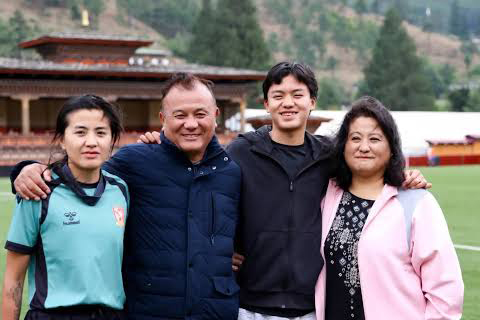
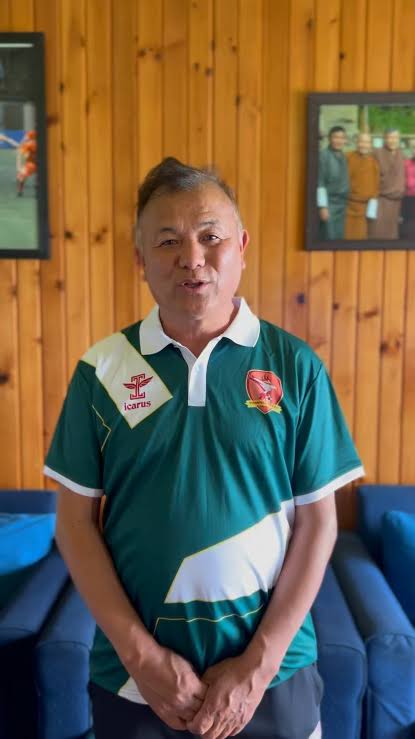
Hishey Tshering once hoped football would keep his children away from drugs and alcohol. He did not expect it to become their passion, or that keeping a football club alive would one day force him to sell his property to pay players.
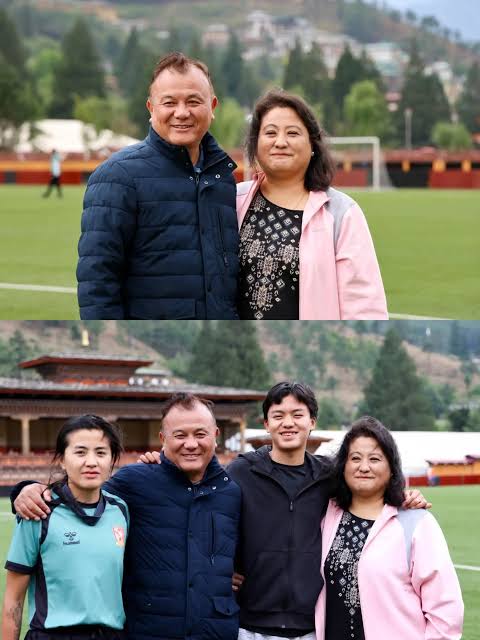
As President of Thimphu City Football Club, he has spent years investing his time and family savings in football. Three of his four children are now involved in the sport, including his daughter, Pema Choden Tshering, captain of Bhutan’s national women’s football team, and his elder son, who plays for the national team.
But the family’s football journey has come at a cost. Hishey says the club receives limited financial support compared with its expenses, leaving him to shoulder much of the burden.
“Last year, I had to sell property just to pay the players on time, and I was on the verge of giving up,” he said.
From Passion to Financial Pressure
Football was not always an expensive undertaking for Hishey. His involvement in football began around 2007 or 2008, when Kota Namgay, then coach of Druk Star, approached him to become the club’s president.
The arrangement was simple: Hishey would fund the team.
At the time, he said that an annual budget of about Nu 30,000 was enough to run the club. Players received little payment, around Nu 2,000 per player and the season was much shorter than it is today.
The financial demands grew as clubs became more professional. Players needed contracts and regular salaries, while longer competitions and the recruitment of foreign players raised costs.
“Today, running a football club has become a very expensive undertaking,” he said.
Hishey Tshering estimates that Thimphu City spends more than Nu 2 million (mn) during a season.
“The Bhutan Football Federation provides a preparation grant of Nu 300,000 and about Nu 70,000 for each away trip, but that the assistance falls short of the club’s needs,” he said.
Even traveling to Punakha, he said that it can cost more than the amount provided for a trip once accommodation and other expenses are considered.
The pressure nearly ended his involvement in football.
According to Hishey Tshering, an unexpected offer of financial help from a former tourism client helped keep Thimphu City operating for the 2026 season. The client, who had first visited Bhutan in 2008, offered to cover the club’s expenses for the season.
“That is the main reason Thimphu City is still operating, Otherwise, you might have heard the last of Thimphu City,” he said.
A Family Drawn into Football
Hishey Tshering’s commitment to football began with a desire to help young people. Coming from a large family, he worried about the risks young people faced, including drug and alcohol use. He wanted to give his children, nephews and nieces a reason to spend their time in sport.
The club also organized an awareness programme on drugs and alcohol.
He said that he invited counsellors and people who had recovered from addiction to speak to players, and that the sessions helped some of them change their habits.
His original plan for his own children was modest: football as a hobby, not a career.
“I initially wanted my children to play football as a hobby, so that it would help keep them away from harmful activities such as alcohol and drugs,” he said.
Instead, three of his four children have become involved in sport. His daughter has captained the national women’s team and, according to him, she works in football development as a FIFA regional consultant.
His elder son plays for the national team and went to Bangladesh to play professionally last year. His younger son, 16, studies at Bhutan Football Academy.
He says some people assume his children’s national-team selections are linked to his position in football. He rejects that suggestion, arguing that selection ultimately depends on ability.
“If you do not have the talent, you cannot succeed simply because someone supports you,” he said.
There is also a practical consequence for the family. Hishey Tshering runs Bhutan Birding and Heritage Travel, a tourism company specializing in birdwatching tours.
He had hoped his children would eventually help with the business. Football, however, has taken their interest elsewhere.
“I had hoped they would eventually pursue my tourism business and help me with the tour operations. Unfortunately, they have become so passionate about football that they have absolutely no interest in helping me with the business,” he said.
He says that his younger brother often jokes that he has drawn not only himself but also his children into a costly commitment.
Despite the financial strain, Hishey Tshering believes the value of football extends beyond competition.
He sees sport as supporting young people, promoting health and strengthening communities.
He wants policymakers to give sport greater priority in public investment, arguing that it should not be treated merely as a leisure activity.
“My key message to policymakers is this, please treat sports as a major economic activity,” he said.
For Hishey Tshering, that appeal comes from years of keeping a club afloat with personal resources, even as his own children build their lives around the game.
His family’s football journey began to keep young people on the right path.
Today, it is also a test of how much one family can sacrifice to keep a club and its players on the field.