The Bhutanese Leading the way.
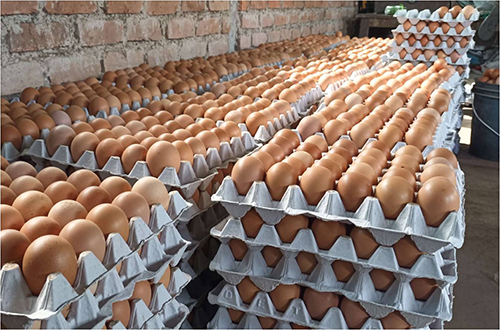
Bhutan expects to meet its national monthly egg demand by August 2026. This target depends on the current day-old chicks successfully reaching the laying stage.
Recent data shows a fluctuating production trend over the last few years. The country produced 84.85 million eggs in 2025, a decrease from 98.17 million in 2024.
Bhutanese consumers are paying the highest retail prices for eggs in South Asia at Nu 18 per egg, according to a new market study published by the Competition and Consumer Affairs Authority (CCAA).
The annual egg demand forecast is made based on population size, per-capita consumption patterns, and institutional requirements. Using Bhutan’s 2025 population of 784,043 and a minimum consumption benchmark of three eggs per person per week, the estimated baseline requirement is approximately 122.31 million eggs annually.
The Ministry of Agriculture and Livestock has set the annual requirement at 130.19 million eggs. Institutional needs, such as the One-Child-One-Egg initiative, add another 7.88 million eggs to the total.
To reach these goals, the government is changing how it distributes day-old chicks.
An official from the Ministry said, “The Ministry has adopted a more phased and demand-responsive approach to the distribution of day-old chicks rather than bulk releases.”
This shift aims to prevent the cycles of over-supply and under-supply seen in the past. Concentrated stocking previously caused market imbalances and price fluctuations.
An official from the Ministry said that production projections indicate that domestic egg production is expected to increase progressively and is likely to meet the country’s monthly demand by around July–August 2026, provided that the day-old chicks supplied to farms and farmers successfully reach the laying stage.
Support for poultry farmers is a key part of the 13th Five Year Plan. Small-scale producers now receive a subsidy of 30% to 40% on day-old chicks. The government also covers half of the premiums for the National Crop and Livestock Insurance Scheme.
This scheme protects farmers against disease outbreaks and natural calamities.
Additionally, veterinary medicines and vaccines are provided free of charge to reduce production costs.
Disease remains a significant challenge for the sector. Outbreaks are often linked to transboundary issues and a changing climate.
The Ministry is currently tracking disease pathways through routine surveillance, field investigations, and close collaboration with poultry farmers, including monitoring the movement of feed suppliers and utility vehicles. “The outbreak of diseases in the livestock sector is a pressing concern for the Ministry,” an official from the Ministry stated.
Strengthening biosecurity at the farm level is a top priority. The Department of Livestock provides technical guidance on cleaning and restricting farm visitors.
The official also mentioned that efforts have been made to improve market opportunities for poultry farmers through initiatives such as OCOE and the promotion of farmer cooperatives and producer groups, contributing to stronger market linkages, improved collective bargaining power, better access to markets, and enhancing farmers’ ability to negotiate more favourable prices.
However, small-scale farmers often struggle to implement these measures due to limited funds and the difficulty of changing long-established management practices. The government plans to continue targeted training to help these farmers become sensitized to key biosecurity measures and healthy practices to reduce diseases and mortality and improve productivity.
If production continues to strengthen through late 2026, a moderate surplus is expected. This surplus will act as a buffer to ensure market stability. The Department of Livestock said that it will continue to monitor stocking levels to maintain a balanced supply.