The Bhutanese Leading the way.
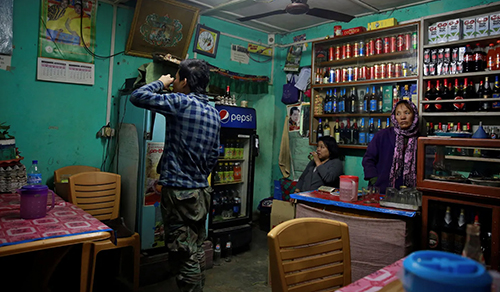
Bhutan has a growing alcohol crisis that is draining the country’s economy and overwhelming the health system.
According to the Health Minister, Tandin Wangchuk, the nation incurs an estimated annual loss of Nu 6.5 billion (bn) due to alcohol-related harm, which is equivalent to 2.6 percent of Bhutan’s Gross Domestic Product (GDP).
Citing internationally accepted costing models adapted to Bhutan’s national context, the Health Minister said Nu 2.5 bn is spent on direct costs such as healthcare, crime, and traffic accidents, while Nu 4 bn accounts for indirect losses like reduced productivity, disability, and premature deaths.
During the Meet-the-Press session, the Health Minister said, “These are not just mere figures, but they represent lives lost, families destabilized, and an increasing strain on our already stretched health resources.”
Alcoholic liver disease continues to be the leading cause of death in the country. The Ministry of Health (MoH) has also observed a near doubling of alcohol-related mental and behavioral disorders since 2019. In 2023 alone, alcohol contributed to around 10 percent of the 1,062 road traffic accidents recorded by the Royal Bhutan Police.
A hospital-based study at JDWNRH found that 37 percent of all injury cases tested positive for alcohol.
MoH is responding with a multi-pronged approach, emphasizing public education, integrating alcohol screening into health facilities, and supporting rehabilitation services in partnership with civil society organizations.
Detoxification services are already available in all district hospitals.
Efforts are also underway to restrict access to alcohol by controlling the number and operation hours of alcohol outlets, reintroducing dry days, and enforcing age restrictions through mandatory CID checks.
MoH is also proposing to lower the permissible blood alcohol concentration level for drivers from 0.08% to 0.05%.
In rural areas, where home-brewed alcohol is common, MoH is advocating for community-level guidelines and stronger regulation. It is also pushing for increased taxes on alcohol to reduce affordability and deter excessive consumption.
Recognizing the moral influence of religious institutions, the ministry is working closely with the Zhung Dratshang and Choedhey Lhentshog to spread health messages through rituals and community events like Moenlam Chhenmo.
Monks are being trained as health coordinators to educate people on the risks of alcohol and tobacco use.
Looking ahead, MoH plans to formulate a multisectoral action plan to build on lessons learned from the 2015–2020 framework. It also aims to strengthen alcohol-related policies, enhance early detection and treatment services, and collaborate with stakeholders such as BICMA to prohibit alcohol advertising, especially those targeting the youth.
The Health Minister said, “Our long-term approach is rooted in health equity, prevention, and collaboration.”