The Bhutanese Leading the way.
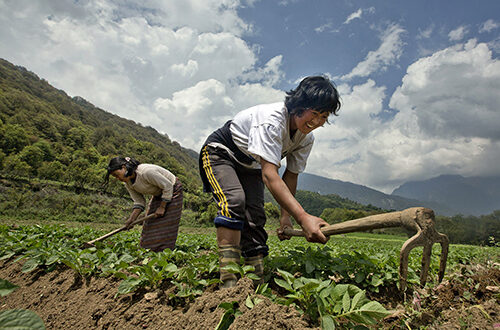
Bhutan is setting an ambitious course to transform agriculture into a climate-resilient and economically rewarding pillar of its economy. By 2035, the sector is expected to contribute Nu 70 billion (bn) to GDP, with annual agri-exports projected to reach Nu 6 bn by 2029. The vision aims to catalyze sustainable and inclusive growth by maximizing productivity, adding value to local produce, and expanding access to international markets, while also ensuring food security, job creation, and competitiveness.
The strategy outlines significant results by 2035, including a 50 percent increase in crop yields, post-harvest losses reduced to below 10 percent, and a 70 percent reduction in vegetable imports to strengthen self-sufficiency. More than 20 agro-processing units are planned, generating over 5,000 jobs and ensuring that 30 percent of exports come from value-added products.
Bhutan also plans to expand its agri-exports to at least five premium markets, targeting destinations such as the European Union, Singapore, and Japan. An official from the Ministry of Agriculture and Livestock (MoAL) stated, “We are determined to make agriculture not just about food security but about creating opportunities, income, and pride for farmers and youth.”
The country’s strengths lie in its “Brand Bhutan” image, carbon-negative status, and strong organic potential rooted in traditional knowledge. Growing global demand for organic and eco-friendly products presents opportunities for diversification, while agri-tourism, youth engagement, and climate-smart farming practices are seen as areas with huge potential.
However, the road ahead is not without challenges. Limited land access for commercial farming, weak institutional support, shortage of skilled workers, and regulatory complexities continue to constrain the sector. Import competition, rural-to-urban migration, and climate risks such as human-wildlife conflict and environmental degradation also threaten progress.
To address these issues, the government has proposed a comprehensive policy and regulatory overhaul. This involves reviewing laws governing agriculture, food safety, and trade to close gaps and inefficiencies, while upgrading agro-processing standards to meet international food safety requirements. Foreign Direct Investment (FDI) rules will also be streamlined to attract responsible investors with capital, technology, and global market linkages, seen as critical for industrial transformation.
Central to the strategy is the engagement of young people in agriculture through innovation, agri-tech, and entrepreneurship.
Officials emphasize that the coming decade will be decisive. If Bhutan can overcome institutional gaps, build on its organic reputation, and diversify markets, agriculture will not only safeguard food systems, but also drive economic growth and rural prosperity.