The Bhutanese Leading the way.
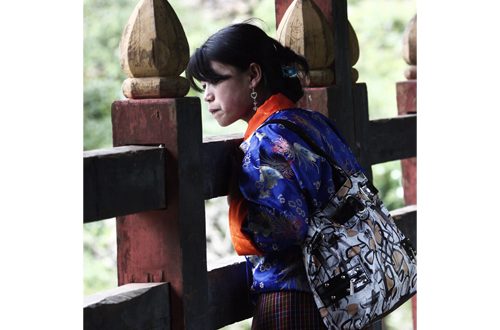
Bhutan continues to face persistent gender gaps in employment, with women underrepresented in the formal labor market and concentrated in low-quality and unpaid work, according to the latest Bhutan Development Update by the World Bank.
Women remain significantly behind men in labor force participation. Bhutan’s female labor force participation stood at 55.8 percent in Q4 2025, compared with 72.7 percent for men according to the National Statistics Bureau.
Only 24 percent of women are engaged in paid work, compared with 43.5 percent of men. The gender pay gap also remains substantial, with women earning approximately 27 percent less than men on average.
Employment patterns further highlight disparities. Women are disproportionately engaged in agriculture, accounting for 57.3 percent of employed women compared with 38.8 percent of men. They are also more likely to be in unpaid family contributing work, at 41.1 percent versus 23.0 percent for men. Female youth unemployment reached 26.5 percent in Q4 2025, up from 21.2 percent a year earlier, and significantly higher than the male rate of 15.1 percent.
The female inactivity rate remains high at 44.2 percent, driven primarily by household and family responsibilities, according to NSB. An estimated 81.8 percent of employed women are in vulnerable employment, as noted by the World Bank Gender Data Portal 2023.
Emigration has also emerged as an alternative avenue for employment, with women accounting for 52.9 percent of current emigrants as per World Bank 2025 records.
Barriers to quality employment persist. Inadequate childcare, workplace harassment, and limited opportunities in higher-paying jobs and entrepreneurship continue to restrict women’s access to better work. Family duties, followed by education and training, are the main reasons women remain outside the labor force.
Access to childcare remains limited despite some progress.
As of 2024, only 11 workplace crèches were operational nationwide. While access to Early Childhood Care and Development (ECCD) centers has improved, reaching 38.6 percent of children aged 3–5 years (up from 9 percent in 2014), the majority of these enrollments among the 574 ECCD centers are concentrated in Thimphu Throm, as per the Annual Education Statistics Report 2024. Formal childcare services for children aged 0–3 years remain largely unavailable, with over 60 percent of young children still lacking formal care.
Furthermore, facilitator-to-child ratio, that is the number of children per caregiver in a childcare setting, falls below global average. Expansion of quality childcare is critical to reducing unpaid household care burden that limits women’s participation in paid work.
Workplace harassment is another concern. Although pervasive, it remains severely underreported. An assessment conducted by NCWC in 2022 found that 9 to 12 percent of women at major construction sites experienced sexual harassment. The Labour and Employment Act, 2007 does not fully address psychological, verbal, or discriminatory harassment, a gap the proposed legislative amendments seek to close.