The Bhutanese Leading the way.
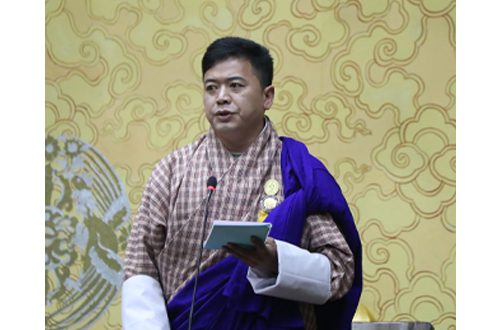
The Member of Parliament (MP) Tashi Tenzin of Radhi-Sakteng constituency raised concerns in Parliament over the rising prices of goods despite the introduction of the Goods and Services Tax (GST), which was expected to reduce costs for consumers.
The MP said several products that were previously taxed between 10 and 30 percent under the Bhutan Sales Tax (BST) system had not become cheaper after GST implementation. He cited examples such as noodles, bread, sweet biscuits, juice products, and iced coffee, whose prices had either remained unchanged or increased.
According to the concerns raised, bread prices had increased by Nu 5 to 10, while juice products and iced coffee had also become more expensive despite the removal of high excise duties. Retailers reportedly informed that some agents and importers had not reduced prices of finished goods or raw materials, leading to suspicions that GST benefits were not being passed on to consumers.
Responding to the issue, the Minister of Industry, Commerce and Employment, Namgyal Dorji, acknowledged that while GST was expected to lower prices for many goods, market prices in several cases had remained the same or increased.
Lyonpo Namgyal Dorji explained that Bhutan follows a market-based economic system where prices are largely determined by import costs, transportation expenses, fuel prices, exchange rate fluctuations, and operational costs across supply chains. He noted that the government directly regulates prices only in limited sectors such as fuel and selected essential commodities.
However, the ministry and relevant agencies have carried out assessments and market studies to monitor GST’s impact on prices. Findings reportedly showed mixed results, with some suppliers maintaining stable prices while others faced higher source and logistics costs. The Minister also acknowledged that in some cases tax reductions were not reflected in retail prices, indicating that consumers may not have fully benefited from GST reforms.
On concerns about monopolistic practices, Lyonpo clarified that exclusive distributorship arrangements in Bhutan’s small market do not automatically amount to monopolies if substitute products remain available to consumers. Nevertheless, he said the government remained alert to unfair market practices.
The Competition and Consumer Affairs Authority (CCAA) is currently operating a Price Watch Program in major commercial centers including Thimphu, Phuentsholing, Gelephu, Mongar, Samdrup Jongkhar, and Trongsa. Prices of essential commodities are being monitored and publicly shared to improve transparency and consumer awareness.
Lyonpo further stated that regular market surveillance is being conducted to monitor compliance related to product labelling, pricing disclosures, and fair trade practices. Sector-specific studies are also underway to identify supply chain inefficiencies and cost drivers contributing to higher retail prices.
Under the current legal framework, enforcement action can only be taken where there is evidence of unlawful conduct such as collusion, cartel behaviour, fraudulent practices, or violations of consumer protection laws. High prices alone do not constitute a legal offence in a market economy.
To strengthen oversight, the government has finalised the Competition Bill, which would establish mechanisms to investigate and penalize anti-competitive practices such as price fixing, abuse of dominant market position, cartel arrangements, and anti-competitive mergers. The Bill is being consolidated with amendments to the Consumer Protection Act into a single legislative framework, which is expected to be submitted during the upcoming Winter Session.
The government also plans to strengthen the institutional capacity of the CCAA to expand the Price Watch Programme, and develop a mobile application to provide consumers with real-time comparative price information on key commodities.
The ministry said it would continue working with the Ministry of Finance to address GST implementation issues, including unintended tax effects that may increase retail prices. According to the Minister, the government’s approach is aimed at ensuring consumer welfare through fair competition, efficient supply chains, market transparency, and informed consumers rather than broad administrative price controls.
MP for Sergithang constituency Lhakpa Tshering Tamang said that GST will be well adjusted and nice in the future, but currently, the wholesalers and retailers do not understand the regime and keep on adding 5 percent GST, which ultimately falls on the end consumers, and they get frustrated.
To this, Lyonpo Namgyal Dorji said, “CCAA and customs, after discussion, have started end-to-end monitoring from the moment the commodities are imported till it reaches the distribution point.”
The Minister of Finance Lekey Dorji said, “Since GST is a comprehensive regime, it is taking time to be stabilised. We have spread awareness with the help of the media and the eight regional RRCOs, but the focus was mainly on registering for GST. The RRCOs have called around 3,700 businesses falling under the GST regime and have done awareness programs as well.”
Lyonpo Lekey Dorji also said that under the Consumer Protection Act of Bhutan businesses must provide invoices to the consumers and as consumers we should ask for the invoice, and as business owners, we should provide invoice as well.
The Opposition Leader, Dasho Pema Chewang, said, “The problem is in the implementation of the GST regime and for implementation to go smoothly, we need to spread awareness. As the implementor is the Department of Revenue and Customs, and DRC is under the Ministry of Finance, the ministry should have disbursed the budget for awareness programs for a better understanding of the regime. I am saying this not to pick a flaw but because the people who work under the above-mentioned agencies have raised this issue to us.”