The Bhutanese Leading the way.
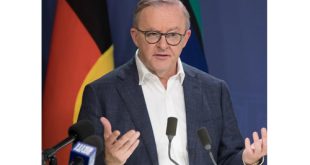
On 5 June 2026, Prime Minister Dasho Tshering Tobgay, while announcing the extension of the ESP Education Loan application window until 30 June, said, “We will support those who meet the requirements, as it is meant for those coming from humble families.”
These might be among the most expensive words ever spoken by a Prime Minister, as more than 1,000 applicants have applied for over Nu 1 billion (bn) in education loans.
This is despite the fact that the actual amount available as of 2 June was only Nu 168.61 million (mn).
As of 20 June, there were 1,004 applicants, with the total loan amount requested reaching Nu 934 mn. According to a Bank of Bhutan (BoB) projection, at the current rate, loan demand is expected to reach between Nu 1.1 bn and Nu 1.2 bn by 30 June.
Another issue is that, according to bank figures, around 95% of the applicants are eligible under the condition that the combined annual income of their parents is less than Nu 500,000.
All applicants were required to produce certificates from the Department of Revenue and Customs (DRC) validating this.
In fact, around 30% to 40% of those applying have reported nil income for both their father and mother, indicating that they are farmers.
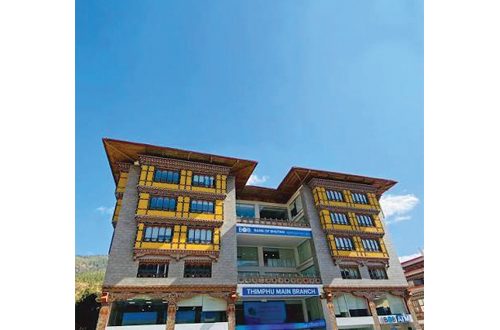
Applicants have applied from all 20 dzongkhags through the 37 BoB branches across the country.
The big challenge for the government is how to come up with the Nu 1 bn needed to fund this ESP programme.
This is because the Nu 15 bn ESP had already been scaled back after Nu 2.5 bn was spent on fuel price support, while substantial amounts had already been allocated by the various agencies that received ESP funding.
Another problem is that the government was not anticipating such a huge demand for the loans.
Earlier, a senior official had said that resources would be reallocated from the ESP and that additional funding would be provided. The official said that, given that 457 applicants had received Nu 333.72 mn in August 2025, the government anticipated that the additional funding required would be around that amount.
However, the latest figures show that loan demand is three times higher than what the government had anticipated.
An official said that the government will now assess how much additional funding will have to be injected after completing its assessment.
The BoB will submit its report after the application deadline to the ESP Secretariat and the ESP Steering Committee. However, if funding has to come from outside the ESP, then the Cabinet will have to become involved.
Background
The original allocation for the ESP Education Fund was Nu 600 million (mn).
The original plan was to allocate Nu 150 mn annually over four years. However, during the first intake in 2025 itself, demand was so high that the government instructed the BoB not to limit the number of applicants.
The scheme was launched on 23 July 2025 with a deadline at the end of August for the 2025 summer intake. During that period, 457 applicants received loans totalling Nu 333.72 mn.
A second announcement was made in January 2026, with applications accepted until February. During that intake, 110 applicants received Nu 97.67 mn.
This meant that Nu 431.39 mn had already been committed under the July 2025 and February 2026 intakes, leaving a balance of Nu 168.61 mn available for the June 2026 summer intake.
During the first two intakes, virtually all applicants who met the eligibility criteria received their loans.
However, challenges emerged during the third intake because only Nu 168.61 mn remained available.
At the same time, word had spread about the success of previous applicants, and many prospective students had prepared to submit their applications both online and in person.
When applications opened on 2 June 2026, the BoB received 253 loan applications between 9 a.m. and 5 p.m., amounting to Nu 266.08 mn—well above the available Nu 168.61 mn. The bank decided to close the application window and seek directions on how to deal with the additional applications received on the first day.
There was soon a hue and cry, as many people questioned why the application window had been closed when the original announcement had stated that it would remain open until 30 June. Various allegations also began circulating online.
In response, the government decided that the BoB would reopen the ESP Education Loan application window until 30 June 2026, as originally announced.
Eligibility
The only option for the government will be to either increase the funds or reduce the numbers based on the eligibility criteria.
To be eligible for loan, applicants must have completed Class 12 and be enrolled in undergraduate or TVET programmes; be full-time, in-person students admitted from July 2025 onward; be under 25 years of age; have a household income below Nu. 500,000 annually; and not hold any full scholarship.
Household Income is computed as the total combined income earned by both parents (or legal guardians) in a year. For salaried parents verified through PIT (Total Adjusted Gross Income) and for business through BIT (Net Taxable Income).
The maximum loan available is Nu 1.5 mn. The interest rate is 4% per annum and the loan tenure is 10 years excluding the gestation period. The gestation period is Course Duration plus 1 year.
The loan will cover both tuition fee for the course and living expenses.
The Bank will release the tuition fee directly to the colleges or institute and 50% as living expenses will be disbursed to clients’ CASA account.
The loan can be used within Bhutan and India only.
Even if you already started your course in July 2025, you can still apply if you fulfill the eligibility criteria. If your loan application is approved, the Bank will reimburse the tuition fees if you have already paid for the first semester, provided you submit the official receipt or proof of payment along with your application.
If your loan gets approved but you decide to defer the start of your course, you must immediately inform the Bank.
A guarantor for this scheme is mandatory. The applicant’s parents or legal guardian will act as the guarantor.
If the parents or guardians have a poor credit record, the applicant is ineligible for the loan.
Repayment begins after graduation plus 1 additional year to allow for job search. For example, if you’re pursuing a 4-year course, your repayment starts in the 6th year. This gestation period ensures that you are not burdened while studying or immediately after graduation.
If a student discontinues the course midway through a semester, the student will be required to repay the loan amount disbursed for the entire semester immediately.
If the student fails a semester, the bank will not finance that particular semester. However, the loan will be available for the following semesters once the student continues studies.
Only enrollment from July 2025 and hereafter will be eligible for the loan.