The Bhutanese Leading the way.
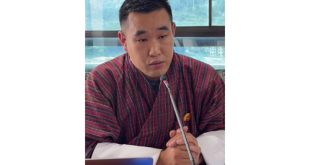
In response to a question on what the private sector can do the Minister of Industry, Commerce and Employment (MoICE) Namgyal Dorji stated that meaningful economic change cannot come from government reforms alone, stressing that the private sector must also adapt, take greater responsibility and play a stronger role in driving growth.
The minister said the government must continue simplifying regulations, removing unnecessary barriers and making it easier and more predictable to do business. However, it said reforms cannot be one-sided, and businesses seeking fewer regulations must also demonstrate greater professionalism, compliance and accountability.
Lyonpo said this approach is central to His Majesty’s vision of a Trust Economy, where the government trusts businesses to operate responsibly while businesses have confidence that the government will be fair, predictable and efficient. The minister also called for greater ambition from Bhutanese businesses, particularly given the country’s small domestic market.
“In a small domestic market, we cannot keep replicating the same businesses,” the minister said, stressing the need for entrepreneurs to innovate, improve productivity, invest in technology and skills, take calculated risks and increasingly look beyond Bhutan for markets. While the government has a role in creating an enabling environment for businesses, the minister said the private sector ultimately has to invest, compete and create jobs.
The minister said stronger government reforms combined with greater private-sector participation could make trust a competitive advantage for Bhutan. He said the responsibility for creating a stronger business environment must therefore be shared between the government and the private sector, with reforms on one side matched by greater responsibility and ambition on the other.