The Bhutanese Leading the way.
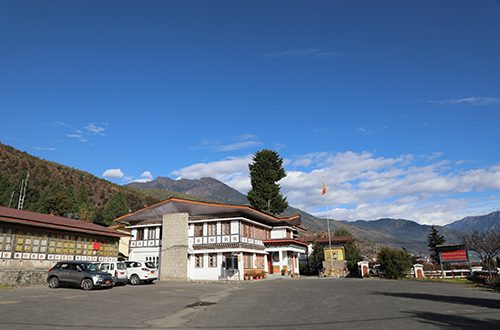
Only 10 vacancies for B.Ed Primary Dzongkha graduates have been announced for the Bhutan Civil Service Examination (BCSE) 2026, despite 69 students graduating from the program this year.
The Education Minister, Lyonpo Yeezang De Thapa, said the number of vacancies is determined by the actual requirement for teachers in the education system, and is not linked to the number of graduates produced by colleges.
“The 10 Dzongkha vacancies announced for BCSE 2026 represent the number of additional Dzongkha teachers required after taking into account the existing workforce and measures such as deployment, transfer and rationalization,” the Education Minister said.
She said teacher requirements are determined through the Teacher Requirement Exercise (TRE), which considers student enrolment, the number of classes and sections, curriculum and subject requirements, existing teacher strength, attrition, workload and the distribution of teachers across schools.
Lyonpo added that completing a B.Ed qualification does not guarantee appointment to the civil service. “A B.Ed qualification qualifies a person to compete for a teaching position. It does not create an entitlement to a government job. The government recruits teachers based on the needs of the education system, not on the number of graduates produced each year,” she said.
Teacher requirements can also change during the academic year itself, due to resignations, transfers, extraordinary leave and other staffing movements. Gaps that arise are addressed through redeployment and, where necessary, contract recruitment. The ministry said it is not practical or sustainable to maintain standby teachers for every vacancy that may arise, and remaining gaps are addressed through subsequent recruitment and redeployment exercises.
On the intake of around 70 students into the B.Ed Primary Dzongkha program at Paro College of Education in previous years, the ministry said this figure is not based on an annual teacher requirement or a requisition from the Ministry. Colleges instead determine their intake based on their own admission policies, programme capacity and institutional requirements.
Lyonpo explained that requirements can shift significantly over the four years it takes to complete a B.Ed program, due to changes in student enrolment, curriculum, teacher strength and attrition. “Therefore, the number of students admitted to a B.Ed program in any given year cannot be directly matched with the number of teaching vacancies available four years later,” she said, adding that an intake of around 70 students should not be interpreted as 70 government teaching vacancies, or as a commitment by the government to recruit the same number upon graduation.
For graduates who are not selected in the current recruitment cycle, the ministry said they can pursue opportunities in private schools and other education-related institutions, or compete for government positions in subsequent recruitment cycles, subject to the requirements and selection procedures in place at the time.
According to Lyonpo, the ministry will continue to work with dzongkhags and thromdes to plan teacher-training intake in line with the projected requirements of the education system.