The Bhutanese Leading the way.
Recent data from the National Water Resources Inventory Report has laid bare a growing environmental challenge in Western Bhutan, revealing that multiple surface-water sources in Paro and Thimphu are either drying up or showing severe signs of depletion.
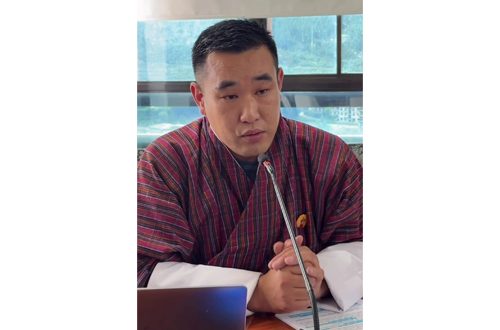
During the 31st Meet-the-Press session, the Ministry of Energy and Natural Resources (MoENR) outlined targeted interventions, emphasizing that the data provides a crucial roadmap for localized climate resilience and spring revival.
According to the inventory, out of 967 assessed surface-water sources across the two dzongkhags, Paro accounts for a disproportionate share of the decline. The dzongkhag recorded 16 completely dried-up sources and another 117 in the process of drying.
Targeted interventions and nature-based solutions
Detailing the government’s response, the MoENR noted that comprehensive hydrogeological assessments have already mapped approximately 7,683 hectares of potential recharge areas in degraded sub-watersheds across Dogar, Lamgong, Wangchang, Tsento, and Shaba gewogs in Paro.
“The findings from the water resources inventory are concerning, but they also give us a much better understanding of where action is needed,” the MoENR stated during the briefing. “The Department of Water is already taking several measures to protect and revive vulnerable water sources,” the ministry added.
To combat the decline, approximately Nu 7.1 million (mn) has been secured through the Enhancing Climate Resilience of the Urban Landscapes and Communities (ECRUL) Project. These funds will support nature-based solutions aimed at reviving drying springs, rolling out initially in selected areas of Dogar and Lamgong gewogs during the current financial year.
Complementing the physical restoration works, roughly Nu 1 mn has been mobilized via the Adaptation Fund Project and ECRUL to drive community-centric awareness programs, watershed management education, and technical training on spring revival techniques.
Strengthening community ownership
A central pillar of the ministry’s strategy involves shifting long-term maintenance and conservation responsibilities directly to local water users. The government is actively promoting the formation of Water User Associations (WUAs) to ensure community-led upkeep of water supply systems and localized watershed protection. Initial WUA formations have already commenced in Balakha and Dragyepangtsho under the Adaptation Fund Project.
Expanding nationwide assessments
Looking beyond Paro and Thimphu, the ministry confirmed that water resource inventories are scaling up nationally. Draft reports for a subsequent inventory covering four additional dzongkhags (Samtse, Sarpang, Tsirang, and Dagana) were completed over the 2025–2026 financial year.
Furthermore, funding has been secured to complete inventories across the remaining 14 dzongkhags within the current (2026–2027) financial year. Officials hope that comprehensive national data will pre-emptively guide mitigation frameworks, safeguarding rural livelihoods, agriculture, and drinking water security against mounting climate pressures.