The Bhutanese Leading the way.
Bhutan has no psychiatrist specialised in old-age mental health, even as the country’s ageing population is increasing and older persons account for a disproportionate share of depression and dementia cases.
Presenting on “Caring for Bhutan’s Older Persons” at the Fourth PEMA Symposium, Dr Sonam Wangchuk, Psychiatrist, Department of Psychiatry, JDWNRH, said Bhutan has only eight psychiatrists serving the entire population, one specialised psychiatric center at JDWNRH.
However, Bhutan has no psychiatrist specialized in old-age psychiatry, even though older adults are over-represented in mental health services.
In 2025, JDWNRH saw 2,230 patients aged 65 and above, accounting for 13 percent of all psychiatry patients, despite this age group making up only 6 percent of the population. Of these patients, 54 percent had depression, 19 percent had anxiety and 7 percent had dementia. 4 in 10 cases were associated with loss, loneliness and illness.
According to Dr Sonam, “Dementia is six times more common among older patients, 6.8 percent versus 1.1 percent overall.” Nationally, 6,449 anxiety and depression cases were recorded in 2023.
The vulnerabilities behind the numbers are stark.
Citing NSB and UNFPA data, Dr Sonam said the share of people aged 65 and above is projected to rise from 4.7 percent in 2005, or 29,745 people, to 13.4 percent by 2047, or 118,650 people.
The number of people aged 80 and above is expected to grow by 404 percent.
Old-age dependency is also projected to increase from one older person for every 11 working-age adults in 2017 to one for every five by 2047, while the median age is expected to reach 40.2 years.
His presentation also highlighted that difficulty with self-care rises sharply with age, from 6.8 percent among those aged 60 to 69 to 30.9 percent among those aged 80 and above.
About 20 percent of older persons live alone or only with a spouse, while 19.8 percent are widowed. The proportion is higher among older women, at 27.6 percent. Older persons also report almost twice the sickness and hospitalization rates of the general population.
“Isolation, widowhood, and rising self-care difficulty are established risk factors for depression and cognitive decline,” he said.
To address the specialist gap, Bhutan had to bring in external expertise.
The Bhutan Old Age Psychiatry Educational Program (BOAPEP), a charity-run webinar series launched in 2023, was co-organised by JDWNRH and KGUMSB in Bhutan, BCUHB in the UK and the Malaysian Psychiatric Association. It introduced old-age psychiatry training to Bhutan for the first time.
The demand for such training was also evident. The BOAPEP pilot recorded 399 attendances across seven sessions, averaging 57 participants per session, with participants from three countries.
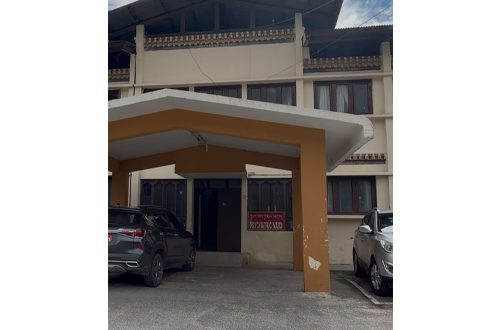
On the ground, the need for specialized care is already visible at Goensho Tshamkhang in Wangsisina, Bhutan’s only residential home for elderly citizens without family support. The home was established on 24th July 2018 as a His Majesty’s People’s Project.
The home currently houses 54 residents against a capacity of 76, with many living with physical and mental health conditions. About 30 percent have some form of mental health condition, while another 30 percent are fully or partially bedridden.
The JDWNRH Psychiatry Team began regular visits to the home on 16th May 2025.
Although the number of residents has fallen from 59 in May 2025 to 54 in October 2026, the care burden has not decreased. The facility has 10 staff members, including only three caregivers, meaning one caregiver is responsible for about 18 residents.
“No new staff have been added since May 2025,” Dr Sonam said.
The psychiatry team has provided care through a broader, system-based approach. Around 15 residents were individually reviewed, while group sessions were conducted for all residents and medicines were provided where required.
Regular counselling was provided to residents, alongside emotional support for staff. The team also provided on-site guidance on behavioural management and psychosocial care planning, integrating these practices into daily routines.
According to Dr Sonam, the impact is already visible. “Residents have demonstrated clear and sustained improvement, better mood, improved sleep, increased social interaction,” he said.
The team also co-developed a structured day-care program running from 6 am to 9 pm, based on five pillars: Move, Connect, Think, Contribute and Reflect.
In April 2026, Kidu Medical Service formally requested monthly multidisciplinary visits. The model now includes a psychiatrist, counsellor and physiotherapist.
For capacity building, two of the three caregivers are enrolled in a six-month certified elderly-care course, while the Royal Society for Senior Citizens has conducted a three-day elderly-care training program for staff.
However, significant challenges remain.
19 residents are fully or partially bedridden and require assistance with feeding, hygiene and repositioning. The care burden continues to rise as existing residents pass away and new bedridden residents are admitted.
Dr Sonam said bedridden residents have limited outdoor exposure and stimulation because of staffing constraints. Transport also remains a major barrier to volunteer engagement, despite interest from students.
Thus, for 2026-2027, the work plan until March 2027 will focus on two areas.
The first is strengthening geriatric care services, including a structured day-care program, monthly psychiatry and physiotherapy visits, an outing to Buddha Point, and mental health and fall-risk screening every three months from December.
The second is capacity building in transfers, positioning and behavioural support, self-care and burnout prevention, infection control, and old-age mental health and dementia.
Dr Sonam said the way forward is to establish national targets for old-age mental health, aligned with the National Mental Health Strategy 1.0 and led by the PEMA Secretariat.
The targets should focus on depression and dementia screening, trained caregivers, access to psychiatry, counselling and physiotherapy, and home- and community-based support.
He proposed bringing together agencies including the PEMA Secretariat, Ministry of Health, JDWNRH, KGUMSB, His Majesty’s Kidu Medical Service and the Royal Society for Senior Citizens, while drawing on international expertise from BOAPEP partners in the UK and Malaysia, the Royal College of Psychiatrists network and the WHO Decade of Healthy Ageing 2021-2030.
For Bhutan, the issue is no longer simply whether the country is ageing. The figures suggest that the health system must prepare for a population that will need substantially more mental health and long-term care as it grows older.