The Bhutanese Leading the way.
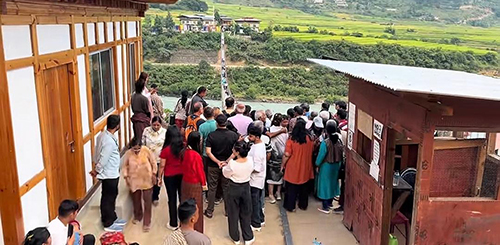
Kuenphen Bridge, popularly known as the Suspension Bridge in Dzomi Gewog under Punakha, is increasingly drawing large numbers of tourists, with the bridge often becoming crowded as visitors gather to cross and experience the popular attraction.
The growing tourist presence has brought benefits to the local community, with visitors contributing to economic activities in the gewog. Local businesses and residents have opportunities to earn from the increasing flow of tourists, particularly through the sale of local products, food and other services.
However, the growing number of visitors has also raised concerns among the community about the safety of the bridge, particularly when large groups gather on the bridge at the same time. The suspension bridge has become a popular attraction for tourists visiting Dzomi, but the increasing footfall has raised questions about whether the existing infrastructure and safety arrangements are adequate to accommodate the growing number of visitors.
Community members are concerned that overcrowding could place additional pressure on the bridge and create difficulties for people trying to move across it, particularly during peak periods when groups of tourists arrive at the same time. The concern is not necessarily about tourism itself, as residents recognize the economic opportunities created by the growing number of visitors. Rather, the increasing popularity of the bridge has highlighted the need to ensure that tourism growth does not compromise the safety of visitors or the local community.
With the bridge becoming an increasingly recognized attraction, there are also concerns about crowd management, visitor behaviours and the need for proper safety measures. Clear guidance on the number of people allowed on the bridge at one time, appropriate visitor flow and regular inspection of the structure could help address some of these concerns.
It has been more than two years since the De-suung Headquarters allocated four DeSuups to manage the Suspension Bridge. DeSuup Tashi, who is stationed at the bridge, said the four DeSuups take turns to manage the area depending on the number of visitors. However, when the number of people increases, particularly during busy periods, all four DeSuups have to be on duty at the same time to manage the crowd.
She said the number of visitors includes both tourists and local guests, making crowd management important, especially when large groups arrive at the bridge. According to her, tourists are allowed to cross the bridge in turns to avoid overcrowding and maintain a steady flow of people. The DeSuups also monitor the movement of visitors and manage the crowd based on the situation at the site.
“Sometimes all four of us have to be on duty at the same time because it depends on the number of people and tourists visiting the bridge,” she said.
She said the turn-by-turn system is followed for tourists to prevent too many people from gathering on the bridge at once.
With the bridge attracting an increasing number of visitors, the role of the DeSuups has become important in maintaining order and ensuring that visitors follow the safety arrangements while crossing the bridge. Their presence also helps manage the movement of tourists during periods when the bridge becomes crowded.
The growing number of visitors has brought economic opportunities to the local community, but the increasing footfall has also made proper visitor management necessary to ensure the safety of both tourists and local residents.
Wangchuk, a local resident who runs a grocery shop in the area, said around 85 percent of local businesses depend on tourists for their income. He said most of the visitors are from India and Bangladesh, and the increasing number of tourists has provided a boost to businesses in the area. According to him, the growing tourist footfall has created more opportunities for local shops and other businesses to earn from visitors. However, he said the Kuenphen Bridge is important not only as a tourist attraction but also as a vital crossing for local residents who use it on a daily basis.
“The growing number of tourists will definitely benefit local businesses, but the question is, what will happen to the bridge if the number of visitors continues to increase?” he asked.
He said the community welcomes the economic benefits brought by tourism, but there are concerns about the increasing pressure on the bridge. Since the bridge is used regularly by both tourists and local residents, he said its safety and condition should be given equal importance as visitor numbers continue to grow.
He added that tourism could provide a significant source of income for the local community if the growing number of visitors is managed properly. At the same time, measures should be put in place to ensure that the bridge can safely accommodate both tourists and residents without affecting its long-term use. For local businesses, the increase in tourist arrivals is a welcome development. However, residents believe that the economic benefits of tourism should go hand in hand with proper management and safety measures to protect the bridge, which remains an important part of their daily lives.
The situation also raises the broader question of whether tourist infrastructure in rural areas is keeping pace with the rapid growth in visitor numbers. As more tourists seek experiences beyond Bhutan’s traditional tourist destinations, attractions such as the Suspension Bridge are likely to see greater visitor pressure.
Dawa Tashi, Gup of Dzomi Gewog, said the growing popularity of the bridge could benefit local businesses and create opportunities for the community, but its safety and sustainability should also be ensured. He said proper planning and visitor management are important as tourist numbers increase, while the support of the Desuups in managing visitors has allowed the gewog to focus on other development works. He added that tourism has created new economic opportunities for the community, but the bridge should remain safe and accessible for both tourists and local residents.