The Bhutanese Leading the way.
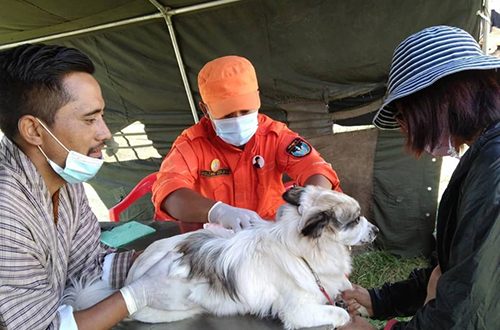
Bhutan has become the first country in the WHO South-East Asia Region to have the elimination of dog-transmitted rabies validated as a public health achievement, marking a major milestone in the country’s long-running efforts to prevent rabies deaths.
The achievement comes after more than a decade of work involving human and animal health agencies, Local Governments (LGs), communities and De-suung volunteers, with dog vaccination, population management, surveillance and timely treatment forming key parts of the effort.
Rabies remains one of the deadliest infectious diseases. Once clinical symptoms appear, the disease is almost always fatal. However, deaths can be prevented if measures are taken before the virus reaches the central nervous system, including vaccinating dogs and providing prompt post-exposure prophylaxis (PEP) to people exposed to the virus.
Bhutan’s progress has been driven by a One Health approach, which recognises the links between human, animal and environmental health. This has brought health and veterinary authorities together in surveillance, planning and response.
When a suspected rabies case is reported, the two sectors work together to identify people who may have been exposed and, when required, conduct joint field investigations.
Dr Nilesh Buddha, Officer-in-Charge of WHO South-East Asia Region, said Bhutan’s experience shows that eliminating dog-mediated human rabies is achievable when national leadership, coordinated action and communities work towards the same goal.
He particularly highlighted the role of health workers, veterinary professionals and De-suung volunteers in carrying out dog vaccination, dog population management and awareness activities across the country.
“Bhutan’s achievement offers an important example for other countries in the Region,” he said.
The progress is reflected in Bhutan’s human rabies record, with no human deaths from dog-mediated rabies reported since June 2023.
WHO’s validation followed a two-stage assessment by a regional Dossier Review Group, convened with support from the World Organisation for Animal Health (WOAH). The review first examined Bhutan’s submitted evidence before a field mission was conducted from 17th to 22nd August 2026.
During the mission, the team visited health facilities and laboratories, examined programme records and information systems, visited the Bhutan-India border area and met officials and other stakeholders involved in rabies control.
The Health Minister Tandin Wangchuk described the validation as a proud and historic moment for Bhutan, linking the achievement to the leadership of His Majesty The King and the National Accelerated Dog Population Management and Rabies Control Program.
He also singled out the contribution of the DeSuups, alongside health workers, veterinary teams, LGs, communities and other partners.
“The dedication and hard work of our DeSuups, who have been at the forefront of dog population management and rabies control across the country, deserve our highest recognition,” the Health Minister said.
For Bhutan, however, the validation is not the end of the effort. The country will continue providing free PEP across all 20 dzongkhags while maintaining mass dog vaccination, dog population management and surveillance.
The next phase of the National Accelerated Dog Population Management and Rabies Control Program will continue the work, with stronger coordination between human and animal health sectors. Cross-border coordination with neighbouring Indian states will also be strengthened to protect the progress made.
WHO Representative to Bhutan, Dr Bhupinder Kaur Aulakh, said the achievement was built on years of investment in One Health and universal health coverage.
The achievement involved the Ministry of Health, the Ministry of Agriculture and Livestock, De-suung volunteers, local governments and communities across the country. WHO and WOAH provided technical support, while financing came through the Bhutan Health Trust Fund and partners, including the Pandemic Fund.
With WHO’s validation marking a major public-health milestone, Bhutan now faces the task of sustaining the gains made over more than a decade. Continued vaccination, surveillance, dog population management and community participation will remain important to ensure that dog-transmitted rabies does not return and that the country’s achievement is protected.