The Bhutanese Leading the way.
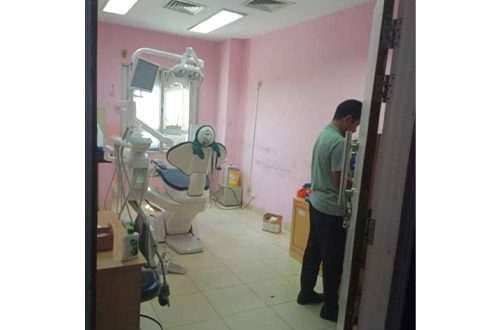
Patients seeking specialized dental treatment at the Jigme Dorji Wangchuck National Referral Hospital (JDWNRH) face waiting times of up to three to four years for new orthodontic cases, as demand for specialized dental care continues to exceed the available specialist workforce.
The Ministry of Health (MoH) acknowledges that waiting times for some specialized dental procedures, including root canal treatment and dental surgery, have become unusually long.
President of National Medical Services (NMS), Dr Mimi Lhamu Mynak, said the delays are primarily due to the growing demand for specialized dental care and the limited number of trained specialists available in the country to perform complex procedures, some of which are cosmetic in nature.
She said, “The MOH is working strategically to expand dental services across the country so that minor dental concerns do not escalate further into more complex cases which require specialized care by deploying dental surgeons and dental hygienists to all district hospitals and including 10-bed hospitals across the country.”
At JDWNRH, measures are being developed to improve access to specialized dental services, including prioritizing patients according to clinical urgency, making better use of the available dental workforce and facilities, and improving services outside regular working hours where feasible.
Longer-term measures include increasing the number of specialists through training and recruitment and progressively strengthening specialised dental services within the country.
Dr Mimi said concerns about patients seeking treatment overseas, where standards of care may vary, were valid. However, JDWNRH is managing cases based on patients’ needs, medical urgency and the hospital’s available capacity.
She said root canal treatment (RCT) is performed by dental surgeons across the country, but waiting times for the procedure have increased at JDWNRH.
Dr Mimi further said, “The RCT is done by dental surgeons in the country. However, the waiting time for RCT has increased here at JDWNRH because of changing patient preference (tooth preservation instead of extraction), late presentation (restoration not done on time) and only one specialist to manage the complicated cases.”
For orthodontic services, new patients at JDWNRH currently face an estimated waiting time of three to four years.
The MoH attributed the long waiting period to increasing demand and awareness, including demand for cosmetic treatment, improved access to dental care and referrals to higher-level hospitals, and a shortage of specialists.
JDWNRH currently has three orthodontists, while the Mongar Regional Referral Hospital (ERRH) has one. Plans are in place to expand the workforce by training more dentists during the 13th Five-Year Plan (FYP).
Orthodontic treatment also requires a lengthy commitment, with regular follow-up over approximately one to five years. Many comprehensive cases take around three years, limiting the number of new patients specialists can accommodate while continuing treatment for existing patients.
In terms of the wider dental workforce, JDWNRH has seven General Duty Dental Surgeons (GDDS) and 13 dental specialists. Other hospitals have 48 GDDS, while three dental specialists are based at ERRH.
The ministry’s planned expansion of dental services aims to improve access to routine care across the country while strengthening the capacity to manage complex cases and reduce pressure on specialized services at JDWNRH.