The Bhutanese Leading the way.
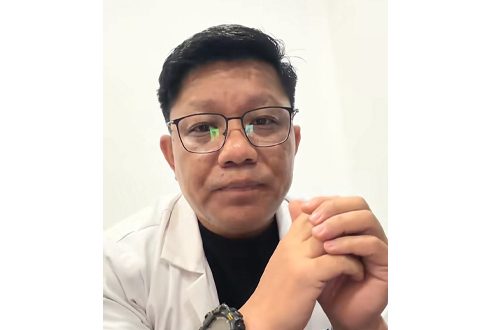
In what will come as a relief to the medical community and the public alike, neuro-spine surgeon Dr Sonam Jamtsho has withdrawn his resignation, which he had submitted to the Jigme Dorji Wangchuck National Referral Hospital (JDWNRH) on 20th March 2026
More details have since emerged about the series of events that led to his resignation. Documents, including an incident report and a letter Dr Jamtsho sent to senior colleagues, were reportedly leaked online. This newspaper has also reviewed other information related to the matter.
According to the document, the incident took place on 31st December 2025 at about 4 pm, when a 70-year-old woman with a history of hypertension was brought to the JDWNRH emergency room with altered consciousness, aphasia (slurred speech) and weakness on the left side of her body.
A CT brain scan reportedly showed an acute intracerebral haemorrhage in the right frontal lobe, with perilesional oedema, which is accumulation of fluid or swelling within the brain tissue surrounding a specific lesion.
The patient was intubated for ventilation and treated with mannitol and antihypertensive therapy.
At 6.17 pm, the emergency physician on duty consulted Dr Jamtsho about the case through a surgical resident doctor on call, and on reviewing the CT images, Dr Jamtsho decided that the patient required urgent surgical intervention.
However, the location of the bleed was considered atypical, raising suspicion of an underlying abnormality.
According to the online document, Dr Jamtsho felt that in such cases further vascular imaging is mandatory, including MRA and MRV of the brain, to rule out abnormal vasculature, as surgical planning without these investigations carries a high risk of catastrophic outcome.
After assessment by the surgical resident on call and in discussion with the emergency physician, the emergency physician contacted the radiologist doctor on call requesting emergency MRA and MRV of the brain.
The incident report of Dr Jamtsho stated that despite the clinical urgency and technical justification, the radiologist doctor refused to perform the MRI stating that “Urgent MRI brain is not done after 3 pm” and the study would only be performed the following morning during office hours.
In the report, Dr Jamtsho wrote that the patient could not safely wait until morning, as any delay would have significantly worsened her functional outcome and chances of survival.
As the radiologist on call remained adamant in refusing urgent imaging, the patient was taken to the operating theatre at 10.30 pm. The family was told that the risk of mortality exceeded 50 percent because the MRI could not be performed.
The patient’s family was also informed of the MRI refusal and the steps ahead, and the name of the radiologist on duty was disclosed to the patient’s family, should they wish to pursue a medico-legal case.
The surgery lasted four hours and was completed at 2 am. It was successful. In the incident report, Dr Jamtsho wrote, “In this instance, both the patient and I were fortunate that the abnormal vessels could be identified and managed intraoperatively, however, this may not always be the case.”
Dr Jamtsho on 31st December 2025 wrote an incident report of the above case and emailed it to some seniors, also mentioning that he had given the name of the radiologist to the patient’s family for any possible medico-legal case.
In response, JDWNRH management formed a committee headed by the Medical Superintendent to review the case. However, there was no resolution, and the committee was recently reconstituted.
The new committee reportedly reached two findings. First, it said both the radiologist and Dr Jamtsho were at fault for not contacting each other directly and for failing to escalate the matter to their respective department heads.
Under the second finding, Dr Jamtsho was given a verbal warning by the JDWNRH management that if Dr Jamtsho again gives a name like this for a case, then there would be serious action taken. Dr Jamtsho was informed that the warning was being given verbally, and not in writing so as to not impact his service record.
It has been learnt that the lack of any formal action on the incident, coupled with the verbal warning, led to Dr Jamtsho’s resignation.
In his report, Dr Jamtsho questioned if consultants are required to personally call the radiologist on call to request or plead for urgently indicated imaging.
He also referred to a letter dated 23rd December 2025 on the judicious use of MRI, CT and colour Doppler, noting that clause 4 states that during emergency hours, decisions on imaging requests shall be made by the emergency physician and the radiologist on duty.
Dr Jamtsho further asked where in the world there is a rule that urgent MRI brain imaging cannot be performed after office hours. He also questioned who would be responsible if a radiologist refused clinically indicated emergency imaging and the patient later deteriorated or died.
As per the document he said he wanted a proper way forward to ensure that patient safety is not compromised because some consultants fail to carry out their basic on-call responsibilities.
A source said emergency MRI scans can be performed after 3 pm in emergency cases, and that protocols around this are now being strengthened. The source also said Dr Jamtsho should not have taken the matter to the media.
The matter is understood to have been resolved for now.