The Bhutanese Leading the way.
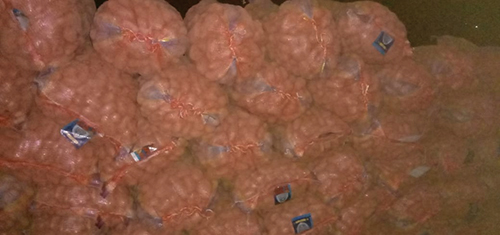
The Western Regional Branch of the Food Corporation of Bhutan Limited (FCBL) issued a notice on 11th November 2026 urging potato growers to halt bringing potatoes to the Phuentsholing Auction Yard until further notice. The suspension comes in response to a sharp drop in prices driven by a lack of demand for Bhutanese potatoes in Indian markets, compounded by a surge in local Indian production.
The market saturation has left major growing hubs, such as Phobjikha, facing mounting anxiety over unsold produce. Phub Wangdi, a potato farmer from Phobjikha, described the severity of the bottleneck.
“Over 90 percent of our potatoes go to FCBL. During peak seasons we take more than 200 trucks worth of potatoes down to the Phuntsholing auction yard. Now we are worried that it will go to waste,” he said, adding that farmers had heard officials intended to clear remaining stocks first.
Farmers report operating at a loss for some time as demand and prices have steadily declined over recent years. Adding to the strain, growers traveling to Phuentsholing often find themselves stranded for 7 to 10 days awaiting auction slots, accumulating further out-of-pocket expenses on top of existing business losses.
A video circulating online underscored the severity of the backlog at the yard, featuring an Indian dealer addressing the situation.
“The godown is also full to the brim and you are coming with the potatoes continuously. We also have nowhere to take them. Therefore, cooperate with us. We will ask you when there is demand. We also urge you to stop the inflow,” the dealer said.
Operational Pressures and the Search for Alternatives
Kelzang, Regional Director of FCBL, explained that 38 vehicles are currently in queue for the auction, necessitating strict controls at the source to prevent compounding problems.
Without intervention, managing the influx of trucks stretches processing times to over a week, leading to warehousing constraints whereby potatoes risk sprouting and sustaining damage. Furthermore, the auction is scheduled to close starting from 30th November, which has been communicated to farmers in advance.
“There is absolutely no market and even the Indians said they cannot auction an entire godown in a day. The price of potatoes has gone down in India and they choose to buy it. There are also no takers for our potatoes which is why we had to put a stop,” Kelzang noted.
“We are currently trying to negotiate with Indian dealers to reduce the existing stocks as much as possible,” he added.
Efforts to find alternative buyers have yielded mixed results. FCBL has engaged with Indian counterparts while exploring possibilities in Bangkok, Siliguri, and Sikkim. While some avenues remain under discussion, others have stalled, leaving few immediate alternatives.
In the interim, officials are exploring options to direct surplus stocks to local industries and canteens to secure some returns for struggling farmers.
Policy Recommendations and Future Planning
With approximately 30-40 percent of potatoes currently stuck at the source, FCBL has briefed relevant authorities and submitted a series of formal recommendations to address the structural crisis.
The first recommendation includes holding 30-40 percent of the yield to be held and sold during the lean season, allowing the produce to be naturally absorbed by the local market.
Second, establishing a government-funded buyback framework complete with regulated buying and selling prices.
Looking ahead, the regional director emphasized the need for structural shifts in agricultural planning.
Kelzang urged farmers to carefully evaluate commercial potato farming decisions for the upcoming year, strengthen market exploration alongside the Department of Agricultural Marketing and Cooperatives (DAMC) and Gewog agricultural extension offices, and focus on market-led, high-value produce.
Experts have pointed out that current Bhutanese varieties are unsuited for industrial value-added products or frozen french fries, highlighting the necessity for growers to adapt to shifting market demands.
An official stakeholder meeting has been convened to review the situation, with further policy discussions anticipated in the coming days.