The Bhutanese Leading the way.
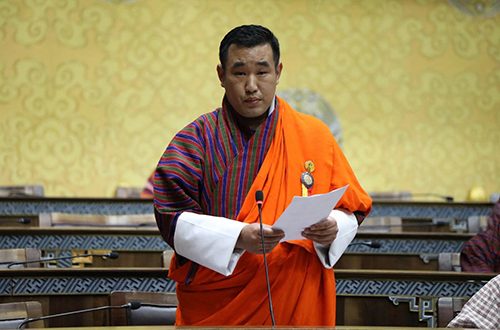
The Bill seeks to strengthen mining regulations, promote sustainable resource management and increase economic benefits from the country’s mineral resources
The National Assembly endorsed the Mines and Minerals Bill of Bhutan 2026 for the Third Reading on 13th November, following its introduction by the Minister for Energy and Natural Resources, Lyonpo Sonam Tashi, during the Sixth Session of the Fourth Parliament.
Lyonpo Sonam Tashi, as the Member in charge, presented the Bill to the House, with the motion seconded by the Member of Parliament from Khamaed-Lunana.
The Mines and Minerals Bill 2026 seeks to strengthen the regulation and management of mines, mineral resources and geoscientific activities in the country. It is guided by constitutional provisions that recognize the State’s ownership of mineral resources and the collective responsibility of Bhutanese citizens to protect natural resources for the benefit of present and future generations.
The Bill aims to support long-term national development through the creation of value chains and broader ownership in the mineral sector while ensuring transparency, equity and accountability in the management of mineral resources. It also proposes to strengthen the regulatory and monitoring framework governing mining and geoscientific activities, increase socio-economic benefits and revenue for the State from mineral resource development, and promote responsible environmental management.
The Mines and Minerals Bill of Bhutan 2026 proposes significant changes to the management and regulation of the country’s mineral resources, with new provisions covering mining leases, value addition, environmental protection, community benefits and revenue collection. One of the key provisions is that mineral resources will remain the property of the State, regardless of whether they are found on State land, private registered land, State Reserved Forest land or in water bodies.
The Bill requires value addition to minerals before they are sold or exported. However, exemptions are provided for strategic mines, auctioned mines and quarries, low-grade minerals from captive mines, construction materials and minerals that are not viable for value addition.
For mining leases, the Bill introduces competitive bidding for proven mineral reserves, with provisions for direct allocation to State-owned mining agencies and eligible Bhutanese individuals or companies under specified conditions. Private operators, except State-owned mining agencies and leases granted through public auction, will not be allowed to hold more than two mining or quarrying leases at a time, including captive mines.
The initial mining or quarrying lease will be granted for a maximum of 15 years or the projected economic life of the mine, whichever is shorter. Leases may be renewed for periods of up to five years, but not more than three times.
The Bill also introduces stronger environmental safeguards through a Mine Reclamation Fund, which will be established to ensure that mining and quarrying sites are restored after operations end. Lessees and permit holders will be required to contribute to the fund, while failure to fulfil reclamation obligations could result in the forfeiture of the deposited amount.
Mining companies will also be required to prepare Environmental and Social Risk Management Plans. Mines with potential environmental or social hazards must submit Emergency Response Plans and Hazard Preparedness and Response Plans.
Another important provision focuses on benefits for communities affected by mining activities. Mining companies will be required to engage with affected communities and give preference to local residents, where possible, for employment, procurement of locally available goods and services, and hiring of local equipment and machinery.
The Bill also gives affected communities priority to acquire an equity stake in mining companies undertaking activities that materially affect them. In addition, mining companies will be required to enter into Community Development Agreements, outlining benefit-sharing arrangements, and contribute to a Community Development Fund for affected communities.
On revenue collection, the Bill proposes a progressive system to ensure the State receives a proportionate share of income generated from mineral resources. Lessees and permit holders will also be required to pay royalties, lease rents, taxes, government levies and applicable fees.
The Bill further strengthens enforcement by authorizing designated officials to search mining areas, inspect operations and seize minerals, equipment or vehicles suspected of being connected to illegal mining activities. It classifies violations into minor and major offences. Repeated offences may attract double fines, suspension of activities or revocation of mining leases and permits. A person who continues an offence after being notified or directed to remedy the breach may also face an additional fine of up to Nu 10,000 for each day the offence continues.
The proposed legislation further emphasizes socially, culturally and environmentally responsible mining practices to ensure that the country’s mineral resources are developed sustainably while safeguarding the interests of future generations.
The Bill received unanimous support from Members of the National Assembly through a show of hands to proceed to the Third Reading. Following the endorsement, the Bill was referred to the Environment and Climate Change Committee for further review and scrutiny. It will be tabled for the Third Reading during the Seventh Session of Parliament.