The Bhutanese Leading the way.
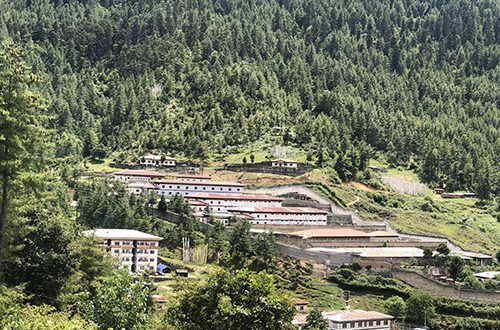
The government is taking decisive steps to address chronic overcrowding at Chamgang Central Prison by expanding Open-Air Prisons (OAPs), new sites across dzongkhags have already been identified, and planning decentralizing to regional correctional facilities.
As of July 2025, Chamgang houses 660 inmates in a facility designed for only 400, operating at 65 percent over capacity. Despite the deployment of 1,291 inmates to 20 OAPs nationwide, including those tied to temporary projects like Gyalsung and smaller-scale community initiatives the congestion persists.
676 inmates are currently placed in five Gyalsung-related OAP sites, while 615 inmates serve at various smaller local and religious projects.
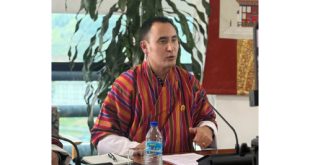
The Minister of Home Affairs (MoHA), Tshering, acknowledged during the 18th Meet-the-Press session that many of these OAP placements are temporary in nature, and the nearing completion of Gyalsung projects signals a drop in future intake.
Between 2021 and June 2025, there were 490 inmates that returned to confined prisons for breaching OAP conditions, highlighting ongoing challenges within the program. Although 2,597 inmates were admitted and 1,860 released between 2021–2025, admission continues to outpace outflow, especially at central facilities like Chamgang.
Lyonpo Tshering said that the government has come out with a multi-pronged forward strategy.
Additional wholesome OAPs are under planning, with new sites already identified across multiple dzongkhags to accommodate the growing need for decentralized rehabilitation infrastructure.
Regional correctional facilities are being considered to distribute inmate populations more evenly and reduce the over-reliance on Chamgang.
Additionally, expanded partnerships with religious bodies, local governments, and NGOs are being explored to support new rehabilitation-based projects.
Further, policy revisions are underway to streamline eligibility and screening criteria for OAP placements, allowing for more flexible and effective deployment of low-risk inmates.
These initiatives are aimed not only at resolving current congestion, but also at preparing for the sustainability of Bhutan’s prison and rehabilitation system after Gyalsung and other short-term projects phase out.