 The Bhutanese Leading the way.
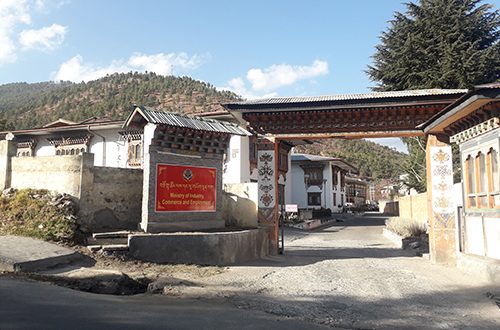
The Ministry of Industry, Commerce, and Employment (MoICE) has set a national target of generating 65,000 new industrial jobs by 2035. The target falls under the Industrial Development Ecosystem, which outlines seven expected outcomes with multiple national targets to drive industrial growth.
It also seeks to ensure that 40 percent of new jobs are filled by youth, women and rural workers. Another target is to achieve 100 percent alignment of TVET and skills training with emerging industrial needs by 2032. In addition, MoICE has set a target to improve school-to-work transition and reduce youth unemployment.
This is expected to build a more diversified, value-added, and resilient industrial economy. Here, the targets are focused on transforming the country’s narrow hydro-reliant economic base into a diversified and shock resilient industrial ecosystem driven by value addition and sectoral balance. One target is to increase the share of manufacturing from the current 8 percent to 12 percent by 2025, an increase of 4 percent. Another is to expand the total contribution of the industrial economy from the current 53 percent to 60 percent of GDP, an increase of 7 percent.
Another expected outcome is to position the private sector as the principal engine of industrial growth. Under this, one of the targets is to ensure the private sector creates at least 70 percent of all new industrial jobs. The target is to mobilise Nu 300 million in foreign direct investment. The aim is to facilitate private led growth through fast tracked approvals and dedicated industrial finance mechanisms.
An expected outcome is to revitalise Cottage, Small and Medium Industries as drivers of grassroots prosperity. MoICE has set a target to increase the operational rate of licensed CSMIs from 41 percent to 70 percent. The target is to ensure 50 percent of CSMIs get access to affordable credit, business development services and sustainable markets. A further target is to integrate CSMIs with tourism, agriculture and public procurement to boost competitiveness and value chains.
An expected outcome is to promote spatially balanced and regionally equitable industrial development. Targets under this include locating 50 percent of new industrial establishments outside Thimphu and Chukha, developing regional industrial clusters in dzongkhags with limited industries, and enhancing localised production, rural job creation and reducing urban-rural economic gaps.
Another expected outcome is to strengthen export competitiveness and advance strategic import substitution. One target is to double the value of industrial exports by 2035. Another is to substitute key imports such as food, furniture and construction materials with locally produced alternatives. This is expected to reduce the national trade deficit and enhance foreign exchange stability and self-reliance.
Another outcome is to develop world class industrial infrastructure and a convergent support ecosystem. MoICE has set a target to establish three new industrial parks with state of the art utilities and logistics. Another is to operationalise the National Single Window, dry ports and multimodal trade hubs to reduce transaction costs. A further target is to build strong linkages between industry, agriculture, tourism and education or TVET for innovation and competitiveness.


I’m a ex aviation security 2ic at Paro international airport for last 13 yrs.due to my family problem I need to resign from job.now with as I need to rise my living n to educate my children need to get back my dedication to serve the nation for my living