The Bhutanese Leading the way.
According to UNICEF Bhutan, children who come into contact with the justice system, whether as victims, witnesses or alleged offenders, require more than legal procedures. They need professionals who understand their age, development, experiences and trauma, and a system capable of protecting their rights while minimising further harm.
A needs assessment involving key stakeholders across Bhutan’s justice sector identified gaps in the knowledge, skills and coordination of professionals working with children.
The assessment involved the Royal Bhutan Police, Office of the Attorney General, Royal Court of Justice, Bhutan National Legal Institute, Legal Aid Centre, National Commission for Women and Children, PEMA Secretariat and JSW School of Law.
UNICEF Bhutan Deputy Representative, Fawzia Hoodbhoy, said one of the key challenges is the need for greater specialised expertise in responding to children in conflict with the law, as well as child victims and witnesses.
“Participants have consistently highlighted the value of training in child psychology, trauma-informed care and restorative justice, areas that require continued strengthening within the system,” she said.
She said child justice cases often involve several agencies, making coordination between professionals critical to ensuring children receive appropriate protection and support.
“Child justice cases often require coordinated responses from multiple agencies, yet professionals may not always fully understand one another’s mandates and procedures,” she said.
This gap in coordination can have direct implications for children navigating the justice system. Professionals from different agencies may interact with the same child at different stages, making it important that responses are coordinated and sensitive to the child’s experience.
She said strengthening these areas is important to ensure children are treated with dignity and respect throughout justice and protection processes, while avoiding practices that could contribute to further trauma.
According to the Deputy Representative, one practical focus is how professionals communicate with children. Police officers, for instance, need to be able to explain in simple, age-appropriate language why a child is being questioned and what will happen next. Police and prosecutors can also consider whether a case is suitable for diversion rather than formal court proceedings, while court officials can protect a child’s privacy and provide a safe environment for them to speak.
Protection officers and social workers, meanwhile, need to be able to identify a child’s needs and connect them with appropriate services, including counselling and family support.
Importantly, professionals also need to work across institutional boundaries so that children do not have to repeatedly recount traumatic experiences to different service providers.
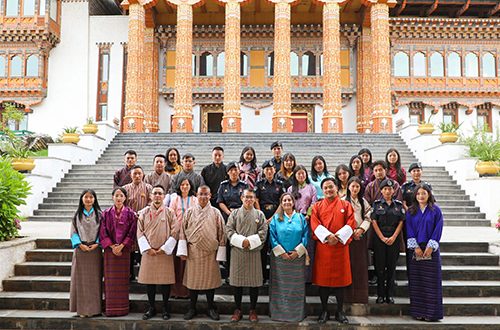
It is against this backdrop that the Third Summer School on Access to Justice for Children was conducted, building on the foundation established by the first two editions.
The program brought together justice and social sector professionals to strengthen their capacity to apply child rights-based and child-friendly approaches in their work. Its key themes included child protection, restorative justice, trauma-informed care and interdisciplinary collaboration.
“The key themes include child protection, restorative justice, trauma-informed care and interdisciplinary collaboration. These focus on approaches to supporting children, understanding the impact of harmful experiences on their wellbeing, and strengthening coordination among key professionals and agencies,” she said.
The program also focused on strengthening participants’ understanding of the legal and policy frameworks governing children’s rights and applying them to practical situations involving child victims, witnesses and alleged offenders.
The participants also examined real-life scenarios and explored how laws, policies and child protection principles could be applied in practice.
A central objective was to shift the way children are viewed within the justice system, from being treated simply as victims, witnesses or alleged offenders to being recognised as rights holders whose views should be heard and considered in decisions affecting them.
It also covered trauma-informed and child-sensitive practices, including how a child’s developmental stage and exposure to harmful experiences can affect communication and behaviour.
Beyond formal justice proceedings, the approach extends to children experiencing violence, abuse or neglect at home, in schools and in communities. UNICEF emphasises that responding to such harm requires cooperation among families, schools, communities and government agencies.
For Fawzia Hoodbhoy, the purpose of the Summer School therefore goes beyond completing a training program. It is about strengthening the capacity and partnerships needed to make the justice and protection system safer and more responsive for children.
“The key message is that keeping children safe is a shared responsibility, and institutions must work together to ensure children are protected, heard and supported,” she said.