The Bhutanese Leading the way.
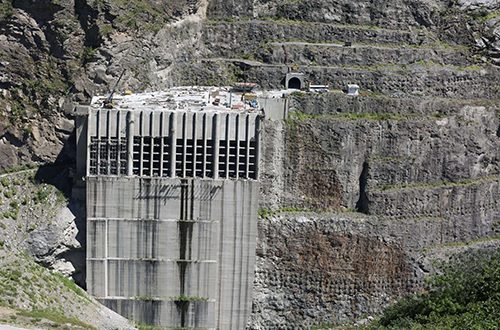
Earlier, Bhutanese experts and a foreign third-party expert said the P1 dam site should be abandoned for a barrage in a different location, as studies showed weakness in the right bank.
However, Bhutan agreed to the dam at the same site, based on the request of the Indian side.
There are some concerns and questions now that given that climate change will only make floods worse, what are the rectification measures on the right bank to make sure it does not give way one day.
The Ministry of Energy and Natural Resources, during the press meet, said that the long-term safety and stability of the dam remains their highest priority, making the stabilisation of the right bank essential.
The additional stabilisation measures will include the removal of overburden above the national highway along both the upstream and downstream sides of the dam axis, construction of 2-meter-diameter RCC piles, installation of high-capacity cable anchors and construction of drainage wells to lower the groundwater level.
Besides, a diversion tunnel will be used to facilitate future maintenance of the stilling basin and appurtenant structures, and the stilling basin will be designed based on hydraulic model studies conducted by CWPRS, India.
An early warning system for GLOF and instrumentation to monitor the right bank slope will also be enhanced and implemented.
In short, through a combination of advanced engineering solutions, continuous monitoring and proactive risk management, we are committed to ensuring the long-term stability and safety of the dam and its appurtenant structures.