The Bhutanese Leading the way.
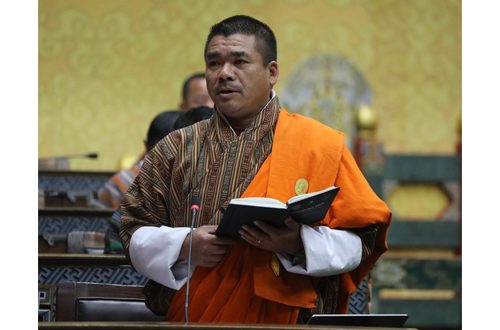
The feasibility of the proposed Pongchola Airport in Mongar, long proposed by residents since 2008, came under discussion during the Question Hour of the 1st Sitting of the Fifth Session of the Parliament, when Naiten Wangchuk, Member of Parliament (MP) from Mongar constituency, questioned the government on its status, technical viability, and future plans for improving air connectivity in eastern Bhutan.
The MP said that assessments had reportedly concluded that the proposed airport is not feasible.
However, he emphasized that long-term economic and developmental aspirations of the region should not be limited by a single conclusion. Instead, the focus should be toward exploring practical alternatives to improve connectivity, including STOL operations, high-capacity helicopter services, upgrading and widening the East-West Highway, and other innovative transport solutions suited to eastern Bhutan’s terrain.
In response, Lyonpo Chandra Bdr Gurung, the Minister of Infrastructure and Transport, provided an explanation of the technical evaluations conducted on the proposed Pongchola site.
Lyonpo confirmed that comprehensive assessments have already been carried out and concluded that the airport project is not feasible due to significant terrain constraints and limitations related to runway length requirements.
He said that the assessment conducted in 2018 both the on-site and desktop feasibility studies, there were specific observations indicating infeasibility due to misaligned ridge, narrow width and cross wind component.
However, meteorological observation was continuously recorded to ascertain wind intensity and direction.
The reassessment conducted in 2025 covering meteorological data for the period from May 2021 to May 2025 (four years) showed that the dominant wind direction remained in same direction as assessed in the past, however although the prevailing wind direction results in a crosswind, the relatively low average wind speed over the four years does not appear to pose a significant impact on aircraft operations.
While the reassessment found that wind conditions and operational obstacles do not pose major constraints, the key limitation remains with the maximum achievable runway length.
He said that accordingly, further assessment was conducted to ascertain the possibility of terrain modification and it was concluded that the site can only provide an estimated runway length of approximately 1,000 meters even after considering all possible areas for ridge modification.
This falls short of the minimum requirement of about 1,200 to 1,700 meters required for safe operation of aircraft.
He said that based on the technical findings, the site has not been recommended for further study or development.
The above study was conducted by Department of Air Transport in collaboration with Bhutan Civil Aviation Authority, National Center for Hydrology and Meteorology, Department of Infrastructure Development (DoID), National Land Commission and airlines.
He informed the House that alternative sites that were examined for the airport were similarly found to be unsuitable for development, effectively ruling out the project under current technical conditions.
Regarding alternative interventions such as STOL operations and advanced helicopter facilities, he said that the development of STOL is not feasible for the current aircraft available in the country.
Despite the rejection of the Pongchola Airport proposal, Lyonpo reiterated the ministry’s commitment to improving regional connectivity and ensuring equitable access to transport infrastructure across eastern Bhutan.
He emphasized that while the specific airport project is not viable, broader connectivity needs of the region remain a priority under ongoing and planned infrastructure programmes.
A key focus is the expansion and refurbishment of Yonphula Domestic Airport, which continues to serve as the primary aviation gateway for the east.
In addition, government is exploring the development of other domestic airports, including proposed sites at Yoeseltse and Samrang.
Lyonpo Chandra also placed strong emphasis on road infrastructure development as a more immediately feasible and impactful solution to connectivity challenges.
He said that the current road development, especially the highway towards Mongar, has really helped in cutting travel time compared to past years.
Furthermore, he highlighted the priority of developing road infrastructure such as the East-West National Highways under the 13th Five-Year Plan.
He said that improvement of Yongkola–Lingmithang Primary National Highway (PNH) is underway with an approved budget of over Nu 700 million.