The Bhutanese Leading the way.
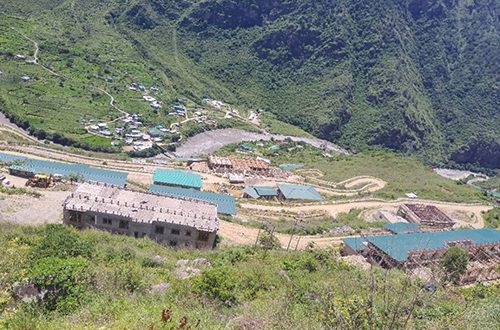
Many Bhutanese may have been surprised with the sudden introduction of the ‘Renewable Energy Tax Exemption Bill of Bhutan’ in this Session of Parliament.
The Bill exempts indirect taxes such as Goods and Services Tax (GST), Customs Duty and Excise Duty on direct inputs used for the construction, installation, or establishment of renewable energy projects, as well as property ownership transfer tax.
A source said the oversight dates back to 2020 when the GST Act was passed, and subsequent amendments also failed to exempt renewable energy projects.
What may have complicated the issue was that in the past, such projects were mainly hydro projects done bilaterally with the Government of India or with funding from World Bank and Asian Development Bank, and none of these entities allow for taxes on project construction.
As a result, power projects funded by these agencies were considered to be automatically exempt from indirect taxes.
However, in what may have been an oversight during the GST Bill consultation process, and also the many deliberations in Parliament over the years, nobody included that exemption in the GST Act.
Another factor was that Bhutan was getting Foreign Direct Investment (FDI) in its projects, like 600 MW Khorlochhu and 1,125 MW Dorjilung with Tata Power, 570 MW Wangchu project with Adani, GMR possibly in 590 MW Chamkharchhu II and a total of 5,000 MW with Tata and another 5,000 MW with Adani.
The World Bank also signed a USD 515 million financing agreement for Dorjilung. There is also a lot of interest from Thailand, South Korea and others to invest in Bhutan’s Renewable Energy sector.
When the GST Act started to be enforced from 1st January 2026 it came as a rude shock to Bhutan’s investment partners as they had assumed that at least the goods and services used for the construction would be exempt from taxes.
The official said that the main issue was GST since the GST Act clearly outlined only limited exemption areas like rice, oil, salt, pads and wheelchairs.
This was swiftly communicated to the Druk Green Power Corporation (DGPC) and the Ministry of Energy and Natural Resources which in turn informed the Ministry of Finance (MoF).
It was then decided that the MoF would come up with the Bill.
The key concern for both the investors and the Bhutanese counterpart DGPC is that higher construction costs from indirect taxes would lead to higher tariff rates, which would make their power less competitive.
An additional issue is that since the power from Bhutan is exported to India, it needs a power purchase agreement with India.
India, as such, does not allow foreign renewable energy projects adding taxes during the construction phase.
A senior official said that the foreign investors have come with huge investment to Bhutan based on good faith and trust in the Bhutanese governance and laws, and so, it is important for Bhutan to be consistent.
The official said the exemptions are intended to support the larger goal of 25,000 MW by 2040.
It has been clarified that the tax exemption applies only during the construction phase for the construction, and there will be no other tax exemptions once the projects start as the projects will pay PIT, CIT and other relevant taxes.