The Bhutanese Leading the way.
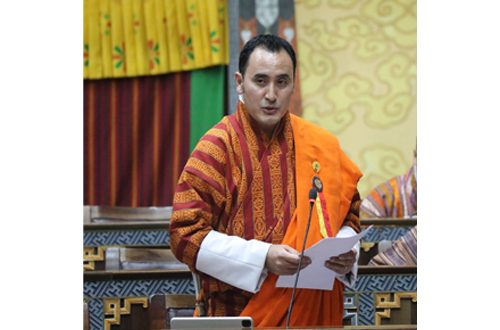
On 18th May, the Parliament commenced the reading of the Insolvency and Rehabilitation Bill of Bhutan, 2026.
Lyonpo Namgyal Dorji, Minister of the Ministry of Industry, Commerce and Employment (MoICE), introduced the Insolvency and Rehabilitation Bill of Bhutan 2025 in the National Assembly stressing the need to provide legal remedies for individuals and business.
The Insolvency and Rehabilitation Bill of Bhutan, 2026 is a comprehensive legislative framework designed to modernise how the nation manages the insolvency, rescue, and bankruptcy of individuals, firms, and corporate entities.
It essentially replaces the outdated 1999 Bankruptcy Act to introduce simple, efficient, and time-bound processes for resolving financial distress, which has remained unimplemented for over two decades.
For smaller businesses, it provides rescue-focused alternatives to bankruptcy specifically for Cottage, Small, and Medium Enterprises (CSMEs), which helps preserve local employment and investment.
The Bill seeks to strengthen Bhutan’s credit environment, support entrepreneurship, protect jobs, and encourage investment through efficient insolvency resolution and rehabilitation mechanisms.
One of the Bill’s primary solutions is to facilitate the rescue and rehabilitation of viable businesses, ensuring that companies facing temporary difficulties can continue as going concerns rather than facing immediate liquidation.
The motion was seconded by the Member of Parliament (MP) from Thrimshing Kangpara constituency, Damche Tenzin.
The proposed legislation introduces differentiated procedures for individuals, MSMEs, and corporate debtors, promotes business rescue over liquidation, provides mechanisms for cross-border insolvency cooperation, and establishes regulatory oversight for insolvency practitioners.
A major benefit of the Bill is the introduction of mediation to encourage effective restructuring outcomes that satisfy the best interests of all stakeholders involved.
To protect financial stability, the Bill aims to maximize the value of assets and recoveries for creditors through a timely and impartial winding-up process for businesses that are no longer viable.
The Bill also solves the problem of legal uncertainty by providing predictable, consistent, and transparent outcomes, ensuring that similarly situated creditors receive equitable treatment.
Additionally, it establishes a formal Insolvency Practitioners Regulation Committee to supervise and license the professionals who administer these complex proceedings.
Finally, the Bill addresses modern economic realities by granting the High Court original jurisdiction over cross-border insolvency issues, providing a clear legal path for international financial matters.
The Bill further proposes simplified and accessible procedures, institutional capacity-building, and the designation of the Corporate Regulatory Authority as the Insolvency Administration Office to ensure effective implementation and transparency.
The House agreed with the introduction of the Bill and assigned it to the Legislative Committee for further review and presentation of its report in the Winter Session of the Parliament for the Third Reading.