The Bhutanese Leading the way.
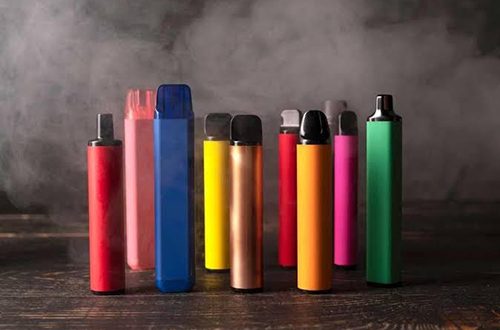
The Social and Cultural Affairs Committee (SCAC) of the National Council (NC) observed that the Tobacco Control Act of Bhutan 2010 does not adequately address emerging tobacco products such as e-cigarettes, vapes, and electronic nicotine delivery systems, which are becoming increasingly popular among youth aged 15-24.
As a result, the SCAC recommended amending and renaming the law as the Tobacco Control Amendment Act of Bhutan 2026 under Section One of the Act. The Tobacco Control Act was first enacted in 2010 and later amended in 2014, 2021, and revised in 2024.
During the deliberation, the Chairperson of SCAC, Phub Dorji, said that during the COVID-19 pandemic in 2021, many people were illegally importing tobacco products through the borders, prompting the government to adopt a more lenient approach to regulate and manage the situation.
However, he said the situation has since changed, with newer tobacco products entering the Bhutanese market without proper legal provisions to regulate them.
He said, “Today, products such as e-cigarettes, vapes, electronic nicotine delivery systems, and electronic non-nicotine delivery systems are increasingly available in the country and are becoming popular among youth, but many of these products are not clearly covered under the existing law.”
The committee reported a significant increase in the import of tobacco products and electronic cigarettes between 2023 and 2025. Cigarettes containing tobacco increased from approximately 107.4 million sticks in 2023 to more than 204.2 million sticks in 2025.
Imports of electronic cigarettes and vaporizing devices also rose sharply, increasing from 25,533 units in 2023 to 448,086 units in 2025.
The SCAC noted that the current Act lacks clear provisions to regulate such emerging products and stressed the need to strengthen and update the legislation to address evolving tobacco-related challenges.
The committee’s recommendations include the introduction of several new sections and subsections, while many of the existing provisions remain unchanged.
The recommendations, followed by additional submissions from Members, included provisions under Section 2(b) and (c), where the committee recommended the repeal of Section 14 and Section 50 (a) of the Tobacco Control (Amendment) Act of Bhutan 2021. It also proposed the repeal of Section 31 and Section 53 of the Tobacco Control Act of Bhutan 2010.
These provisions earlier stated that individuals found in possession of permanently banned tobacco products would be dealt with under the Penal Code of Bhutan.
To this, during the deliberation, Eminent Member Ugyen Tshering sought clarity on the applicability of the amended provisions, questioning how possession cases would be handled going forward.
He said, “The provision does not clearly state how individuals currently in possession of such banned tobacco products will be dealt with after the amendment comes into force.”
Moving to Section 3, the provision states that no person shall be allowed to smoke in dzongs, monasteries and religious centers, health and educational institutions, tshechus, recreational parks, and sports fields. It further provides that the Tobacco Control Board may, from time to time, declare any area a smoke-free zone as deemed necessary.
However, the Eminent Member raised concerns over the practicality of the provision in certain contexts. He noted that while smoking is not permitted in religious settings, many of these places are also visited by foreign tourists, including administrative offices and public events such as tshechus.
He said, “In such places where there are also foreign visitors, including research and educational centers, the committee should consider whether designated smoking rooms should be allowed.”
Section 11(a), (b), and (c) was also widely deliberated, where the SCAC recommended provisions on the prohibition of sales to persons under 18 years of age. Under Section 11(b), the provision further strengthens restrictions by covering a wide range of tobacco products, including vape products, e-cigarettes, electronic nicotine delivery systems, electronic non-nicotine delivery systems, heat-not-burn products, and e-hookah devices.
It also defines tobacco products that are permanently banned for import under the Act, which include the above-mentioned products and any use of such devices.
Further, it provides that a person shall be guilty of an offence of possession of permanently prohibited tobacco products if, at the time of possession, the product is banned under the Act, and if it is held for personal use or commercial purposes.
To this, the Trongsa MP Rinzin Namgyel noted that in other countries, strict age verification systems are enforced, with youths required to present identification to confirm their age. He suggested that Bhutan consider introducing a mandatory digital identification verification system to prevent underage access to tobacco products.
Furthermore, Zhemgang MP Tshering Tshomo raised concern, citing the National Health Survey 2023, which shows that 91.2 percent of youths aged 15-24 are engaged in traditional smoking, while 20.2 percent use emerging tobacco products such as vapes and e-cigarettes.
She questioned the focus of the proposed restrictions under Section 11(b), noting the disparity in usage between traditional and new tobacco products.
She said, “Under Section 11(b), the committee recommends banning e-cigarettes and vapes. However, when nearly 90 percent of our youths are still using traditional tobacco products, while only about 20 percent are using new products, why is the committee banning only the new tobacco products? Why not consider banning both?”
Dagana MP Birendra Chimoria said that in institutions such as schools, where children under 18 years of age are present, there should be no shops or vendors selling tobacco products nearby. He said that easy access to such products could encourage consumption among minors.
He said, “If these tobacco products are easily accessible, children will eventually buy them.”
A newly added Section 60(s), proposed by the committee, defines “Novel and Emerging Nicotine and Tobacco Products” as any electronic device that heats a substance, with or without nicotine or flavourings, to produce an aerosol for inhalation. This includes products such as electronic nicotine delivery systems, heat-not-burn products, electronic non-nicotine delivery systems, and vapes.
The provision further clarifies that these products are covered under the law regardless of their name, shape, size, form, or how they are sold, whether as a complete system or as separate components. The aim is to ensure that all current and future vaping-type products are covered by a single legal definition, preventing loopholes arising from rebranding or design changes.
Several related provisions were also deliberated, where the committee recommended that offenders under certain sections be dealt with in accordance with the Penal Code of Bhutan.
However, some recommendations could not be fully deliberated as they were linked to sub-sections that required further discussions during the proceedings.
Therefore, the Bill has been scheduled for deliberation on 15th June 2026, along with the revised recommendations of the SCAC.