The Bhutanese Leading the way.
For seven years, 40-year-old Passang Dorji waited for the restoration of Changyul Bum Galem’s ancestral house in Punakha.
When he first approached authorities in 2019 seeking permission to renovate the centuries-old structure himself, he said he was told that the government would support the restoration with a budget of Nu 1 million.
Later, discussions around international funding further raised his hopes that the historic house would finally be restored.
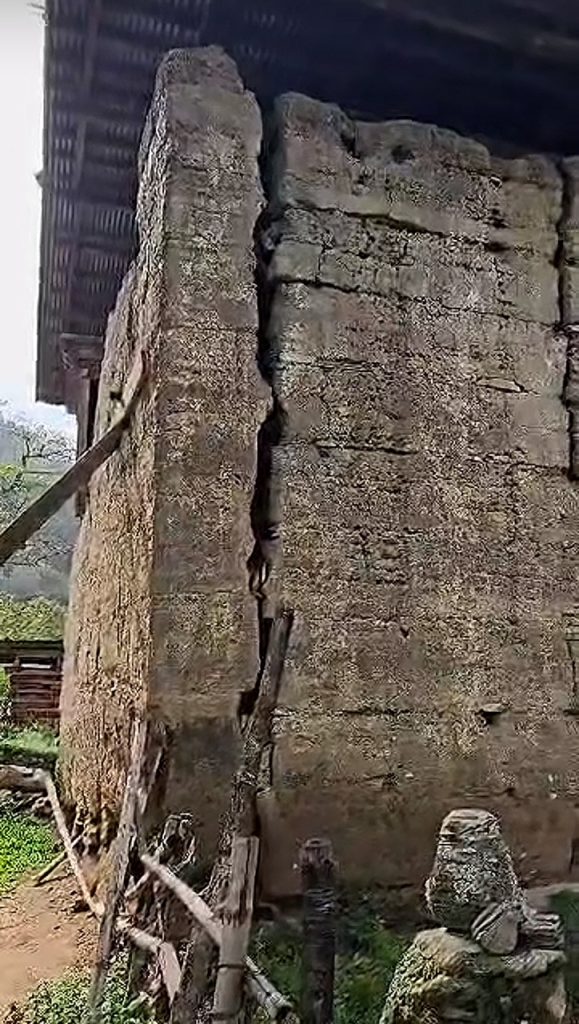
Today, however, Passang Dorji said that he is left watching the condition of the house worsen year after year, with the recent earthquake further aggravating the damage.
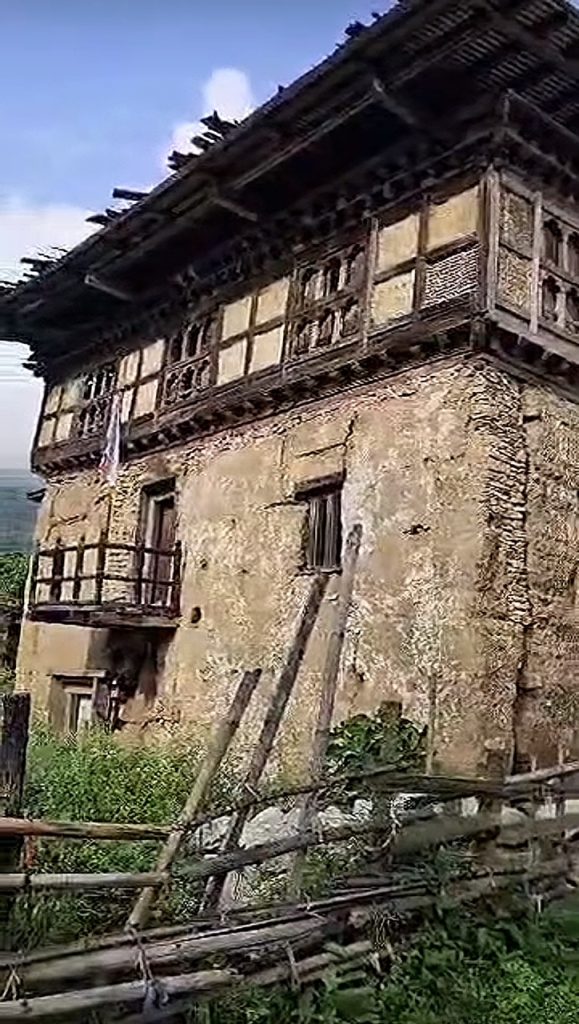
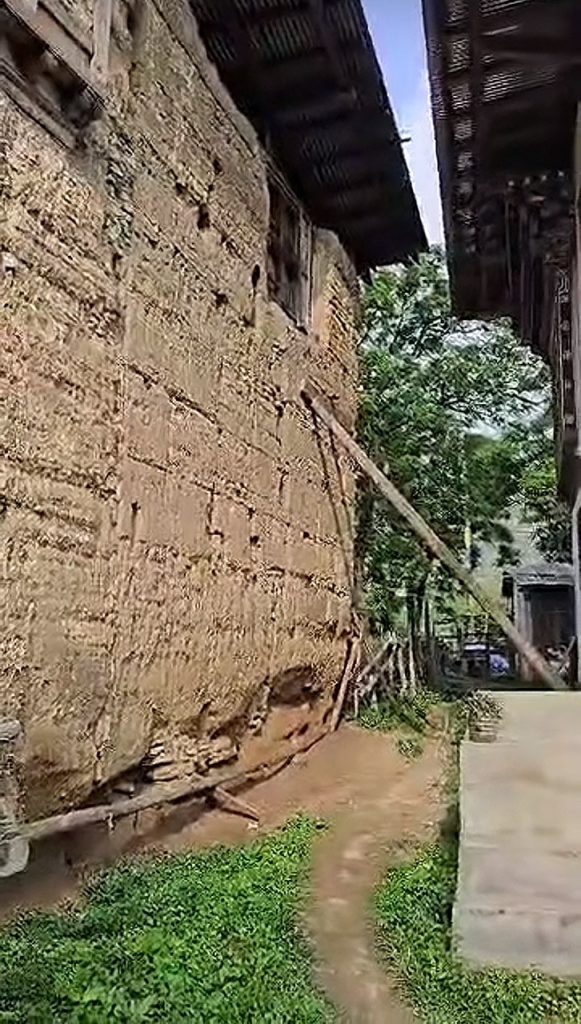
Standing before the three-storeyed rammed-earth structure, where cracks have widened across the walls and parts of the building continue to deteriorate, he questions why the restoration could not have moved ahead when he first sought approval.
“If I was allowed to renovate in 2019 or 2020 when I first approached them, the condition of the house would not have reached this stage,” he says.
The house, which has remained vacant for safety reasons, is now fenced off, with temporary supports placed around parts of the structure.
A nearby neighbor has also raised concerns with the dzongkhag administration, fearing that a collapse could damage surrounding homes.
For Passang Dorji, the concern is not only about a building. It is about the loss of an ancestral home linked to one of Bhutan’s most recognized folk tales.
A restoration project that began with hope
Changyul Bum Galem’s house has been considered one of Bhutan’s significant private heritage structures.
The house is associated with the legendary love story of Gasa Lamai Singye and Changyul Bum Galem, often described as Bhutan’s Romeo and Juliet. Believed to date back several centuries, the house continues to hold cultural significance, with descendants maintaining traditional roles connected to local religious practices.
The Department of Culture and Dzongkha Development (DCDD) under the Ministry of Home Affairs (MoHA) had identified the house among privately owned heritage structures requiring conservation support.
It was also included among 17 vernacular houses registered by the department for heritage conservation.
The restoration plan was not only intended to preserve the structure but also create a sustainable model for privately owned heritage properties.
However, for the owner, the journey towards restoration has been filled with changing expectations.
In the year 2019, Passang Dorji submitted applications to the MoHA and Punakha Dzongkhag Administration seeking permission to renovate the house.
He said he had already consulted engineers and experts and was prepared to take up the renovation himself.
However, he said the direction changed after the government expressed interest in supporting the project.
“The then Dzongda informed us that there would be budget support of Nu 1 million from the government,” he said.
He said the assurance continued even with subsequent officials. As discussions continued, the possibility of international support emerged.
International funding revived expectations
In 2022, discussions began around seeking external support for the restoration.
According to documents shared by the owner, he had proposed that if the government was genuinely interested in supporting the renovation, he be allowed to undertake part of the restoration works while receiving financial assistance.
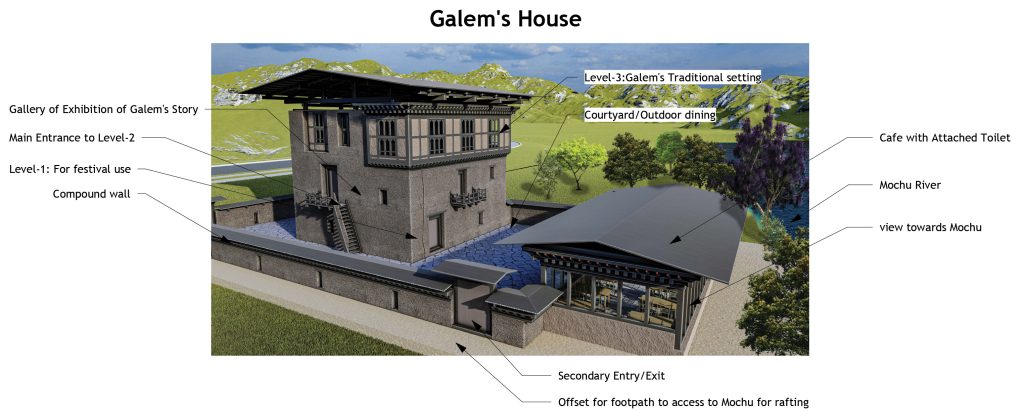
He had proposed developing tourism-related facilities, including a café, hot stone bath facility and construct proper toilets after restoration.
In July 2023, Punakha Dzongkhag Administration and the house owner signed an agreement concerning the future use of the restored structure and budget division.
The agreement stated that the dzongkhag would seek funding support from Pro Bhutan Germany for restoring the house to its original structure without any compromise.
It also stated that the restored building would function similar to an exhibition house, with revenue generated from the exhibition space shared equally between the government and the owner.
The surrounding area could be developed with facilities such as a café and other business activities, with income from those facilities belonging to the owner.
For Passang Dorji, the agreement brought renewed hope.
He said he even considered taking loans to establish the planned facilities, believing the restoration would finally happen.
Funding delays halt restoration
In 2024, The Bhutanese reported that the government had almost secured funding for the restoration of Galem House.
At the time, the MoHA had said that the estimated budget for the renovation was around Nu 17.6 million, with support expected from Pro Bhutan Germany.
The plan included restoring the structure, developing the site and establishing a museum inside the building.
However, the restoration did not begin.
The German NGO involved in the funding discussions confirmed that the restoration had to be put on hold because the cost was beyond the total of €130,000 (about Nu 13 million) it had committed.
The NGO said the original estimate was based on a very professional architectural proposal with a financial estimate submitted by the concerned Bhutanese authority. However, after tendering the bids (quotations) from relevant contractors the amount was significantly higher than the funding committed by the donors of the NGO.
With only limited funds available, the NGO had to propose an additional contribution by the Bhutanese authority because, without confirmation that the entire cost amount was secured, the major German public donor could not, by law, maintain his commitment.
However, the €50,000 (about Nu 5 million) committed by a private German donor, has now been redirected towards another priority project, the re-roofing of the Punakha District Hospital in the context of its general renovation.
The Germany NGO said that it is confident to mobilize another German private contribution to cover the remaining costs of the total renovation, namely €150.000 or Nu 15 million for the hospital.
Owner questions changing messages
Passang Dorji said what concerns him most is the uncertainty surrounding the project.
He said that after years of waiting, he was recently called by the Punakha Dzongkhag Administration and asked whether he would carry out the renovation himself.
If he planned to renovate on his own, he was asked to submit a letter stating so and if he still wanted government support, he was asked to submit another letter requesting assistance.
However, Passang Dorji said he had already submitted multiple letters seeking government support in previous years.
He questioned why he was being asked to clarify his position again after earlier discussions and agreements.
“I have already submitted letters requesting support. They are not clearly stating whether there will be budget support or not,” he says.
He also questioned the difference between earlier statements that funding had been secured and the current situation where the project remains dependent on external funding approval.
He said he clearly remembers being informed through media reports that substantial funding had been secured.
“Now the dzongkhag says they tried approaching different agencies but could not secure the budget,” he says.
He added that he feels the responsibility should not now fall entirely on the owner because renovation works were kept on hold while waiting for government-led restoration.
Government says restoration is still active
The MoHA said that government has not discontinued the project. The ministry said the restoration remains a priority and that the project is currently going through the process of fulfilling international funding approval.
According to the ministry, DCDD and Punakha Dzongkhag Administration are preparing a revised proposal to submit to Pro Bhutan Germany, which will then be forwarded to the German Federal Foreign Office.
The ministry said no government budget has been separately allocated for the project at this stage because international funding was expected to cover the restoration.
It also said delays were caused by several external factors, including increased contractor rates, funding cycle constraints, revised proposal requirements and changes in German funding procedures. The project could proceed once funding approval is received.
Regarding the earthquake damage, the ministry said a rapid assessment of the structure is being coordinated with technical officials.
It said that before the earthquake, deterioration was mainly concentrated in the roof and upper portions of the structure, while the rammed-earth walls were assessed as structurally sound. Depending on the assessment findings, immediate stabilization measures may be considered.
The house owner says so far after the recent earthquake, no government officials have contacted them or dropped by to inspect the damages apart from insurance company but with no statements on support was made.
A heritage house waiting for time
The MoHA said that Changyuel Galem’s house is one of the most culturally significant privately owned heritage structures in Bhutan, predating the arrival of Zhabdrung Ngawang Namgyal, linked to the legend of Gasa Lamai Singye and Changyuel Bum Galem, and central to the Punakha Dromchoe.
The ministry said, “Its preservation is a government priority and has been the subject of a Cabinet directive. Subject to the German Federal Foreign Office’s funding approval, physical restoration works are targeted to begin immediately, with the building thereafter opened as a public heritage museum jointly managed by the Punakha Dzongkhag Administration and the house owner. However, the timeline will entirely depend on the funding commitment from external donor.”
Additionally, the ministry said that several factors converged to cause the delays.
MoHA stated, “First, when the project was tendered under FY 2024–25, contractor rates came in significantly above the initial cost estimates, and the time taken to negotiate and adjust the scope pushed the project into the German Federal Foreign Office’s financial year closing period, making fund release impossible within the remaining time.”
“Second, German Federal Foreign Office budget rules prohibit commencing any works before formal approval of the funding application, this legal constraint meant construction could not begin even while negotiations continued. Third, a revised proposal became necessary following new requirements raised by the German FO, requiring formal agreements to be put in place between the Punakha Dzongkhag Administration and the house owner.”
“Fourth, the German parliamentary elections of February 2025 and pressures on Germany’s federal budget from the Russia-Ukraine conflict delayed funding decisions. With all of these factors addressed, the revised proposal will be submitted soon.”
For Passang Dorji, however, the immediate concern is whether the structure can survive long enough for those plans to materialize.
He said every year of delay has made restoration more difficult and expensive.
“The condition of the house in 2019 and now in 2026 is completely different,” he says.
As discussions continue over revised proposals and funding approval, the centuries-old house connected to one of Bhutan’s most enduring legends remains waiting not only for restoration, but for a decision that can save it before time does more damage.