The Bhutanese Leading the way.
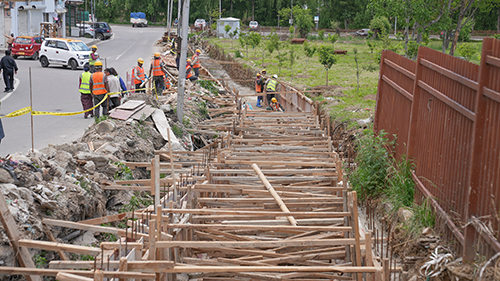
The Ministry of Infrastructure and Transport (MoIT) has defended the ongoing stormwater and roadside drainage improvement works in Thimphu Thromde, stating that the interventions are based on detailed master planning and climate-resilient design considerations intended to address both current flooding issues and future urban demand.
The clarification came in response to a written question asked on 29th May 2026, by Member of Parliament (MP) Kinzang Wangchuk from Drametse Ngatshang constituency during the ongoing parliamentary session.
The MP sought assurances on whether the drainage works, currently being implemented in Thimphu with support from the United Nations Development Programme (UNDP), would be sufficient to permanently address recurring urban flooding and whether long-term technical and climate considerations had been adequately incorporated.
While acknowledging the importance of the ongoing project, the MP raised concerns that some interventions may not appear fully comprehensive or future-oriented.
In its response, the MoIT clarified that the project is guided by the Stormwater Master Plan for Thimphu Thromde and the Water Services Master Plan prepared in 2022.
These plans were developed based on detailed technical assessments of existing drainage capacity, projected urban growth, development trends, and climate change impacts, including increased rainfall intensity and rapid urbanization.
“The current drainage interventions have been designed with consideration for both existing flooding issues and future drainage demands within Thimphu city,” the MoIT said, adding that it is confident the project will significantly improve stormwater management and reduce recurring street flooding upon completion.
The ministry also highlighted that the project is part of broader urban resilience initiatives supported by UNDP, incorporating climate-resilient infrastructure approaches, sustainable urban drainage systems, and nature-based solutions such as environmentally sensitive drainage designs and green infrastructure elements.
The ministry acknowledged that stormwater management remains an ongoing and adaptive process, particularly in the context of climate change and continued urban expansion.
The MoIT said it will continue monitoring system performance and implement upgrades where necessary.
On whether technical assessments and climate projections were properly incorporated before implementation, the ministry confirmed that all designs were reviewed based on the 2022 master plan, which included flood risk analysis, topographic studies, infrastructure capacity assessments, and future development scenarios.
The ministry added that climate projections, including extreme rainfall events and increased surface runoff due to urbanization, were factored into the planning process.
The designs were also reviewed by relevant agencies to ensure alignment with both current needs and future urban development requirements.
On long-term value, the MoIT said multiple safeguards have been introduced, including engineering supervision, quality control mechanisms, and regular monitoring during construction.
The ministry said that contractors are required to carry out material testing such as slump and cube tests for M20 grade concrete, while the project management unit conducts periodic site inspections.
“The ministry recognizes that urban drainage management is a continuous and adaptive process,” the response stated, adding that maintenance and future upgrading will remain essential components of long-term resilience planning.
On broader policy direction, the MoIT said it is strengthening stormwater management planning across Bhutan’s urban centres.
The ministry said that a stormwater master plan for Paro is currently under preparation and expected to be completed by October 2026.
The ministry said that stormwater considerations are being integrated into structure plans, local area plans, and urban infrastructure projects to ensure climate-resilient urban expansion, with continued collaboration with development partners, technical agencies and local governments.