The Bhutanese Leading the way.
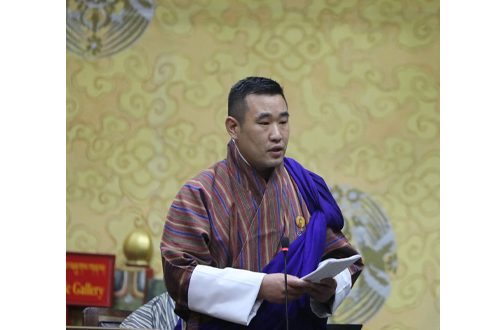
The issue regarding long immigration lines and the lack of toilet facilities in tourist spots has been reached Parliament as the Member of Parliament (MP) of Lamgong-Wangchang constituency, Sonam Tashi, raised a question to the Home Minister during the Question Hour session on Friday, 5th June.
MP Sonam Tashi said that the question came as he was alarmed by social media and media posts of long immigration lines at the Phuentsholing terminal due to the delay of issuing permits, lack of washroom facilities, road issues and bad quality of services, etc.
“There is a need for better services and improved infrastructure as the mere rise of the number of tourists isn’t enough,” he said, where the idea of “High-Value, Low-Volume” is also being ridiculed as “High-Value, No-Toilet”.
The Minister of Home Affairs, Tshering, answered that the ministry acknowledges the importance of tourism as one of the main sectors of the nation’s economy, and it has directed the Department of Immigration to evaluate the situation.
He said that the department has understood the problem, and it mainly attributes it to three reasons.
There has been an unprecedented surge in the number of tourists which led to long lines at the Phuentsholing terminal.
Lyonpo Tshering said that the immigration office saw a record-breaking number of 2,149 tourists entering the country on 4th May, as it floats in and around 1,000 usually.
Lyonpo Tshering said, “Between 1st and 24th May, a total of 9,449 tourists were recorded.”
This is particularly good news for the nation’s economy as it also means a proportional rise in SDF collections. Lyonpo added that SDF collections crossed Nu 9.4 million for may, which is greater than the usual collections.
Lyonpo attributed the second reason to the rise of cross-border travel activity as over 116,380 travellers were recorded, with 56,054 being Bhutanese people only.
The third main reason for the issue is attributed to the maintenance/renovation of the regional immigration office at Phuentsholing, which is currently ongoing.
The maintenance is scheduled to be completed this month, with Wi-Fi and SIM services, shops and other vital services installed.
He urged the public to plan their trips accordingly, with these updates in mind. The fourth reason he stated is due to the West Bengal elections that affected travellers with a new rule that added a burden to them.
Lyonpo Tshering shared that to ease this situation, the government is looking for digital transformation of online visa and permit systems, 24-hrs fast-track service, and the e-gates at Paro Airport and Phuentsholing terminal, with strengthened services in Samtse, Gelephu and Samdrup Jongkhar entry points as well.
The MP of Lingmukha-Toedwang constituency, Namgay Wangchuk, raised a concern over how digital systems were made but were interrupted due to network issues.
Additionally, he shared a crucial problem of the lack of toilets and sanitation facilities, giving an example of the way to Khamsum Yulley Namgyel Chorten and the Chelela Pass, claiming that there is only one toilet at Chelela and it is troublesome for older aged tourists.
Lyonpo Namgyal Dorji said that he visited the Chelela area to inspect the situation. He said that it isn’t as bad as depicted in social media.
“Places such as Chelela are located higher and secluded, and there is also a responsibility of guides to communicate with tourists that they visit toilets whenever they can and that there will be no toilets on the way.”
However, Lyonpo said that an Integrated Roadside Amenities Plan will be rolled out by the government, which will seek to build clean toilets and resting places along the routes.
Additionally, he said that a “Tourism Bhutan App” will also be developed, an information system that will include real-time data of tourists’ crowds and numbers in main itinerary spots.
Most MPs shared that while there are more than sufficient budget and the increase of SDF, it is not being utilized well for improvement of services and public amenities.
Some of them also shared the need to improve other entry points in Samtse, Gelephu, and Samdrup Jongkhar.