The Bhutanese Leading the way.
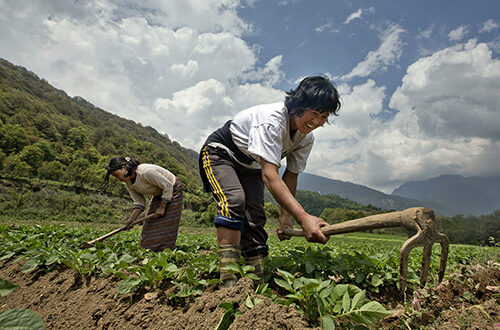
It has been over eight months since the rollout of the National Crop and Livestock Scheme (NCLIS), with a total of 149 households now enrolled under the initiative.
As of 6th August, 98 households across seven dzongkhags have insured agricultural commodities, specifically paddy, maize, and potato. Mongar leads registrations with 70 households, followed by Samtse (12), Chhukha (10), Samdrup Jongkhar and Trashigang (2 each), and one each from Bumthang and Pemagatshel.
In parallel, 51 livestock-farming households have enrolled across Chhukha, Pema Gatshel, Punakha, Trashiyangtse, and Trongsa. According to the Ministry of Agriculture and Livestock (MoAL), Trongsa recorded the highest livestock enrollment with 26 insured households, followed by Trashiyangtse and Punakha (8 each), and Chhukha (7).
Punakha spans coverage across all three livestock categories (6 cattle, 6 piggery, and 1 poultry farm covering 500 birds), while Pema Gatshel enrolled two poultry farms covering 1,447 birds.
Together, these households insured 2,007 livestock, comprising cattle, pigs, and poultry, with a total insured value of Nu 3.1 million (mn). MoAL reports that of the 51 insured livestock households, 46 (90.2 percent) insured cattle, 3 (5.9 percent) insured poultry, and 2 (3.9 percent) insured pigs.
Premiums and Rapid Payouts
Total insurance premiums currently stand at Nu 0.297 mn, shared equally between the government and farmers under the 50 percent premium subsidy scheme, with each contributing Nu 0.148 mn.
Among crops, maize commands the highest registration with 72 farmers, followed by paddy (25) and potatoes (1).
The ministry noted that 20 households across Bumthang, Mongar, and Pemagatshel received compensation for maize crop losses ranging from 5 percent to 85 percent, driven by weather hazards, pests, diseases, and wildlife predation.
Individual payouts ranged from a minimum of Nu 1,154.35 to a maximum of Nu 39,984.
Total compensation disbursed reached Nu 225,057, against a total premium collection of Nu 92,254, representing a payout-to-premium ratio of over two times.
Notably, the Royal Insurance Corporation of Bhutan Limited (RICBL) processed these claims within the Turnaround Time (TAT) stipulated under the NCLIS operational manual, averaging a seven-working-day settlement period from the date of loss.
Affordability and Sustainability
Officials from MoAL emphasized that this outcome highlights the scheme’s early effectiveness in delivering meaningful financial relief. To ensure accessibility, affordability remains a core focus: farmers can opt for under-insurance (covering 50 percent of the sum insured) or partial insurance for specific commodities rather than blanket coverage.
To date, the ministry has sensitized more than 14,000 farmers.
“Currently, the government’s approach is structured as a phased and learning-based rollout rather than a fixed, one-time programme,” the ministry stated, adding that current priorities focus on reviewing and expanding coverage annually.
Moving forward, MoAL aims to strengthen monitoring, and grievance redressal, regularly review priority commodities to match changing farmer preferences, and explore consistent funding options to institutionalize the premium subsidy within national budgeting.