The Bhutanese Leading the way.
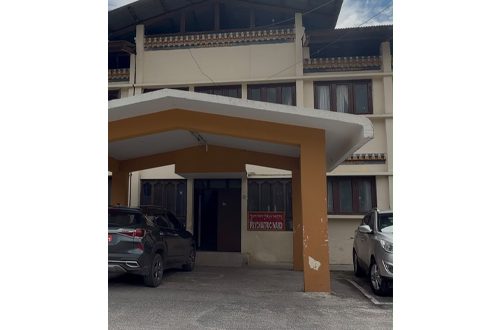
Rising patient numbers, safety concerns and the need for specialised care drive the relocation from the hospital’s oldest ward structure
This paper reported that the Psychiatric Ward at Jigme Dorji Wangchuck National Referral Hospital (JDWNRH) accounted for 34 of the 53 incidents reported across the hospital between July 2025 and June 2026, according to the hospital’s Annual Incident Report Analysis.
To understand why the ward records a disproportionately high number of incidents and the challenges faced by mental health professionals, The Bhutanese spoke with the Head of the Psychiatric Department/PEMA Centre, Dr Ngawang Samten.
He said many of the incidents involve patients with severe mental illnesses whose judgment may be impaired, leading to cases of absconding, aggression, and violence.
He also explained why the current psychiatric ward is no longer adequate to meet the growing demand for mental health services and why plans are underway to relocate it to the new 60-bedded PEMA Centre.
High Number of Violent incidents and Patients Absconding
According to Dr Ngawang Samten, the high number of incidents reported from the Psychiatric Ward is largely because patients with severe mental illnesses can have impaired judgment.
He said conditions such as schizophrenia, psychosis and bipolar mania, as well as substance-induced psychosis, substance withdrawal and intoxication, can all affect a person’s judgment.
“That’s why when you are forcing someone to be inside, they don’t want to, and they don’t have the judgment to realize that, it is for their best, which creates a lot of disagreements or disputes,” he said.
Dr Ngawang Samten said incidents are reported when patients with severe mental illnesses, whether temporarily or chronically, are unable to remain in the ward. “We want to report the incidents because we want to make it clear to the authorities that this is what we’re facing,” he said.
He said the high number of incidents recorded in the Psychiatric Ward could also be attributed to differences in reporting practices across departments. “It could be because we routinely report all cases, or there could genuinely be a higher number of incidents in the Psychiatric Ward,” he said.
The most common incidents reported from the ward are cases of absconding and violence.
According to Dr Ngawang, these incidents are often associated with patients’ aggression, which he said exists on a spectrum ranging from mild agitation to severe violence.
He explained that agitation is the milder form, where a patient may show signs of irritability through their facial expressions, body language, speech or tone, but has not yet engaged in harmful behaviour. “Agitation is when we know that someone is at risk of becoming aggressive, but they have not yet done anything,” he said.
At this stage, he said health workers try to de-escalate the situation verbally and understand what the patient needs. This may include offering relaxation therapy or medication to help calm the patient.
“The next part is when someone actually becomes aggressive. They have done some harmful behaviour, like throwing something, kicking something, or actually hurting someone, but not very grievously,” Dr Ngawang said. “That is aggression,” he added.
He said restraint is used only when necessary to prevent patients from harming themselves or others and is kept to the shortest possible duration. “We have to restrain someone, either through physical or chemical restraint, to keep them safe, but it is not for a very long time, maximum five to 10 minutes,” Dr Ngawang said.
“It is just enough time to give them the medication,” he added.
Dr Ngawang said violence is the most severe form of aggression and may require police intervention when it results in serious or grievous harm.
“When aggression reaches its most severe form, that is when we call it violence. If it results in a grievous injury or a serious offence, it is not socially acceptable. That is where the police have to come in,” he said.
He said violent acts are generally reported as incidents by the department, while cases of absconding are also reported because the hospital has a responsibility to inform the patient’s family.
“If a patient goes missing, we have a duty to report it. We inform the administration through an incident report and also inform the family that their son or daughter has gone missing,” Dr Ngawang said.
According to Dr Ngawang, absconding incidents usually occur during busy periods in the morning, when staff are occupied with routine duties and patients have access to the ward’s backyard.
He said the backyard is opened in the morning to allow patients to get some sunlight, fresh air and time outdoors. Unlike the main entrance, the area is less secured, creating an opportunity for some patients to leave the ward.
“Some patients plan ahead. When everyone is busy, maybe during a blood pressure check-up or when everyone is waiting for lunch, that is when they abscond,” he said.
Violent incidents, on the other hand, are more likely to occur at night when fewer staff are on duty and patients are mostly confined to the ward.
“At night, there are fewer staff. After three in the afternoon, we have only two staff on night duty, and security also becomes a little less strict,” Dr Ngawang said.
He said patients who are unable to sleep may become increasingly distressed and, in some cases, attempt to escape from the ward.
“The patients who can’t sleep are left alone with their negative thoughts, and that is where, in an act to escape, they become violent,” he said. “They are not violent because they necessarily want to harm someone. Basically, it happens when they are trying to escape and we are trying to stop them,” he explained.
The latest available Annual Incident Report covers the period from July 2025 to June 2026. Moreover, Dr Ngawang said approximately 6 such incidents had been reported from the Psychiatric Ward in the two months July and August. “The average is about three incidents per month, although we deal with aggressive and agitated patients, we don’t report all of those,” he said.
“We only report the violent incidents and cases where patients have absconded,” he added.
Furthermore, he mentioned that some patients who abscond do not necessarily remain missing for long. In some cases, patients return to the hospital after leaving the ward, sometimes to get doma or cigarettes.
He said the patients admitted to the Psychiatric Ward are generally those with severe mental illnesses who are considered to be at risk of harming themselves or others, or are unable to be safely cared for at home.
“Most of the time, the people who get admitted are those who are at risk to themselves or others, and whose families cannot manage them at home,” he said.
He said admission may also be necessary when patients are unable to take their medication despite their families’ efforts to provide care at home.
“If they cannot be taken care of by their families, or if they are not taking their medication even when the family is offering it, that becomes a reason for admission,” he added.
According to Dr Ngawang, the most common severe mental health conditions among patients admitted to the ward include schizophrenia, bipolar mania and substance-related psychosis.
“To be direct, schizophrenia and bipolar mania, as well as substance-related psychosis, are among the common severe cases we see. These are mainly related to schizophrenia and mood disorders,” he said.
The Psyciatric Ward to be relocated and named The PEMA Center
Talks are underway to relocate the Psychiatric Ward at JDWNRH, with the current facility considered inadequate to safely manage the growing number of patients and the needs of healthcare workers.
Dr Ngawang said the existing ward will eventually be relocated to the 60-bedded PEMA Centre, which was built to provide specialized care for people with mental health conditions.
He said, “The reason we are moving is because the current structure is not good enough or capable of handling the demand.” “There has been a huge increase in the number of cases, and the prevalence has increased,” he added.
The growing demand is reflected in the number of patients seeking outpatient psychiatric services. Dr Ngawang said the department recorded around 10,000 OPD visits in 2024, which doubled to approximately 20,000 in 2025.
The current psychiatric ward has 20 beds, including eight for male patients, eight for female patients, three for children and families, and one safety room.
The safety room is used for patients with a history of violent behaviour who are considered at risk of becoming aggressive.
The ward receives around 40 admissions a month, with some patients requiring several weeks to stabilise.
“Psychiatry is not like taking antibiotics; it takes time for patients to settle,” Dr Ngawang said. He further said, “On average, it takes around three weeks in the ward for them to stabilize.”
He said the ward also manages patients across a wide age range.
The youngest patient admitted was an eight-year-old, mainly for conditions requiring intensive therapy, including cases related to child abuse and autism spectrum disorder.
The oldest was an 80-year-old woman with behavioural and psychological symptoms associated with dementia.
“For elderly patients, we also admit them to manage their condition and give some respite to the caregivers. We also evaluate them to see if there is an underlying cause, such as a tumour, because we have to understand that psychiatry is also a disease of the brain,” he said.
One Ward, Different Conditions
Dr Ngawang said one of the major limitations of the current facility is that patients with different diagnoses are not adequately separated.
He shared, “For example, if you have depression or anxiety, you may be placed in the same room, or at least the same unit, with someone who might be psychotic.”
He further pointed that, “There may also be someone receiving treatment for substance use who is irritable because they are going through withdrawal, and there might be a manic patient in the same room.” “That is bound to create issues as different conditions and different needs are being managed in the same space, so incidents can happen,” he added.
The new PEMA Centre is expected to address some of these concerns by having separate facilities for different categories of patients.
Dr Ngawang said the new arrangement would allow patients to receive care in environments more suited to their conditions.
Security Concerns
Security remains another concern in the current ward. There are currently two security personnel per shift from 9 a.m to 9 p.m, although the department previously had fewer security personnel.
Dr Ngawang said the hospital has struggled to retain security personnel because of low pay and poor job satisfaction. “They have poor pay and poor job satisfaction, so it is difficult to retain security personnel,” he said.
He said the department has repeatedly requested additional security and now requires around four security personnel along with two nurses to safely manage the ward.
JDWNRH is also considering establishing its own pool of security personnel so they can be trained specifically to work in the hospital environment. He said, “We are thinking of having our own pool of security personnel so that we can train them.” “Otherwise, they keep changing. You train someone today and, by tomorrow, they are no longer there,” he shared.
“That is why we have not been able to retain good security personnel,” he added.
Training Staff to Manage Aggression
The hospital is also strengthening staff training to manage aggression and prevent incidents across departments.
Dr Ngawang said the Quality Assurance Division of JDWNRH is working with the department to provide continuous medical education for staff on aggression management, trauma-informed care, psychological first aid and self-care.
“Violence is not limited to the psychiatric department. Aggression can happen anywhere because there are people under high stress. When you have fewer doctors and nurses, communication also becomes a challenge,” he said.
He said patients and attendants may become agitated when they do not receive information or treatment within the timeframe they expect, particularly in emergency services.
“In the emergency department, we see a lot of agitated people waiting for their turn because patients are prioritized based on severity, not on who arrived first or seniority,” he said.
He said similar situations can occur in other departments, such as surgery, where patients may be fasting while attendants become anxious about delays in their procedures.
“That is why JDWNRH is rolling out continuous medical education on topics such as aggression management and trauma-informed care,” he said.
He added that healthcare workers themselves can experience secondary trauma, particularly those who regularly deal with deaths and highly distressing cases.
Verbal Abuse and Burnout
Dr Ngawang said healthcare workers also face verbal abuse from patients and attendants, but such incidents are often not included in official incident reports.
“We have accepted this as a norm at a cultural level. It has become part of working in hospitals,” he said.
He said training in psychological first aid and self-care is also important because healthcare workers need support in dealing with the emotional demands of their work.
“The people who take care of others also need to be taken care of. However, that does not seem to be happening,” he said.
He said the training could help staff recognise signs of burnout, including changes in their behaviour and increasing irritability. “They may realise that they are becoming irritable towards patients for some reason, even though they were not like that before. They may not realise that this is a sign of burnout,” he said.
“If we make them aware of these signs and encourage them to speak about it, they may eventually come forward and seek help,” he added.
Changing Attitudes Towards Mental Health
Dr Ngawang said awareness and advocacy through the PEMA Secretariat have also contributed to more people seeking mental health services.
“Because of The PEMA, awareness and advocacy have gone a long way. More people are coming forward, and many youths are now accepting therapy,” he said.
He said people are increasingly moving away from relying solely on medication and are becoming more open to counselling and therapy.
“People are moving away from the traditional approach of just taking medicine to solve the problem and are instead opting for therapy,” he said. “School counsellors are doing their part, and clinical counsellors in the districts are also doing their part,” he added.
Mental Illness as a Disease of the Brain
Dr Ngawang said misconceptions about mental illness remain a challenge, particularly the belief that psychiatric conditions are simply behavioural problems rather than medical conditions.
He said families can sometimes struggle to understand why a person behaves differently at different times if the condition is a disease.
“It is very hard to convince people that mental illness is a disease of the brain,” he said. He further shared, “For example, with alcohol addiction, it can be difficult to tell a family that this is not simply their family member’s behaviour or personality. It is actually a disease.”
He said some people question the diagnosis when a patient appears well on some days and unwell on others.
“They may say, ‘Some days he is okay and some days he is not. If it is a disease, he should be like this throughout.’ But that is not how these illnesses work,” he added.
The relocation to the PEMA Centre is expected to mark a shift from the current model of psychiatric care to a more specialised system, with patients separated according to their needs.
Dr Ngawang said the current Psychiatric Ward is the oldest structure in the hospital and is no longer suited to the growing demand for mental health services.
The new 60-bedded PEMA Centre will have separate facilities for children, patients requiring de-addiction services, and those requiring open or closed psychiatric care.
Dr Ngawang said the move is expected to provide a safer and more appropriate environment for both patients and healthcare workers as the demand for mental health services continues to grow.