The Bhutanese Leading the way.
Reverse Unified Payments Interface (UPI) has been introduced to allow Bhutanese travelers in India to make payments to Indian merchants using their mobile banking applications. However, practical challenges at the merchant level continue to affect the usability of the system. A recent attempt to use Reverse UPI in Jaigaon showed that while the payment facility is technically available, transactions do not always go through smoothly.
Payments were attempted at several establishments. In some cases, the amount was initially debited from the account, but the transaction subsequently failed and the money was later credited back to the account. The issue was also observed when attempting to make payments to merchants already registered with UPI intermediaries such as Axis Bank, ICICI Bank and PhonePe.
Another challenge is the type of bank account used by small merchants in India. Many small businesses operate through personal bank accounts rather than business or current accounts. Since Reverse UPI payments cannot be made to individual accounts and require eligible merchant or business accounts, a significant number of small businesses may not be able to accept payments through the system. This could limit the practical reach of Reverse UPI, particularly in border towns such as Jaigaon, where Bhutanese frequently travel for shopping, medical services, dining and other purposes.
While the introduction of Reverse UPI marks an important step in facilitating digital payments between Bhutan and India, the experience on the ground suggests that more attention is needed to address last-mile implementation issues. For Bhutanese travelers, the effectiveness of the system will ultimately depend not only on its introduction but also on whether payments can be completed reliably and accepted by a wider range of Indian merchants.
The challenges observed in Jaigaon highlight the need to further improve transaction reliability and expand merchant eligibility and participation, particularly among small businesses.
The Department of IT and Payment Systems at the Royal Monetary Authority (RMA) said six Indian banks, namely Yes Bank, Axis Bank, ICICI Bank, Punjab National Bank, Bank of Baroda and Canara Bank, are currently enabled to accept QR code payments from Bhutanese travellers. It said transaction failures mainly occur when the merchant’s acquiring bank in India has not yet been enabled to support the service.
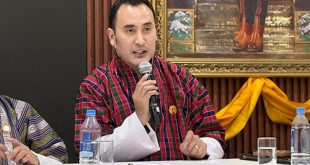
During the 32nd Meet-the-Press held yesterday, Minister of Foreign Affairs and External Trade (MoFAET), Lyonpo D.N Dhungyel, said that more than 8,621 transactions had been successfully processed through the Bhutan-India QR payment service as of 6th October 2026. He said the milestone marks progress in strengthening cross-border payment connectivity between Bhutan and India, adding that the service is being introduced through a phased rollout.
With approximately 65 million merchants in India accepting UPI QR payments, expanding acceptance across the network will take time and progress gradually. Four additional Indian banks, State Bank of India, HDFC Bank, Kotak Mahindra Bank and Union Bank of India, along with major third-party application providers PhonePe, Google Pay and Paytm, are undergoing technical integration, certification, testing and other required validations. Their onboarding is targeted for completion at the earliest.
“Once these banks and payment applications are enabled, acceptance coverage is expected to increase to approximately 80 percent of UPI payments in India, allowing Bhutanese users to make QR payments at a wider range of merchants,” he said. The RMA is working closely with NPCI International Payments Limited (NIPL) to expedite the onboarding of the remaining Indian banks and non-bank payment providers, monitor transaction performance and address technical and operational issues.
The two institutions are also working to improve the visibility of QR payment acceptance at merchant outlets for Bhutanese travelers in India and Indian visitors in Bhutan. RMA and NIPL have reaffirmed their commitment to expanding the payment linkage between the two countries.