The Bhutanese Leading the way.
The lack of a formal scrap export arrangement is leading to the imposition of Gunda Tax, extortion and the seizure of Bhutanese trucks in Jaigaon, threatening livelihoods in Bhutan in the process. It may also contribute to the exhaustion of the country’s landfills.
This is in contrast to the period before May 2022, when there were no restrictions or Gunda Tax, according to those affected.
The Bhutan Waste Management and Recycling Association (BWMRA) said it had written to the Government on the issue.
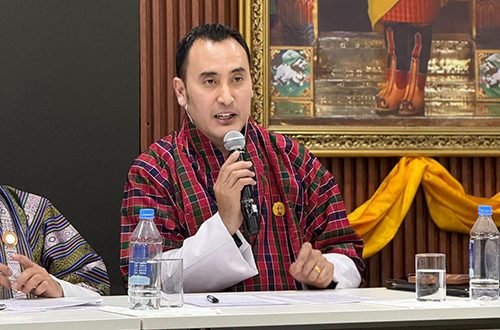
The Minister for Industry, Commerce and Employment, Namgyal Dorji, said he was not aware of the letter written by BWMRA or its contents.
He said the export of scrap materials to India was disrupted following changes in India’s import policy in August 2021. Since then, the Ministry of Industry, Commerce and Employment, on behalf of the Royal Government of Bhutan, has consistently pursued the matter with the Government of India through diplomatic channels, bilateral forums and other engagements.
During the Commerce Secretary-Level Meeting in September 2024, the Government of India positively considered Bhutan’s request to allow the export of unshredded metallic waste and scrap through the Jaigaon Land Customs Station (LCS), subject to the establishment of the required screening and testing facilities.
Exporters are also required to obtain a Pre-Shipment Inspection Certificate from an authorised Pre-Shipment Inspection Agency. However, the absence of such facilities and agencies in the vicinity has constrained the operationalisation of the arrangement.
MoICE has continued to follow up on the matter through the Ministry of Foreign Affairs and External Trade (MoFAET), most recently on 7 October 2026.
The Royal Government is awaiting confirmation from the Government of India on the required arrangements at Jaigaon LCS. It will continue to pursue the matter through the appropriate diplomatic channels to find a permanent solution.
Lyonpo said it should be noted that the import of scrap into India is heavily regulated, with strict conditions and compliance requirements imposed by Indian regulatory authorities. These requirements apply to all countries, not just Bhutan.
He said that if India’s regulatory requirements for scrap imports were not being followed, the export of scrap from Bhutan would become informal, which was likely to be the reason for the imposition of such illicit fines. He added that this situation was neither desirable nor sustainable.
He said there were a few domestic industries and businesses in Bhutan that required different types of scrap as raw materials. Until the situation was resolved with the Government of India, this could be one option for existing scrap dealers to consider, Lyonpo said.