The Bhutanese Leading the way.
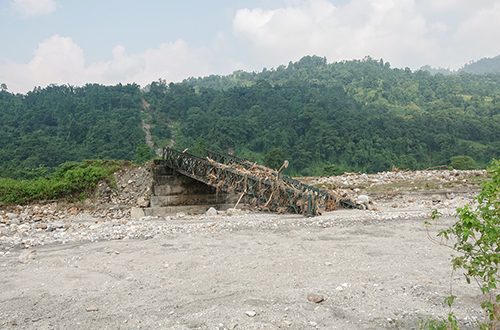
A new project has been launched to enhance the disaster resilience of critical urban infrastructure in Thimphu, Phuentsholing, and Samtse, where flood risks are high and urban populations continue to grow.
Heavy rainfall over the weekend swept through Bhutan, Nepal, and India, triggered floods that caused loss of lives and widespread damage to homes, roads, and key public infrastructure.
Several parts of southern Bhutan also reported swollen rivers, blocked routes, and damaged embankments, adding to growing concerns over the country’s exposure to climate-induced disasters.
As Bhutan continues to experience heavier and more erratic rainfall, the government is taking measures to strengthen the resilience of its cities.
The initiative is a collaboration between the Royal Government of Bhutan, the United Nations Development Programme (UNDP), and the Coalition for Disaster Resilient Infrastructure (CDRI).
According to UNDP, Bhutan is among five countries, Bhutan, Brazil, Honduras, India, and Sri Lanka, that received funding under the first call for proposals of CDRI’s Urban Infrastructure Resilience Program through the Infrastructure Resilience Accelerator Fund (IRAF), supported by the Government of India.
It aims to integrate disaster-resilient planning into city development to ensure that infrastructure systems can withstand the impacts of extreme weather.
According to UNDP, “A new project is underway supported by CDRI and UNDP, aimed at enhancing the disaster resilience of critical urban infrastructure systems in Thimphu, Phuentsholing, and Samste.”
The move follows a series of flood incidents, including the major flash flood that struck the Dechencholing community in Thimphu last summer, and the recent heavy rainfall that triggered flooding across the country this year.
With climate-related disasters becoming more frequent, authorities are prioritizing stronger infrastructure and better preparedness in urban areas.
The project, led by the Department of Local Governance and Disaster Management (DLGDM), will strengthen the flood resilience of critical urban systems in the three cities, home to over a quarter of Bhutan’s population.
It will focus on risk-informed planning, data-driven decision-making, and early warning systems to help local governments better respond to climate-related emergencies.
The UNDP states, “This project is not only about safeguarding urban infrastructure; it is about protecting lives, livelihoods, and building liveable cities that are inclusive, sustainable and resilient.”
Municipalities will benefit from training and capacity-building programs for city planners, engineers, and disaster risk management officials to design, build, and maintain disaster-resilient infrastructure.
Officials will also be trained to promote gender-responsive and disability-inclusive planning, ensuring that urban development addresses the needs of all citizens.
According to the Global Assessment Report on Disaster Risk Reduction (GAR) 2025) by the United Nations Office for Disaster Risk Reduction (UNDRR), every dollar invested in disaster risk reduction can save between three and fifteen dollars in future recovery efforts.
UNDP stated, “With USD 640,000 in funding from CDRI’s Urban Infrastructure Resilience Program (UIRP), funded through the Infrastructure Resilience Accelerator Fund (IRAF), the project will strengthen the risk-informed planning, data-driven decision-making processes and early warning system for critical urban services (storm water system, urban infrastructure design, monitoring and operation and green urban open spaces) in Thimphu, Phuentsholing and Samtse.”
UNDP notes that the project marks a major step toward strengthening Bhutan’s preparedness against extreme weather events. Moreover, by improving urban planning and investing in flood-resilient infrastructure, this project aims to reduce future risks and ensure safer, more sustainable cities for its growing population.