The Bhutanese Leading the way.
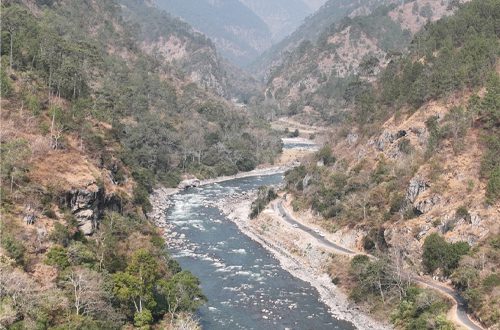
Around 20 percent of the electricity generated from the 1,125 MW Dorjilung Hydroelectric Power Project is expected to be used domestically, while the remaining 80 percent will be exported to India.
Officials said Bhutan primarily requires electricity during winter, while surplus electricity generated during summer can be exported.
The Dorjilung Hydroelectric Power Project has secured a USD 515 million financing package from the World Bank Group for the implementation of the project, which is expected to contribute to Bhutan’s renewable energy generation and economic growth.
The financing package comprises a USD 150 million grant and a USD 150 million credit from the International Development Association (IDA) to Druk Green Power Corporation Limited (DGPC) to be used as its equity. It also includes a USD 200 million International Bank for Reconstruction and Development (IBRD) enclave loan to Dorjilung Hydro Power Limited and a USD 15 million debt service reserve account loan to the Royal Government of Bhutan.
The financing is against the total project cost of USD 1.7 billion.
Tata Power will inject USD 200 million as its equity component, while the International Finance Corporation (IFC) has committed another USD 300 million in non-recourse project financing. IFC has also been appointed as the lead arranger for the remaining USD 700 million required to be raised.
According to officials, the tariff for the project will be set to ensure that the debt component can be serviced while providing a 16 to 15.5 percent annual return to equity shareholders on their equity injection.
The main civil packages for the project are planned to be awarded by October 2026. The project is scheduled to be completed within 60 months from the award of the main civil works packages, with completion expected by October 2032.
Once operational, the Dorjilung Hydroelectric Power Project is expected to add 1,125 MW of installed capacity, constituting around 30 percent of Bhutan’s current installed hydropower capacity of slightly over 3,500 MW. The project is also expected to generate around 4,500 GWh of clean electricity annually.
The project is expected to enhance Bhutan’s renewable energy generation, reduce winter power shortages, support electricity exports, and strengthen fiscal revenues. It is also expected to support Bhutan’s transition toward a hydropower financing model that mobilizes private capital through a public–private partnership structure.
The project will also contribute to Bhutan’s national target of achieving 25,000 MW of installed renewable energy capacity by 2040.
According to the World Bank’s Project Appraisal Document, the projected 2.4 percent increase in Bhutan’s GDP during operations was estimated by the World Bank Group based on project data and Bhutan’s medium-term macro framework.
The World Bank Group will play a central role in the implementation of the project as both financier and technical partner. Its support will include financing, assistance with project preparation, and institutional capacity strengthening.
The World Bank Group will also apply its Environmental and Social Framework to ensure compliance with international safeguards. During implementation, it will monitor project progress, procurement processes, fiduciary performance, and adherence to environmental and social commitments. It will also oversee results monitoring and verification to ensure transparency and accountability throughout the project cycle.
The Dorjilung Hydro Power Limited, incorporated on 8th December 2025, will implement and execute the project. The Special Purpose Vehicle has DGPC holding 60 percent shareholding and Tata Power Company Limited holding the remaining 40 percent.
The Special Purpose Vehicle is expected to have around 300 employees to manage and oversee project construction. On average, contractors are expected to employ around 2,200 workers annually during construction, with the workforce expected to peak at around 5,000 to 6,000 workers.
Local communities in Mongar and Lhuentse are expected to benefit from employment opportunities, local business activities, improved roads and infrastructure, livelihood and entrepreneurship support, skilling initiatives, seed finance for micro-enterprises, and community-prioritized last-mile services.
The Community and Local Development Program is expected to benefit around 10,000 people, including women, youth, vulnerable groups, and remote communities.
Environmental and social safeguards planned for the project include an Environmental and Social Management Plan, Biodiversity Management Plan, Environmental Flow Management Plan, Land Acquisition and Livelihood Restoration Plan, Stakeholder Engagement Plan, Grievance Redress Mechanism, Cultural Heritage Management Plan, Gender Action Plan, Sexual Exploitation and Abuse/Sexual Harassment Action Plan, Labour Management Procedures, Community and Local Development Plan, Dam Safety Plans, and independent environmental and social monitoring through panels of experts and advisors.