The Bhutanese Leading the way.
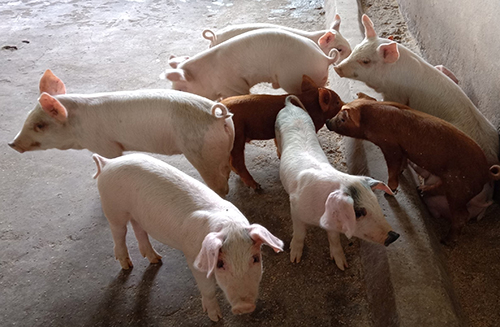
With a spate of recent of African Swine Fever (ASF) outbreaks and also the issue of farmers unable to get market prices due to excess production the Minister of Agriculture and Forests Younten Phuntsho outlined measures saying he fully understands the distress our piggery farmers are facing.
He said the recent drop in pork prices, combined with the ASF outbreaks has created a very challenging situation on the ground and this is something the Ministry and the Government is taking very seriously.
On ASF
In light of these developments, the Ministry has intensified biosecurity measures, surveillance, and containment protocols to prevent further spread of the disease and minimize farmer losses.
The National African Swine Fever Prevention and Control Plan (NASFPCP), 2021 serves as the national framework for preventing the incursion of African Swine Fever (ASF) virus into the country and for ensuring rapid mobilization of the necessary resources during outbreaks to minimize morbidity, mortality, economic losses, and social disruption. In the absence of effective vaccines and specific treatment for ASF, the principal strategy for disease control and elimination remains the rapid implementation of a stamping-out policy, including the humane culling and safe disposal of infected and suspected pigs and contaminated materials.
The Incident Command Structure established for veterinary response to ASF outbreaks consists of the National Incident Command Committee (NICC), Technical Working Group (TWG), Incident Operation Centre (IOC), and Rapid Response Teams (RRTs). The National Incident Command Committee serves as the highest policy and decision-making body for ASF prevention, preparedness, response, and containment activities in the country. The Committee provides overall strategic guidance and oversight for the implementation of the NASFPCP during both preparedness and outbreak situations. In the event of an ASF outbreak, the NICC officially declares the outbreak and issues public notification based on the technical advice and recommendations of the Technical Working Group (TWG). The Committee also provides policy direction and leadership to ensure a coordinated, timely, and effective national response.
The Technical Working Group (TWG), comprising experts from the Department of Livestock (DoL) and the Bhutan Food and Drug Authority (BFDA), provides technical advice and recommendations to the NICC and IOC on outbreak investigation, disease control strategies, surveillance, biosecurity, quarantine measures, and other technical aspects of ASF prevention and containment.
During an outbreak, the Incident Operation Centre (IOC) is activated to coordinate and ensure effective outbreak management and containment. The IOC functions as the field-level coordination and implementation unit responsible for the rapid execution of response and control measures in affected areas. It coordinates field operations including surveillance, quarantine enforcement, movement control, culling and disposal, cleaning and disinfection, biosecurity implementation, and public awareness and risk communication activities.
The Rapid Response Teams (RRTs), comprising representatives from the relevant technical sectors involved in ASF prevention and control, are responsible for implementing the prescribed outbreak response and containment measures in the field. The RRTs are organized into operational groups based on the mandates and technical responsibilities of the respective agencies. The livestock sector is primarily responsible for disease outbreak investigation, surveillance, sample collection, epidemiological assessment, technical guidance, and logistical support for outbreak response operations.
The Bhutan Food and Drug Authority is responsible for quarantine enforcement, movement control, and 3-D operations, including depopulation, disposal, and disinfection. The Royal Bhutan Police is responsible for maintaining law and order, enforcing movement restrictions, and providing security and operational support during outbreak response activities. Other relevant stakeholders and local authorities support the implementation of coordinated response and containment measures as required.
The following key activities are implemented during an outbreak to rapidly contain the disease within the primary infected area and prevent further spread or progression to endemic status.
Zoning of affected areas into infected zones, protection/surveillance zones, and disease-free zones to facilitate targeted control measures.
Strict quarantine and movement control measures, including restrictions on the movement of pigs, pork, pork products, feed, vehicles, equipment, and other potentially contaminated
materials from affected areas.
Enhanced surveillance and epidemiological investigations to detect additional cases, trace sources of infection, identify at-risk premises, and monitor disease spread.
Immediate humane depopulation (stamping out) of infected and in-contact pigs, followed by safe disposal of carcasses, contaminated materials, feed, and waste through burial or incineration.
Thorough cleaning and disinfection of infected premises, vehicles, equipment, slaughter facilities, and other contaminated sites using approved disinfectants and biosecurity protocols.
Implementation of strict biosecurity measures at farms, along the value chain, and at border entry points to prevent further transmission of the disease.
Provision of biosecurity-based compensation to farmers whose healthy pigs are pre-emptively culled as part of disease containment measures.
Temporary destocking and controlled restocking protocols, including maintaining infected premises or villages free of pigs for a prescribed period and ensuring fulfillment of required biosecurity standards before repopulation is permitted.
Public awareness and risk communication activities to educate farmers, traders, transporters, and the general public on ASF transmission, prevention measures, and compliance with control regulations.
Additionally, with illegal importation of pork and pork products continuing to possess risk, efforts are being put to strictly curb illegal import through cross-sectoral collaboration including Bhutan Food and Drug Authority (BFDA).
As one of the long term measures, the ministry is also sensitizing and creating awareness on the criticality to strengthen biosecurity measures at the farm level and individual farmers level with the increasing threat of transboundary animal disease such as ASF.
Another measure is to protect farmers against losses from disease outbreaks for which the Ministry has launched the National Crop and Livestock Insurance Scheme that includes coverage for the piggery sector. In collaboration with insurance companies and MoAL field offices, farmers are being sensitized and encouraged to enroll in the scheme. The insurance coverage includes compensation for livestock fatalities arising from diseases such as ASF.
For pork prices
Alongside strengthened enforcement and disease prevention measures, to ensure longer-term market support and price stabilization, the Ministry is also focusing on managing domestic production to better align supply with prevailing market conditions.
Efforts are underway to address the broader structural challenges in the pork market.
The Ministry is facilitating timely breeding and piglet management measures to help stabilize production and reduce further market imbalances.
Beside this, in order to provide immediate respite in the shorter term, the ministry has formed a Technical Working Team consisting of members from MoAL, MoF, BLDCL and BDBL.
The following actions are being proposed for implementation to address the issue highlighted above.
One of the key immediate interventions proposed to address the prevailing pork market challenges is the revision and rationalization of the existing pricing framework under the Price Guarantee Scheme (PGS). The current pork market situation indicates significant distortions in pricing mechanisms across different stages of the value chain, resulting in unsustainable price disparities between farmers, aggregators, wholesalers, vendors, and final consumers.
Reconsideration of the floor pricing structure under the PGS to establish a more balanced, realistic, and market responsive pricing mechanism that protects both producers and consumers while facilitating market stabilization.
A systematic phased harvesting and coordinated marketing intervention to address the growing accumulation of stranded market ready pig fatteners across the country and to immediately stabilize the production cycle, reduce biological overrun, minimize financial stress on farmers, and restore confidence in the pig value chain.
In order to strengthen organized market aggregation and coordinated supply systems, the Ministry is formalizing the operationalization of livestock aggregators in key production areas such as Dagana and Tsirang. In fact, the Ministry has established dedicated shop stalls at Kaja Throm to sell pork and the associated products at affordable prices.
Additionally, the ministry is working towards optimizing the utilization of cold store infrastructure that will enable storage and distribution of pork over staggered periods to maintain price stability.
Efforts are also being made to improve market access and facilitate linkages between surplus production areas and deficit Dzongkhags to improve the offtake of pigs.