The Bhutanese Leading the way.
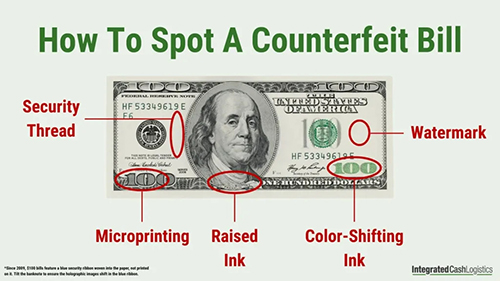
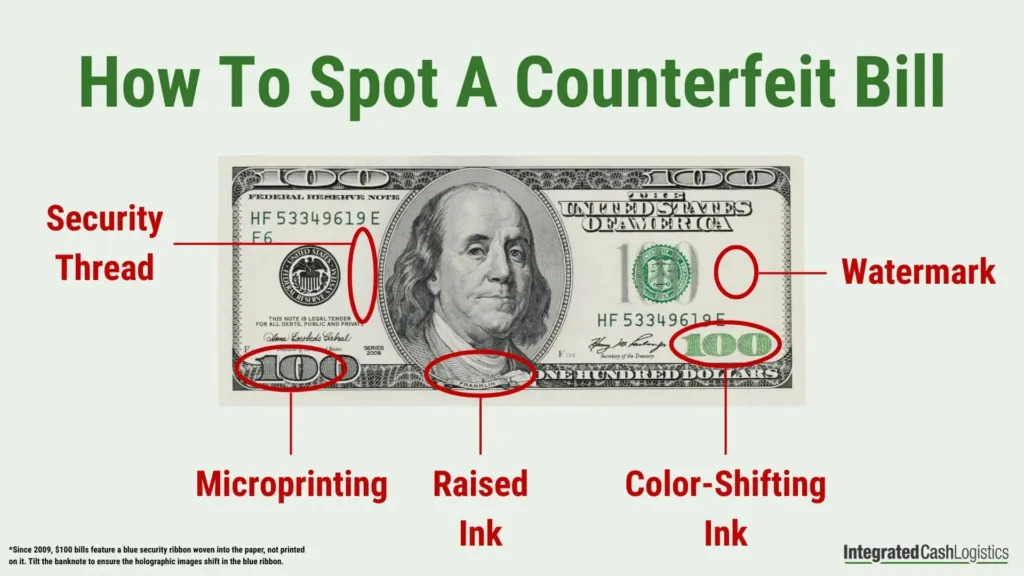
Following the recent seizure of counterfeit United States Dollar (USD) 100 notes in Bhutan, The Bhutanese sought guidance from the Royal Monetary Authority (RMA) on how members of the public can distinguish genuine USD 100 currency from counterfeit notes, particularly as more Bhutanese use USD for overseas education, travel, medical treatment, business transactions and other international payments.
According to the RMA, one of the simplest ways to identify a genuine USD note is to adopt the “Feel, Look and Tilt” approach.
People should first ‘feel’ the note for its distinctive paper quality and raised printing, particularly on the portrait and lettering.
They should then ‘look’ for the watermark and embedded security thread by holding the note against a light source.
Finally, they should ‘tilt’ the note to observe the colour-shifting ink and, on the latest USD100 note, the movement of images within the blue three-dimensional (3D) security ribbon.
The RMA stressed that no single security feature should be relied upon in isolation, explaining that genuine USD notes contain multiple security features that complement one another and are difficult to replicate accurately.
RMA said most of the important security features can be verified without specialized equipment.
In addition to the “Feel, Look and Tilt” method, public is encouraged to compare a suspected note with another genuine US dollar note of the same denomination whenever possible.
The RMA said people should obtain foreign currency only through authorized financial institutions, such as banks and licensed foreign exchange service providers.
While many Bhutanese obtain USD through these authorized channels, some continue to exchange foreign currency through private transactions, particularly when preparing for overseas travel or when seeking foreign currency on short notice.
For those obtaining USD from individuals, the RMA recommends carefully examining all security features, verifying the denomination and condition of the notes, requesting supporting documentation where appropriate, exercising caution if the exchange rate appears unusually favourable, and avoiding transactions where the source of the currency cannot be reasonably verified.
According to the RMA, obtaining foreign currency through authorized channels significantly reduces the risk of receiving counterfeit or altered banknotes.
The RMA also pointed out several common mistakes people make when checking USD notes.
These include relying only on the colour or general appearance of a note, checking only one security feature instead of several, assuming a note is genuine simply because it appears new or carries a convincing serial number, and failing to compare a suspected note with a genuine one.
If a person suspects they have received a counterfeit USD note, the RMA advises against using, spending or passing it on to another person. Instead, the note should be handled as little as possible to preserve potential evidence before being reported to the nearest police station or presented to a commercial bank for further examination.
The Authority said prompt reporting assists law enforcement agencies in preventing counterfeit notes from circulating further.
The information comes in the wake of a counterfeit currency case investigated by the Royal Bhutan Police (RBP), in which two men were arrested after being found in possession of counterfeit USD notes.
South Thimphu Police Station arrested the suspects, aged 35 and 45, following a tip-off received on 6th March 2025.
Investigations led to the arrest of the first suspect in Babesa on 7th March, where police recovered 95 counterfeit USD 100 notes from his residence.
During questioning, the suspect disclosed that an accomplice possessed an equal quantity of counterfeit currency.
Acting on the information, police arrested the second suspect from Lhamoizingkha, Dagana, on 9th March and recovered another 95 counterfeit USD 100 notes.
In total, police seized 190 counterfeit USD 100 notes with a face value of USD 19,000.
The RMA said isolated cases involving suspected counterfeit foreign currency have surfaced in Bhutan from time to time but remain relatively limited.
Nevertheless, increasing international travel, cross-border transactions and the global circulation of foreign currencies mean the risk cannot be overlooked.
The RMA added that it continues to work with commercial banks, law enforcement agencies and other stakeholders to strengthen detection measures and safeguard the integrity of Bhutan’s financial system.