The Bhutanese Leading the way.
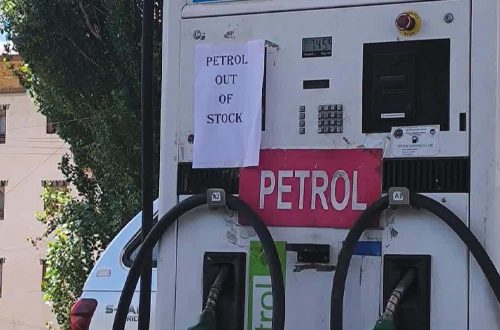
The past two weeks have seen a rush to fuel pumps in Thimphu for petrol, with rumors of a petrol shortage and the resultant panic leading to all petrol pumps running out at different times.
The first two pumps to run out of petrol were the STCBL outlets in Ramtokto and Jungshina which inflamed the panic followed by Druk Petroleum’s two stations, Damchen’s two petrol stations in Changzamtok and Olakha and then BOD Mothithang. Even the biggest of them all, BOD Lungtenzampa, ran out for a few hours.
This is not the first time, as there have been a few instances in the last few months since the start of the Iran War where there has been a similar rush for petrol and even diesel, with rumors of shortages or impending price hikes.
However, the recent rush for petrol saw this problem getting particularly acute, with long lines at several fuel depots for around two weeks.
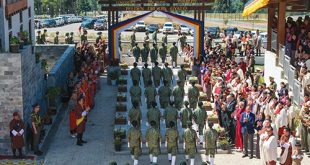
A major reason for this stems from consumer preference for STCBL-operated fuel outlets, made worse by a huge gathering in Thimphu due to the ongoing Kathri prayers and Wang at Buddha Point.
A government investigation into the issue revealed the cause of the panic and the resultant ‘shortage’ and long lines.
Fuel dealers said that the situation stemmed from an exceptional surge in fuel demand rather than any disruption in supply from the source.
They reported that stocks which would ordinarily last two to three days under normal consumption were being exhausted within half a day.
A significant contributing factor is consumer preference for the STCBL-operated fuel retail outlets at Ramtokto and Jungshina.
It was found that when any outlet temporarily runs out of stock while awaiting replenishment, many motorists assume that the fuel is becoming scarce and rush to other stations, triggering panic buying and demand spikes across the remaining outlets.
This behaviour is partly driven by a perception among motorists that STCBL fuel is of superior quality, a perception which the report said is not factually correct.
It said that all petrol and diesel imported into Bhutan originate from the same three public sector undertakings: Indian Oil Corporation Limited (IOCL), Bharat Petroleum Corporation Limited (BPCL), and Hindustan Petroleum Corporation Limited (HPCL).
STCBL sources its fuel from Hindustan Petroleum Corporation Limited, while other dealers source from IOCL and BPCL.
The report said that since all three are government-controlled entities, fuel supplied by any PSU meets the same Euro BIS VI quality standard.
Fuel dealers have also reported a marked increase in vehicle traffic throughout Thimphu, which they attribute to the ongoing Kathri at Buddha Point.
The event has drawn a large number of devotees, visitors, and accompanying family members to the city, substantially increasing vehicle movement and fuel consumption.
With the exception of STCBL, all other fuel dealers have continued to operate beyond the normal service levels while maintaining sufficient inventories to meet customer demand.
The report says that consumer refuelling patterns have contributed significantly to the temporary shortages experienced at certain outlets.
Under normal circumstances, motorists generally prefer STCBL-operated outlets and do not visit other dealers such as BOD, DPCL, or Damchen, unless STCBL stocks are completely exhausted.
While STCBL typically maintains stocks sufficient to meet two to three days of demand, the recent surge in consumption has depleted these stocks within half a day.
The resulting gap between stock depletion and the arrival of replenishment supplies has created temporary supply interruptions at STCBL outlets.
Although adequate fuel remains available at other dealers, these interruptions at STCBL have fostered a public perception of a townwide shortage, prompting panic buying as large numbers of motorists converged on whichever stations still have fuel in stock.
Consequently, outlets that would ordinarily experience steady demand have recorded exceptionally high sales within very short periods.
For instance, the BOD fuel retail outlet at Lungtenzampa has sold approximately 24,000 liters of petrol within half a day, a volume far exceeding its normal daily sales and, according to the station manager, an unprecedented occurrence.
Dealers also attribute this surge in demand to the concluding phase of the ongoing Kathri, during which major religious events, including the Dorji Puen formation ceremony, are being conducted.
Thousands of devotees, relatives, and visitors associated with the event are currently present in and around Thimphu, resulting in substantially increased vehicle movement across the city.
This assessment is corroborated by the disproportionate rise in petrol demand relative to diesel, indicating that the surge is being driven primarily by private vehicles and taxis transporting devotees and visitors rather than by commercial traffic.
The Royal Bhutan Police Traffic Division has confirmed that taxis are currently making approximately 14 to 16 trips per day to Kuenselphodrang compared to the usual three to four trips per day under normal circumstances.
In the past, anticipated price increases whenever one or two outlets experienced temporary stockouts have also led to a rush.
The general perception among motorists in Bhutan, and especially in Thimphu, is that STCBL fuel is better in quality and gives higher mileage.
In fact, motorists still travel all the way to Ramtokto to fuel up and now also line up at Jungshina.
The Trade Department has been saying that the fuel from the three PSUs is essentially the same, and this tallies with online forums in India that discuss this issue. However, this paper also found some online posts where some Indians said that HPCL outlets in India gave higher mileage and a smoother engine feel, especially for bikers. At the same time, there were those who also had a preference for IOCL and BPCL.
HPCL is a new entrant to Bhutan and came in with STCBL, supplying only to them, and also gives technical advice in setting up the pumps.
While the fuels of the three PSUs are essentially the same, they can have minor differences in terms of proprietary additives added to them. If what consumers in Bhutan say is true, then it may indicate HPCL has a slightly better supply chain, additives, or quality checks, and the ultimate pump that sells the fuel also makes a major difference.
The Department of Trade announced on July 10 that all eight fuel retail outlets have adequate stock of fuel.
When it comes to petrol stock, BOD Lungtenzampa has 64,000 liters, BOD Mothithang has 18,000 liters, DPCL Chubachu has 17,300 liters, DPCL Langdru has 16,800 liters, Damchen Olakha has 12,773 liters, Damchen Changzamtok has 13,200 liters, STCB Ramtokto has 27,950 liters and STCB Jungshina has 34,600 liters.