The Bhutanese Leading the way.
There were some reports last year and this year claiming that Bhutan’s coal reserves are depleted, and the reports are mainly based on the Environmental Accounts Statistics 2024 and 2025.
However, the Department of Geology and Mines (DGM) under the Ministry of Energy and Natural Resources disputed this claim and the reports, and said that Bhutan has not depleted its coal reserves.
DGM said Bhutan has known reserves of 5.656 million metric tonnes in 14 sites and it will likely be more once more exploration is done.
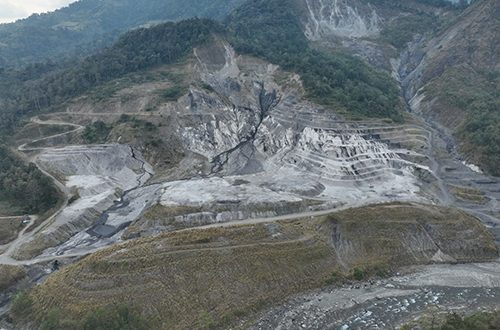
DGM said that currently Bhutan is mining around 130,000 metric tonnes of coal from its two coal mines in Rishore and one mine in Tshophangma against the national demand of 200,000 metric tonnes.
The two mines in Rishore being operated by the State Mining Corporation Limited (SMCL) sit on a combined lease area of 137.50 acres with an estimated reserve of approximately 1.1 million metric tonnes (MT).
The Tshophangma mine sits on 0.451 million metric tonnes (451,000 MT) reserves
Apart from this, in March 2023 the Cabinet had granted approval for an additional 1,000 acres in the Rishore area for coal mining by the SMCL to augment national coal production and meet the country’s growing domestic demand.
Of the 1,000 acres, the DGM has processed the area for the Rishore mine extension of SMCL which is in the advanced stage of leasing, with a total area of 666.348 acres.
The total additional reserve of coal from the proposed area extension of 666.348 acres is around 0.471 million metric tonnes (471,638.44 MT).
DGM feels that once these two new mines are up and running, then Bhutan will be able to fully meet its internal requirements, though it may have to import some higher-quality coal for blending unless it finds even better-quality deposits in the future in Bhutan.
The above two operational coal mines and two more soon-to-be-operational mines are only four of the 14 areas identified with coal deposits, of which 10 more are yet to be opened up.
DGM said that the economically viable coal deposits are confined to the Permian Gondwana Formation, a distinct lithostratigraphic unit within the Lesser Himalayan Sequence that extends from the Manas River in the west to the country’s eastern border.
Although 14 coal occurrences and deposits have been identified within this succession, commercial mining is presently restricted to two leased and operational coal mines in Samdrup Jongkhar Dzongkhag, covering a combined lease area of 137.50 acres with an estimated reserve of approximately 1.1 million metric tonnes (MT).
Coal seams occur predominantly within the upper part of the Gondwana Formation, where they are interbedded with dark grey to black carbonaceous shale, argillite, and very fine-grained sandstone.
However, the complex tectonic evolution of the Himalaya has subjected these strata to intense folding and thrust faulting, resulting in substantial structural deformation of the coal-bearing horizons. Consequently, the coal seams are commonly discontinuous and exhibit highly variable lateral continuity, posing significant challenges to geological correlation, seam delineation, and the reliable estimation of coal resources and reserves.
When asked if Bhutan is in danger of running out of coal reserves, the DGM said that within Bhutan’s Gondwana succession, 14 coal occurrences and deposits have been documented to date.
“Because this geological formation extends continuously from the Manas River in the west to the country’s eastern border, these known sites represent only the currently explored localities rather than the full extent of the nation’s coal resources.”
While future geological mapping and exploration by the Department and State-Owned Enterprises are expected to identify additional coal occurrences and deposits, accurately quantifying the nation’s coal resource potential remains a significant challenge due to the complex structural architecture of the Himalayas.
DGM said that intense tectonic deformation, characterized by extensive folding, faulting, and thrusting, has deeply buried, displaced, and fragmented many coal-bearing strata. Consequently, individual coal seams exhibit highly variable lateral continuity, frequently pinching out, being offset by faults, or occurring as isolated lenses.
This structural complexity severely constrains the ability to correlate seams, delineate resources with confidence, and establish definitive reserve estimates or predict the ultimate lifespan of the resource.
“Accordingly, while it is not currently possible to determine the total extent of Bhutan’s coal resources with a high degree of certainty, the available geological evidence does not support the assertion that the country’s coal deposits have been exhausted or are likely to be depleted in the foreseeable future. Rather, the principal limitation lies in the uncertainty of resource quantification arising from the complex geological setting, rather than in the absence of coal itself,” said the DGM.
DGM has currently issued an Exploration Permit for coal to SMCL under Samdrup Jongkhar Dzongkhag.
While the helicopter survey by Xcalibur is mainly aimed at metallic minerals, its overall findings could also help give more clues and information on additional coal deposits.