The Bhutanese Leading the way.
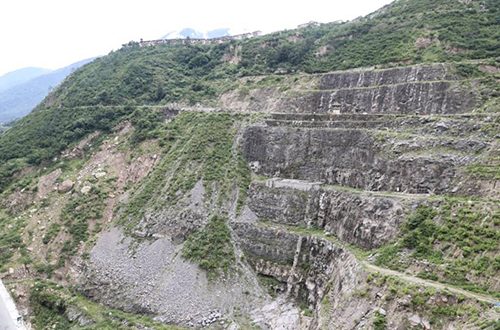
Work on the much-delayed 1,200 MW Punatsangchu-I Hydropower Project (P I) resumed on 10th April 2026, with concrete pouring work on the dam.
As per the understanding between Bhutanese and Indian officials engaged in long talks and discussions over the P I project, the dam construction was supposed to be accompanied with mitigation measures on the right bank.
Landslides on the right bank in July 2013, August 2016, and January 2019, despite earlier rectification measures, led to the suspension of dam construction and prolonged delays.
However, despite the April deadline, the right bank rectification works have yet to begin because the project consultant, Water and Power Consultancy Services (India) Ltd (WAPCOS) and the Central Water Commission (CWC), the project’s principal design authority, have not yet given final approval to the designs and the supplementary agreement.
After missing the April deadline, there have been numerous unofficial deadlines to send the final designs approval and the accompanying agreement but each one has been missed.
What has not helped matters is that two key people on the design committee have finished their terms.
In fact, the main designer in CWC associated with the right bank designs has superannuated and now there is a new main designer who has taken his place and needs time to understand the designs before giving approval.
The supplementary agreement and the designs in it that need final approval from WAPCOS and CWC is needed for the Project Authority so that it can sign this agreement with the contractor Larsen and Toubro outlining the designs and scope of works to be done for the rectification of the right bank.
The designs of the right bank have largely been agreed to between the two sides, but WAPCOS and CWC were supposed to do the final vetting of the designs before work is given to the contractor.
Work on the dam has been going on since April with the pouring of concrete on the dam base.
Background
Bhutan had at one stage considered abandoning the dam for a barrage but this was not agreed to by the other side.
Bhutanese officials then wanted as much safety as possible in the rectification measures for the right bank, and there were three key demands from Bhutan.
The main one is removing as much of the overburden or the slope above the Wangdue-Tsirang national highway above the dam, as possible, covering a stretch of 450 meters to reduce overall weight and pressure on the right bank.
The Indian side initially proposed a lesser removal at a 30-degree slope, but the Bhutanese side pushed for a 26-degree slope, citing concerns over long-term stability. This stalled discussions for a long time and was resolved only after Bhutan agreed to bear the additional Nu 4 billion cost for the extra 4-degree slope reduction.
The second ask was building deep drainage wells inside the right bank to collect water inside the mountain and pump it out using specialized pumps.
Given the fractured nature of the right bank, if any dam water seeps through the right flooded hillside to the right bank in front of the dam through any cracks or fractures, it can easily be collected and removed instead of water building up inside the right bank and weakening it.
Along with the deep wells there will be extensive grouting done with concrete to improve internal stability.
The third ask, which has been agreed upon, involves strengthening one of the two diversion tunnels currently used to divert water from the dam site and installing a gate over it.
The main reason is that such a diversion tunnel can be used in the winter months to divert the water away from the stretch in front of the dam, allowing repairs to the stilling basin, which is the concrete basin area in front of the dam which absorbs the force of the water. This basin prevents erosion in front of the dam.
Additionally, in the event of a massive flood, the tunnel could serve as an additional gate alongside the five proposed sluice gates on the dam.
In terms of stabilization activities, one of the first tasks will be to address the January 2019 slide and remove it first. Around 26 reinforced cement concrete (RCC) piles will be inserted vertically at road level into the hillside to stabilize that section.
This will be followed by further strengthening measures, including additional piles and cable anchors.