The Bhutanese Leading the way.
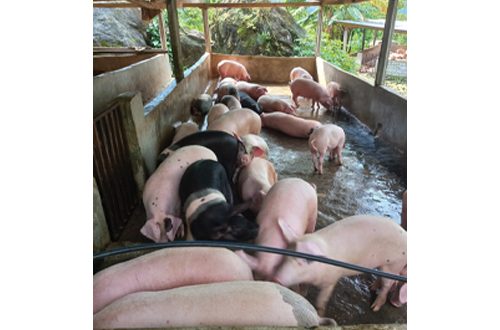
Farmers say the livestock insurance scheme came too late to protect animals already reared, while poor awareness and rising feed costs left many unable to insure their pigs before the devastating outbreak
The ongoing pig disease outbreak in Samtse has left farmers facing devastating financial losses, with livestock worth tens of millions of Ngultrum already wiped out. Despite the scale of the crisis, many affected households remain ineligible for compensation because their pigs were not covered under the livestock insurance scheme. Over the past few weeks, farms across the dzongkhag have reported heavy mortality, with many losing more than 30 pigs each. For individual households, the losses amount to between Nu 500,000 and Nu 600,000 within a matter of days.
For most rural families, pig farming is not a supplementary source of income. It is their primary financial asset and a vital source of cash for children’s education, medical expenses, loan repayments, and daily household needs. The continued deaths have pushed many farming households into severe financial distress. The lack of insurance has become a key issue in the aftermath of the outbreak. However, farmers argue that the current situation cannot be viewed in isolation.
They point out that the livestock insurance scheme was introduced only during the last session of Parliament, long after many of the affected pigs had already been reared. As a result, the animals were exposed to disease risks before the scheme became available. Farmers say it is therefore unreasonable to expect insurance to cover losses that occurred before the policy was introduced. Many farmers also say they were unaware of the new insurance scheme. In several remote gewogs, information about the programme had not reached livestock owners when they were raising their pigs. They believe limited awareness prevented many eligible farmers from enrolling in the scheme.
Affordability remains another major concern. Pig farmers have already been struggling with rising feed prices and weak market conditions. Many say they were finding it difficult to maintain their livestock even before the outbreak began. Paying insurance premiums under such financial pressure was beyond the reach of many households.
Chandra Ghalley, Chief Dzongkhag Livestock Officer of Samtse, said that according to the National Statistics Bureau, the dzongkhag has 1,697 households with a total population of 12,643 engaged in pig farming. He said livestock field staff are stationed in every gewog and have been actively conducting awareness programs on agriculture and livestock insurance. He added that the Royal Insurance Corporation of Bhutan Limited (RICBL) has also carried out advocacy programs for local government leaders to promote livestock insurance. “Approximately 400 pigs have died from the disease so far,” Ghalley said.
He explained that livestock insurance is voluntary and farmers are free to decide whether to enroll. He added that compensation is provided only when disease containment measures are officially implemented following an outbreak. Farmers are required to pay only 50 percent of the annual insurance premium, while the remaining 50 percent is subsidized by the government for insured animals. As a result, only 23 farmers have received compensation. According to Ghalley, the disease is primarily spreading through the movement of people across the border and the practice of feeding pigs untreated swill.
Dhan Kumar Rai, a resident of Norbugang Gewog, said he lost 18 of the 22 pigs he was rearing after they were infected by African Swine Fever (ASF), resulting in an estimated financial loss of Nu 600,000 to 700,000. Rai said he has been engaged in pig farming for more than seven years and that it has been the primary source of income for his family. Following the outbreak, he was left with little choice but to sell his remaining pigs. “The pigs were our family’s main source of income. We depended on them to meet our household expenses,” he said.
Like many other farmers affected by the outbreak, Rai now faces uncertainty over how to rebuild his livelihood. The widespread deaths of pigs have wiped out years of investment and left many households struggling to recover. For communities where pig farming serves as the main source of cash income, the outbreak has pushed families to the brink of severe financial hardship.
While farmers acknowledge that livestock insurance is an important safeguard for future disease outbreaks, they argue that it should not be used as the sole basis for denying assistance during the current crisis. They are calling for immediate relief measures, saying the present outbreak has destroyed livelihoods that were built long before the insurance scheme came into effect.