The Bhutanese Leading the way.
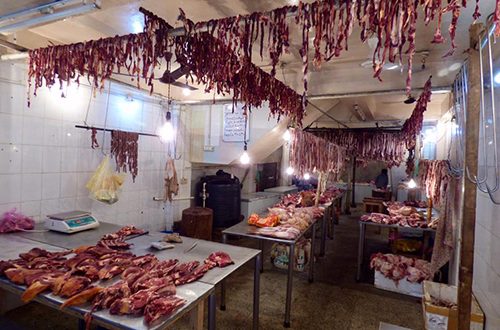
Thimphu’s meat market is showing strong signs of real price competition. This shift comes nine months after regulators dismantled a long-running price-fixing cartel.
A new investigation by the Competition and Consumer Affairs Authority (CCAA) examined 15 different meat products. Officials surveyed 65 meat shops across Thimphu Town. CCAA wanted to see if shops were genuinely competing with one another. They also wanted to know if vendors were still quietly fixing their rates.
The findings show that the old price-fixing system has largely dissolved. Previously, the Bhutan Meat Vendors Association (BMVA) forced all member shops to charge identical prices. This prevented shops from competing on price. CCAA ordered the association to halt this practice. They then trained vendors on how to set prices independently.
Now, fresh meat products show significant price variations across the capital. This is the clearest sign of a healthy, competitive market. For instance, local pork prices vary by a massive 80 percent. The cheapest shop surveyed sells local pork at Nu 300 per kilogram. Meanwhile, the most expensive vendor charges Nu 650 per kilogram.
A similar trend is visible in beef and dried meats. The gap between the cheapest and dearest shops for beef and Sekam ranges from 19 to 31 percent of the average price.
This translates to a difference of Nu 150 to Nu 220 per kilogram. Dried beef, known as Shakam, shows a massive absolute gap of Nu 800 per kilogram. This represents roughly 33 percent of its average market price.
These price gaps indicate that shops are using independent business strategies. CCAA verified this by ranking each shop’s overall pricing level. If shops were still quietly colluding, almost all of them would charge average rates. Instead, more than two-thirds of the shops fell into distinct cheaper or costlier bands.
The report states that it found that 19 shops are consistently cheaper than average. Another 15 shops are consistently pricier. Two shops are much cheaper, and eight are much pricier. This consistent behaviour proves shops are competing rather than following a shared secret list.
However, some products still show tight price clustering. Packaged, factory-weighed frozen chicken is sold at almost identical rates across 85 to 93 percent of shops. The price spread for these products is very low, ranging from 2.2 to 3.9 percent.
CCAA explained that this clustering is entirely normal. Frozen chicken is an imported, pre-packed product. It is usually sold near the price set by the supplier. Therefore, this uniform pricing is not a sign of collusion.
Fish prices sit between these two extremes. Products like Rahu, Panga, and Katla show moderate price spreads of 3.9 to 5.5 percent. Most fish shops follow reference prices set by a small number of wholesalers.
CCAA noted some limitations in its study. The data represents a single snapshot in time. It does not account for differences in meat quality, cut, or freshness. Furthermore, the sample size varied from 9 shops for imported bone-in beef to 60 shops for local chicken.
To keep the market competitive, CCAA recommends regular quarterly price surveys. This will help detect any quiet return to fixed pricing.
The authority also plans to keep publishing comparative retail prices to help consumers make informed choices. Price transparency remains a powerful, low-cost tool to keep vendors honest and competitive.