The Bhutanese Leading the way.
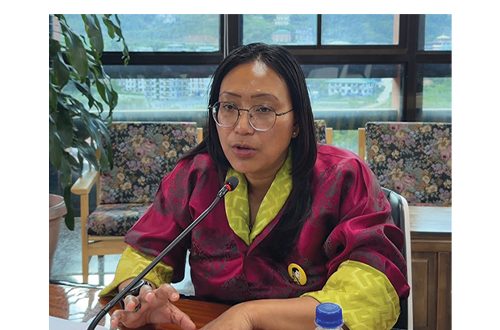
The Education Minister said corporal punishment is prohibited in schools and that allegations of such conduct are taken seriously.
Lyonpo said that individual incidents are addressed by schools and Dzongkhag and Thromde Education Offices through established procedures, while the Ministry provides the policy framework, guidance and system-level oversight.
This paper also separately followed up with the Ministry on the employment consequences for teachers convicted in cases involving corporal punishment. The Ministry mentioned that decisions on the suspension or termination of teachers fall under the mandate of the Royal Civil Service Commission (RCSC), in accordance with civil service rules and regulations.
Moreover, the Ministry is strengthening its approach through the School Discipline Policy 2026, which will clarify roles, procedures and permissible disciplinary measures while promoting positive, constructive and non-violent approaches to student discipline.
Lyonpo said that the Ministry will also continue to sensitise and support teachers and school leaders on child protection, positive discipline and their professional responsibilities. This includes the nationwide Social and Emotional Learning (SEL) training conducted last year, which covered relevant laws, rules and regulations related to child safety and protection.
Moreover, Lyonpo said that the Ministry recognises the need for better evidence on the prevalence of corporal punishment in schools. “Future school-level Situational Analysis and student surveys may include more systematic questions on students’ experiences of physical punishment, including where it occurred, its frequency, whether it was reported and whether students felt safe seeking help,” the Lyonpo said.
The Ministry said this would help it better understand the situation and strengthen prevention and response measures.
Furthermore, the planned nationwide rollout of the Mentor-Mentee Programme will also provide students with additional avenues to raise concerns with trusted adults in schools and support earlier identification and referral of cases requiring assistance.
On concerns raised by teachers regarding the Individual Work Plan (IWP) and performance rating and moderation system, the Education Minister said the framework applies across the Civil Service and is not specific to teachers.
“The IWP and performance moderation system is a civil service-wide framework and is therefore not specific to teachers or the education sector,” the Minister said.
The Minister said the Ministry can document concerns raised by teachers and provide feedback based on their experiences, but any review or revision of the overall IWP and performance moderation framework falls under the mandate of the RCSC.
Lyonpo said that the Ministry will continue to engage with the RCSC and communicate relevant concerns where there is a need to improve or strengthen the system.