The Bhutanese Leading the way.
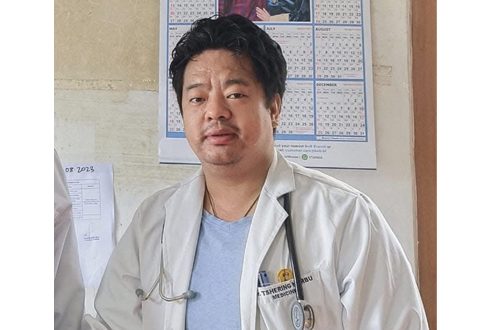
Trashigang Hospital doctor Tshering Norbu has appealed his rape conviction before the Supreme Court on 8 September 2026, seeking reversal of the High Court (HC) judgment and an acquittal.
Tshering Norbu, who was convicted by the HC of rape of a child above 12 years and sentenced to 10 years’ imprisonment with Nu 250,000 in compensation, has challenged the findings of the HC on several grounds, including the sufficiency of medical and forensic evidence, the victim’s testimony, the psychiatric report and the HC’s consideration of earlier complaints against him.
In his appeal, he argues that an essential element of the offence under Section 183 of the Penal Code of Bhutan 2011, sexual intercourse, was not established by medical or forensic evidence.
He contends that the HC relied on the victim’s testimony and circumstantial evidence despite the absence of conclusive medical or forensic findings.
He argues that the prosecution therefore failed to meet the required standard of proof beyond reasonable doubt.
The appeal also challenges the HC’s assessment of the circumstantial evidence.
He argues that the evidence does not meet the four requirements for relying on circumstantial evidence: that the circumstances must be proved beyond reasonable doubt, the evidence must unerringly point to guilt, the evidence must form a complete and unbroken chain, and be incapable of any reasonable explanation other than guilt.
According to the appeal, he said that the absence of DNA evidence linking him to the alleged offence, the absence of relevant physical injuries and the medical findings relied upon by the defence leave gaps in that chain of evidence.
He further argues that there was an alternative explanation for the complaint, which he maintains was made after the victim was allegedly upset with him for scolding her.
He has also challenged the psychiatric evidence relied upon by the HC, particularly the JDWNRH report dated 18 October 2023 that diagnosed the victim with post-traumatic stress disorder (PTSD).
He argues that the trial court was correct in rejecting the psychiatric report and that the HC erred in reversing that finding.
The appeal contends that the report did not adequately establish the criteria required for a PTSD diagnosis under the DSM-V.
He further argues that the victim’s pre-existing epilepsy was not sufficiently considered as a possible alternative explanation for some of the symptoms attributed to PTSD.
He also refers to clinical notes from October 2023, arguing that they did not establish the symptoms required for PTSD and that the victim had denied most symptoms associated with acute stress reaction, apart from fear of the alleged perpetrator and male doctors.
The defence has further challenged the HC’s consideration of medication prescribed to the victim, arguing that Amitriptyline is not among the antidepressants typically used for PTSD and is also used in the treatment of epilepsy.
He has separately disputed the HC’s findings concerning his earlier interactions with female patients and the requirement for a female chaperone during examinations.
He argues that two earlier complaints were mischaracterized by the HC and should not have been treated as evidence of established past misconduct.
According to his appeal, one complaint in Samdrup Jongkhar was investigated by police and allegedly found to be fabricated before the matter was closed.
In the second matter in Trashigang, he says the incident arose during a medical consultation after he noticed scars and medical history that required further examination.
He said that he asked the patient to bring her friend into the room, but she declined, and that the examination was conducted professionally.
The complaint was subsequently reviewed by the hospital administration and internally resolved, he argues.
Norbu therefore contends that the two incidents could not properly be relied upon as evidence of criminal or past misconduct.
He also argues that the HC placed substantial reliance on the Office of the Attorney General’s presentation while failing to give adequate weight to statements and explanations from hospital heads who had direct knowledge of the earlier matters.
He further challenges the High Court’s finding concerning the chamber where the alleged incident took place.
He argues that the claim that he took the victim into his room on the pretext of retrieving a health book and then locked the door was not properly established. He says the chamber door had an automatic self-locking mechanism and was not manually locked by him.
He argues that the HC attributed a fact to the victim that she had not actually stated in her testimony, particularly the assertion that he took her into the room and locked the door. He maintains that this amounted to misappreciation or alteration of a material fact.
The appeal also challenges the HC’s decision to discount the hospital’s internal investigation.
He argues that the investigation could not simply be regarded as compromised because a female police investigating officer had participated throughout the process.
Background
The HC had overturned the Trashigang Dzongkhag Court’s acquittal and found that the prosecution had proved its case beyond reasonable doubt.
It gave considerable weight to the victim’s consistent testimony and the surrounding circumstances, including its findings concerning the doctor taking the child into his chamber, the absence of a female chaperone and the earlier complaints.
The Dzongkhag Court had acquitted him in February this year after finding that the prosecution had failed to prove the charge beyond reasonable doubt.
The case relates to an incident at Trashigang Hospital in September 2024, when the victim was 14 years old and receiving treatment for epilepsy.
The victim, who was undergoing treatment for epilepsy, said that she had been sexually assaulted by the doctor during two separate medical consultations.
According to the family’s account, she disclosed the first assault only after a second incident when her mother found the doctor’s consultation room locked from the inside while searching for her daughter. The doctor had sent the mother away and locked the room from inside and raped the girl according to the High Court judgment.
The Office of the Attorney General had charged Norbu with rape of a child above 12 years in February 2025 after the Royal Bhutan Police forwarded the case to the OAG in November 2024.
Fully established facts
The High Court had said the victim had stated everything from when she and her family arrived at Trashigang Hospital for treatment and encountered Dr Tshering Norbu, to what he did to her, consistently and without any alteration in the testimony offered across different time periods.
This includes the fact that the doctor met and examined the victim in the absence of a female chaperone, despite being required to have one present, and the defendant and victim entering the chamber alone and latching the chamber door.
Moreover, it had been proved beyond reasonable doubt that he engaged in inappropriate conduct with the victim.
Facts consistent with guilt
The High Court said the victim stated that when she came for treatment, the doctor took her to a chamber where they were alone, closed the door, and inappropriately touched her. Accordingly, this account of the victim’s statement was consistent with the criminal act of rape of the victim by the defendant.
Conclusive nature
The circumstances of the case, the conduct of the parties, and the statements given by every individual to the concerned authorities pointed to the conclusion that the defendant engaged in unlawful conduct with the victim, said the high court.
Exclusion of innocence
Upon examining the matters stated above together with the surrounding circumstances, it was established that the defendant raped the victim, and, accordingly, there was no reasonable hypothesis consistent with his innocence.
The High Court concluded that convicting the doctor would help preserve public confidence in the medical profession, safeguard patient safety, encourage ethical medical practice and deter similar misconduct by healthcare professionals.
In addition to the prison sentence, the court found that the offence caused severe and lasting psychological trauma to the victim and her family.
It noted that the victim had developed PTSD that is expected to affect her throughout her life, and therefore ordered the doctor to pay Nu 250,000 in compensation.
The High Court also directed The PEMA to continue providing the victim with mental health support and monitoring.
The High Court also rejected the defence’s principal arguments.
It dismissed the argument that the doctor’s chamber was not a secretive location, holding that the victim had been taken into the room alone, the door had been latched and there was no parental supervision or female chaperone despite earlier agreements requiring one.
The judgement said these circumstances demonstrated the doctor’s intent to commit rape.
The High Court also rejected the defence’s reliance on DNA evidence from a condom recovered near the scene. The defence said that because the condom had been found outside the doctor’s chamber rather than inside it, it could not be linked to the defendant, and was therefore irrelevant to the case.
The defence had argued that the Amitriptyline tablet administered to the victim was not for Post-Traumatic Stress Disorder (PTSD) but for an epilepsy-related condition.
However, the High Court relied on a psychiatric report confirming that the victim had been diagnosed with PTSD and prescribed medication for that condition, rejecting the defence’s submission which was made on 8th April 2026.
In addressing the defence claim that the victim had falsely implicated the doctor, the court found that beyond the doctor-patient relationship formed for medical treatment, the victim had no affiliation or conflict with him nor was there any evidence of any prior dispute or hostility between the families.
Further, regarding the argument on the discrepancy in timing within the mother’s statement. The court found that since the victim’s mother is not a party to the case, she cannot be expected to recall the exact time with precision. Moreover, apart from this minor discrepancy, the sequence of events has been described clearly and consistently.