The Bhutanese Leading the way.
Why Bhutan Must Finally Outlaw Corporal Punishment, In Law, In School, In the Home
By Thinley Tobgay
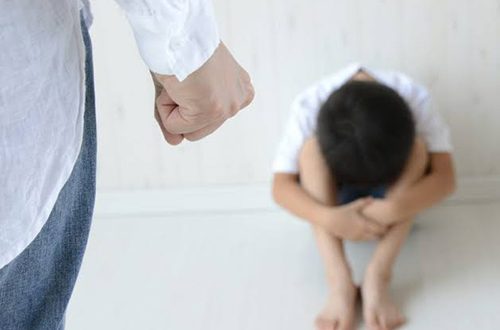
If we would never call it discipline when an adult strikes another adult, why do we call it discipline when the victim is a child? Six out of every ten children in Bhutan have been hit. Not by strangers, not by any intruders in a schoolyard scuffle, but by the very adults entrusted with raising them: parents, teachers, guardians, elders. UNICEF’s own data on Bhutan puts the figure clearly: 64.1 percent of children have experienced some form of physical violence where most occurred due to corporal punishment like being hit with objects, slapped, punched, kicked, ears pulled etc, alongside nearly half who report emotional violence and roughly one in eight who have suffered sexual violence.
We call it discipline. We call it Teycha, and sometimes Azha Nado, the cane, a tool of correction passed down through generations, wielded with the confidence of tradition and the conviction that pain teaches what words cannot. But strip away the euphemism, and what remains is this: an adult, larger and more powerful, deliberately inflicting physical pain on a child who cannot legally consent, cannot fight back, and cannot walk away. In any other relationship between two adults, we would call this assault. Because the victim is a child, we call it parenting.
It is time we ask ourselves, honestly and without hesitating: why does the law protect a grown man from being struck by another grown man, yet permit a child, smaller, dependent, and still forming their sense of self, to be beaten in the name of love and care?
A legal loophole
Bhutan is not a country without a child protection law. The Child Care and Protection Act (CCPA) of 2011 reads, on its face, like a progressive document. Section 212 criminalises assault against a child. Section 213 criminalises cruelty. Section 215 states plainly that a person is guilty of battering a child if they purposely use physical force against one. Section 214 goes further, prohibiting “harsh or degrading correction or punishment” in homes, schools, and institutions.
Read those provisions in isolation, and one might conclude that corporal punishment is already prohibited. But the position is complicated by the justification defence contained in Section 109 of the Penal Code. Section 109 of the Penal Code of Bhutan 2004 creates a justification defence for certain uses of force by parents, guardians and other persons responsible for a child’s care, including force used for discipline.
Child-rights monitors argue that this creates a legal defence that undermines the CCPA’s prohibition.
The result is a country where the law criminalises cruelty with one hand and licenses it with the other. Corporal punishment remains lawful today in Bhutanese homes, in day-care settings, and, despite decades of policy notifications urging otherwise, in schools themselves, because no legislation has ever closed the section 109 loophole. This is not a fringe legal opinion. It is the documented finding of the global monitoring body End Corporal Punishment, and it is precisely why, in May 2024, the UN Committee on the Rights of the Child formally recommended that Bhutan repeal every provision, across the CCPA, the Penal Code, the Child Adoption Act, and the Domestic Violence Prevention Act, that still permits hitting a child.
Bhutan has been told this before. At the 2019 Universal Periodic Review, the international community urged Bhutan to prohibit corporal punishment outright. Bhutan’s response was that its existing legislation was sufficient and that it did not “feel the need to pursue legislative reforms or enactment of new legislation”. The evidence, 60 percent of children bearing the physical marks of that “sufficiency”, suggests otherwise.
The classroom is not exempt
Nowhere does this contradiction sting more than in our schools, where the state itself is the employer of the hand that strikes. Most recently, this newspaper has reported on the case of a Shaba HSS teacher charged with child battery after assault leaves children with bruises, a story that generated public outrage precisely because it exposed what many Bhutanese quietly already knew: that despite a 1997 Ministry of Education notification declaring corporal punishment prohibited, the practice persists in classrooms across the country.
A teacher’s authority should rest on respect earned, not fear inflicted. A child who learns fractions while trembling from the front row is not learning discipline; they are learning that power justifies pain, and that the people meant to protect them cannot always be trusted not to hurt them.
A personal reflection with the cane
Perhaps this argument is easier to make because I, too, grew up in the generation of the cane. I was raised in a system where a beating could be called discipline, where fear could be mistaken for respect, and where the sound of a cane was accepted as part of growing up. I understand, therefore, the instinct behind the argument that children must be disciplined. They must. Children need boundaries, guidance, consequences and accountability. But discipline does not have to come with pain.
This is not an argument against parents exercising their authority, nor against teachers correcting behaviour. It is an argument about what kind of authority we want to pass from one generation to the next. We can correct without humiliating, hold children accountable without hurting them, and teach consequences without teaching that violence is an acceptable response to wrongdoing.
Perhaps those of us who grew up with the cane have a particular responsibility to ask whether the lesson can survive without the instrument. We do not have to abandon discipline; we can abandon the violence that has too often accompanied it. Restorative approaches offer a different possibility: discipline that does not simply demand obedience, but helps a child understand what went wrong, take responsibility, repair harm, and learn from the experience.
And that brings us to a question we rarely ask when we defend the cane: what, exactly, are we teaching a child when we hurt them in order to teach them not to hurt others?
What the cane actually teaches
Proponents of corporal punishment insist it produces obedient, well-behaved children. The global research says otherwise, and it says so with rare consistency. Psychologist Elizabeth Gershoff’s landmark meta-analysis found that physical punishment was associated with greater immediate compliance, but also with a wide range of adverse outcomes. Later research has questioned whether even this short-term compliance advantage is robust.
There stands a long list of harms: heightened aggression, poorer mental health, weaker moral internalisation, damaged parent-child relationships, and a measurably increased likelihood that the child will go on to abuse their own children or partner. Subsequent research by Gershoff and Grogan Kaylor across cultures worldwide has only reinforced these findings. Even scholars who once argued for a “mild spanking” exception now acknowledge a clear dose-response relationship: the more severe and frequent the punishment, the greater the harm.
In other words, we are not choosing between discipline and chaos. We are choosing between a method that teaches children to fear the powerful, and methods of time-outs, natural consequences, structured conversation, restorative approaches, that teach children to understand why a behaviour was wrong. One produces compliance through terror. The other produces character through comprehension.
A question of who we say we are
Bhutan measures itself, uniquely among nations, by Gross National Happiness, a philosophy built on the idea that a society’s worth is measured in the wellbeing of its people, not merely their obedience or productivity. It is worth asking what GNH means if it does not extend to the smallest, least powerful members of our own society. A nation cannot claim to cultivate happiness while permitting the routine physical punishment of the children who will inherit it.
Ending corporal punishment is not about undermining parental or teacher authority, and it is not a foreign value imposed on Bhutanese tradition. Many cultures once considered hitting children unremarkable; more than 65 countries worldwide have since concluded, through law, that a child’s body deserves the same protection from violence as an adult’s. Bhutan can make that same choice without abandoning its own values; Buddhist ethics of Kindness (Jamba), compassion (Nyingjey), love (Gawa), and care (Tsewa) demand it.
What must change
The path forward is not mysterious; it has been mapped out repeatedly by the UN Committee on the Rights of the Child, and it requires four concrete steps. First, Parliament must amend or repeal Section 109 of the Penal Code and every equivalent “reasonable force” defence scattered across Bhutan’s statutes that provides a defence of justification to discipline children, so that Section 214 of the CCPA finally means what it says. Second, prohibition must be explicit and comprehensive, covering homes, schools, daycare centres, monastic institutions, and alternative care settings alike, closing every gap the current patchwork leaves open. Third, law must be paired with support: parenting education, teacher training in positive discipline, and public awareness campaigns, so that adults who have only ever known the cane are given real alternatives, not just a new prohibition to resent. Lastly, and most importantly, schools could adopt Restorative Practices, building on the initiatives already being implemented in some schools across the country, and with the hope of developing a nationally recognized Restorative Practice Toolkit. Such an effort could help provide schools with a consistent, practical, and context-specific framework for embedding restorative approaches into everyday school life, an initiative that is also being explored and developed by the Appropriate Dispute Resolution Clinic at the JSW School of Law.
A law on paper changes little if a father’s hand still reaches for a stick out of habit, or a teacher’s patience still runs out mid-session.
Let the last generation that was raised by the cane be ours, not the generation that raises its children with it.
Fifth-Year Student at the JSW School of Law