The Bhutanese Leading the way.
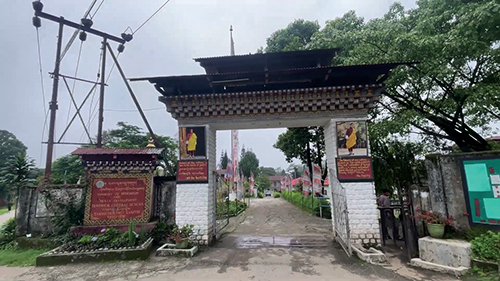
Inside Tendu Central School’s effort to support students with invisible disabilities through early identification, specialized support, and inclusive learning
Not every disability is visible. While society often recognizes disabilities through visible signs such as wheelchairs, white canes, or mobility aids, many individuals live with conditions that cannot be seen but continue to affect their daily lives.
Invisible disabilities refer to physical, mental, or neurological conditions that may not be immediately apparent but can affect a person’s ability to learn, communicate, concentrate, or participate in everyday activities.
These include autism, Attention-Deficit/ Hyperactivity Disorder (ADHD), dyslexia, hearing loss, mental health conditions, and other learning and developmental disorders.
For students with learning disabilities, difficulties in reading, writing, processing information, or remembering lessons are not due to a lack of effort. Rather, they require understanding, early support, and an inclusive learning environment.
Tendu Central School in Samtse, one of the schools providing Inclusive Education services, supports students with diverse learning needs. The school’s Inclusive Education Program, previously referred to as Special Educational Needs (SEN), provides additional support to students based on their individual requirements.
The school’s SEN Coordinator, Tara Devi, who has worked at the school for more than eight years, said invisible disabilities are often difficult to identify because they do not have visible signs.
“Physical disabilities are easier to identify when a person is limping or using a wheelchair. However, with invisible disabilities, it becomes apparent when a child faces challenges in the classroom, whether in paying attention, communicating, or remembering things,” she said.
She said many parents and teachers still associate disability mainly with visible physical conditions.
“Even parents and teachers do not have ideas about these types of disabilities, especially learning disabilities. They look normal, so the parents’ and teachers’ perspective are only that if an individual student has some impairment in their body, then they have a disability,” she said.
Tara Devi said this lack of awareness can lead to misconceptions, with some teachers assuming students are careless or unwilling to learn when they repeatedly struggle.
“Teachers who do not have Inclusive Education training tend to think, ‘Why is this child forgetting what was taught in the morning?’ or why they continue to have difficulties understanding,” she said.
At Tendu Central School, which has around 1,176 students, 75 students are enrolled under the Inclusive Education Program with conditions including autism, cerebral palsy, and speech and language difficulties.
“Looking at learning disabilities alone, we have more than 30 students with learning disabilities,” Tara Devi said.
Identifying students who need support
Tara said early identification is important, but students must first undergo a referral and assessment process before receiving specialised support.
“When a child is suspected of having a learning difficulty, we conduct assessments using screening tools to understand the child’s needs,” she said.
The assessments examine areas such as reading ability, writing skills, communication, and the ability to follow instructions. Based on the findings, students receive appropriate interventions.
However, she said some students who are not formally referred remain in regular classrooms and are often labelled as “slow learners” without receiving specialised support.
The process begins with classroom teachers observing students’ learning patterns and behaviors. Teachers are provided awareness sessions and referral forms to document difficulties and support already provided.
“If the support given is not helpful, then they are supposed to refer the child,” she said.
However, the shortage of SEN teachers remains a major challenge.
“If we had enough teachers, we could do the assessments properly and plan interventions based on the child’s needs. But we already have too many students in the program, so it becomes difficult,” she said.
She added that many students require individual attention, but limited staffing often means they have to be supported in groups.
“Many students need a silent environment, and one-to-one support can be helpful. Even with small interventions, we can see improvements,” she said.
When learning difficulties remain hidden
The SEN coordinator shared the case of a Class VI student referred from another school who was suspected of having a learning disability. Initially, the student did not show obvious difficulties. “His speech and communication skills were good, and even the Inclusive Education team had not immediately noticed significant challenges,” she said.
However, assessment showed that although the student had strong listening and speaking skills, he struggled with reading.
“Although he was in Class VI, his reading level was similar to that of a Class I student,” she said.
The student and his parents initially found it difficult to accept Inclusive Education support, but after struggling in examinations, the school decided to place him under the program.
She said stigma remains a barrier for some families.
“When we inform them (parents) that the student needs Inclusive Education, they feel ashamed to accept it. I tell them that not every student with visible disabilities receives Inclusive Education, but those with learning, speaking, and reading difficulties also require support,” she said.
For another student, she provided tailored sessions between March and June and collected feedback from subject teachers, who reported improvements in learning and participation.
Beyond academics
Tara Devi said Inclusive Education is not only about academic achievement but also about helping students become more independent.
Students who require additional support may use functional textbooks with simplified content, while others participate in vocational activities focused on practical skills. “We teach cooking, cleaning, health and hygiene because these are important life skills. Even if students do not enter the job market immediately, they should be able to live as independently as possible,” she said.
She said families of children with disabilities also face challenges, with some parents struggling financially while managing additional responsibilities.
Many students with disabilities are day scholars because hostel arrangements can be difficult for those requiring support with personal care and daily routines.
“These children may look and communicate like any other child, but when they stay in the hostel, maintaining hygiene becomes challenging,” she said.
Creating an inclusive environment
The school has also been working to improve accessibility. With support from MoESD, ramps have been constructed, while UNICEF supported the development of inclusive toilets. A six-unit accessible building is also under construction with support from the Bhutan Foundation.
The school has also established an inclusive kitchen where students, including wheelchair users, participate in life-skills and pre-vocational activities.
However, Tara Devi said greater awareness among parents, teachers, and policymakers remains necessary.
“If a child is repeatedly struggling or failing, parents should speak with teachers and seek support services. The earlier children are referred, the earlier they can receive the help they need,” she said.
She further stressed that persons with disabilities must be included in decisions affecting them.
“We believe in the principle, ‘Nothing about disability without persons with disabilities.’ Even though I am an Inclusive Education teacher and have completed my Master’s degree, I do not have that lived experience. Many times, we make assumptions,” she said.
She recalled an incident when an accessible toilet was temporarily unavailable, and she suggested that a child with autism use the general toilet. The child’s mother explained it would create discomfort for her as she is entering a gent’s toilet and at the same time for other boys. “That made me realise how important lived experience is,” she added.
“People with disabilities should be included in all areas of planning and policymaking because their lived experiences can guide better decisions,” she said.
Tara said greater awareness among policymakers and stakeholders is essential to ensure that the needs of persons with disabilities are reflected in policies and programs.
As for the immediate needs of the school, Tara Devi said Tendu Central School requires more teachers trained in Inclusive Education and additional spaces where individualised support can be provided to students.