The Bhutanese Leading the way.
Bhutanese in Australia remit USD 451.6 million in last 27 months
For the last couple of years, it looked like the migration rush to Australia, which reached its peak in the Financial Year (FY) 2022 July-2023 June with 15,522 was coming down, but the latest data show that migration to Australia is picking up again despite the hurdles and visa changes in Australia.
The FY with the second highest migration was in FY 2023-24 with 9,787 visas granted followed by 2024-25 FY with 6,186 visas granted.
It appeared that FY 2025-26, which ends on 30 June 2026, would see around 4,000 to 5,000 people leaving. However, in a ten-month period from July 2025 to April 2026, the number has already reached 9,084 and, with two months to go, it will likely reach or cross 10,000, making it the second-highest migration year.
At the same time, the data also shows a new trend. Increasingly, Bhutanese in Australia, instead of opting to return home, are renewing their visas while remaining in Australia.
Of the 9,084 visas, the majority of visa applicants at 5,142 are located in Australia.
This should not provide any relief, as Bhutan still lost around 4,000 mainly young Bhutanese in the last 10 months.
Another concerning trend is that an ever-increasing number of young children are being taken to Australia, which means a longer term and possibly permanent settlement there.
Of the 9,084 who got visas, 1,010 are children aged between 0 to 14 years. Only 383 of this group applied from Australia, which means that majority of 627 are new children leaving Bhutan.
The 15-19 age group comprises of 342 visa holders, of whom 167 are in Australia.
The younger children going in larger numbers means families are migrating, and the growing number of visa renewals for children from Australia means more time spent there in their formative years with less likelihood of them coming back.
The biggest chunk of those going continue to be the young graduates and professionals aged between 20 to 29 who make up 3,995 of those going. Of this group, around 1,459 are applying from Australia.
The older group aged between 30 to 39 make up 2,784 visa grants, but the interesting thing here is that the majority, 2,033 are applying from Australia, which means they are among those who had earlier moved there and are extending their stay with additional courses and visas instead of opting to come back.
This same trend is in the 40 to 49 age group which make up 926 visas, of which again, the majority at 838 visas are applying from Australia, which means they are extending their stay there.
The ones who are 50 years and over are only 27 in number. This trend may be an early indicator that once Bhutanese get old, they may be coming back. It is also more difficult for this age group to get visas. If this trend holds in the coming years, it could mean that young Bhutanese could be spending their most productive years in Australia and return only when they need more care and medical support.
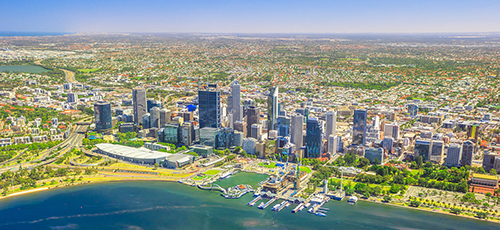
Perth, Western Australia continues to be the most popular destination, with 6,035 heading there.
Of the 9,084 who got visas in the last 10 months, the gender balance is almost equal, as the females with a slight majority are 4,568 and males are 4,516.
Of the 9,084, the students are 4,205 and the dependents are 4,879. The high number of dependents are unusual when compared to other countries.
The higher number of dependents again indicates families migrating together with spouses and children.
There has been some concern over visa grant rates. While rejections have gone up, Bhutan still enjoys a good grant rate. In the last 10 months, the grant rate is 78.1 percent compared to 83.5 percent in FY 2024-25 and 79.6 percent in FY 2023-2024.
At the same time, the large number of Bhutanese in Australia has come as a major relief to the foreign exchange reserves of Bhutan, which as of March 2026 stands at USD 1.315 billion.
A major contribution here has been made by the remittance of Bhutanese in Australia over the years.
In 2024 Bhutanese in Australia contributed USD 102.2 million (mn) to the reserves which shot up to USD 253.4 mn in 2025, and so far from January to March 2026 it is already USD 96 mn.
This means that Bhutanese in Australia have contributed USD 451.6 mn to the reserves just in 27 months.
By comparison, the SDF revenue from tourism in the 26 months from January 2024 to February 2026 is USD 265.1 mn.
This shows that remittance from Australia is now the biggest source of USD for Bhutan leaving aside loans.